
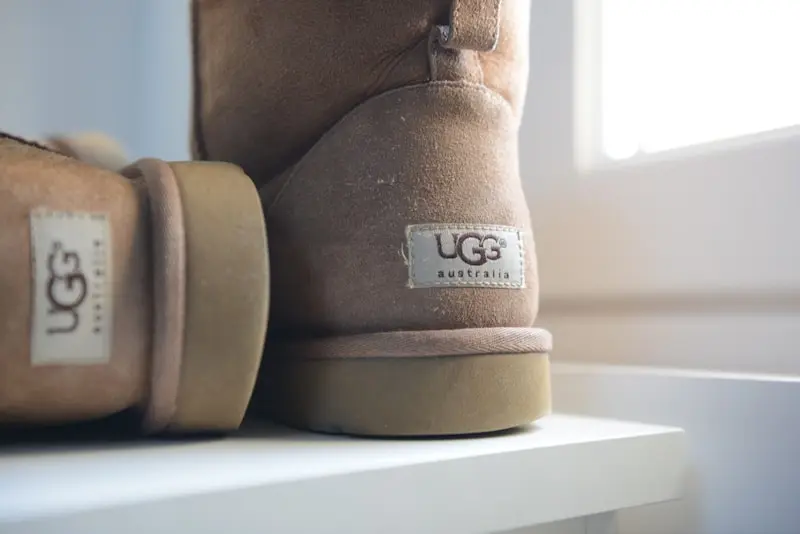
Uggs—those famously warm and fuzzy boots—became a fashion staple in the early 1980s and quickly spread across America, Europe, and Asia. With an array of colors and styles, Uggs have been embraced by a wide range of people. These boots combine advanced manufacturing techniques with natural materials. In fact, Uggs are unusual in that you can wear them in both polar regions and tropical climates.
The original Uggs, made from sheepskin, originated in Australia and New Zealand, where pilots and farmers wore them. Versions of soft sheepskin boots were also used elsewhere—for example, in China by people working in damp conditions. The boots’ popularity among military pilots increased during World War I and World War II, when pilots needed to keep their feet warm in unpressurized planes at high altitudes. By the early 1960s, Uggs had become especially popular among California surfers and swimmers, who pulled them on after long sessions in the water.
Uggs are typically made from high-quality sheepskin that goes through a special tanning process. They feature soft, fluffy fur on the inside and a durable, lightweight rubber sole. Models and colors vary widely and can include metallic embellishments, stones, rhinestones, bows, and options with or without fur, prints, or hand-painted designs. Wear Uggs with pants, jeans, dresses, or skirts. They can have a flattering effect on the calves, making them suitable for both slender and shorter, curvier figures. Wear Uggs without socks to get the full cozy-slipper feeling.
In the capital today, prices for Uggs range from 450 UAH to infinity. Price depends on the level of embellishment and the boot height. However, don’t expect genuine quality Uggs for 450 UAH; that price is likely a knockoff. You can also order Uggs online, since many websites sell them. If you want authentic Uggs, look for stores that sell them for no less than 2000 UAH; the quality of those boots will not disappoint you.
Currently, there is no official UGG® Australia representation in Ukraine, which raises questions about the authenticity of the footwear sold there. Here are a few tips to help when purchasing Uggs:
- Knockoffs are often taller than genuine Uggs, although it can be hard to tell just by looking. Compare the height with the specifications on official sources.
- Counterfeits are usually wider at the ankle, causing them to feel loose on the foot.
- Knockoffs tend to run true to size, while authentic Uggs often fit about one size smaller.
- The sole thickness of a counterfeit is typically 6–7 cm, while the original is 13 cm; the original sole is more flexible and softer.
- Counterfeits often smell of synthetic paint or lacquer.
- The fur in genuine Uggs is thick and plush; in knockoffs it flattens quickly. In authentic Uggs, the fur matches the color of the boots, and the sheepskin on the insole usually has a natural cream shade.
- Genuine Uggs have a ® symbol on the sole, which counterfeits lack.
- Authentic Uggs have been produced in China for several years, after Deckers Outdoor Corporation acquired the UGG® Australia brand about 15 years ago. So a label claiming the boots are from New Zealand or Australia may indicate a fake—this specifically applies to UGG® Australia boots. In Australia, the term “ugg” is not trademarked, and all sheepskin boots are still referred to as uggs. For example, boots labeled “UGG Made in Australia” indicate genuine sheepskin but belong to a different brand and manufacturer. Those boots can be considered branded and well made; the final choice depends on your preferences.