
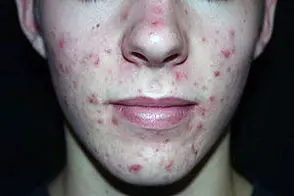
 It’s better to consult a skincare professional about treating acne.
Ah, youth — the time you find yourself lingering at the mirror, admiring rosy cheeks and thick hair…
But wait, what’s that? Small dark spots on your nose, forehead, and chin. Where did they come from?
Acne often appears at this age, which is why people call it “teenage acne.”
Typically, acne occurs in people with overactive sebaceous glands and altered sebum composition. The skin can look porous, shiny, even like orange peel. Sebum gets trapped in hair follicles; when dust and dirt get in, blackheads (comedones) form. Bacteria can also invade the sebaceous glands and trigger inflammation, which leads to inflamed nodules, pustules, and whiteheads.
Hormonal imbalances play a big role, as do digestive problems, a high intake of fats and carbohydrates, and improper skincare routines.
Some think teenage acne will fade on its own. Often it does, but scars and dark spots can remain. That’s why treating skin early is important, starting by addressing any underlying health issues associated with acne.
Start with vitamins, especially vitamin A, which helps regulate sebaceous gland activity. Also limit fats, carbohydrates, and extractive substances — which means cutting back on rich soups, candies, and pastries.
Walk outdoors and exercise. Consult a skincare professional about acne treatment.
Cleanse your face with hot water and soap. But avoid prolonged hot-water washing — it dilates blood vessels and can contribute to premature sagging. Rinse your face with cold water, adding a tablespoon of vinegar, lemon juice, or citric acid.
If your skin is porous, wipe your face in circular motions along the massage lines with a soapy cotton pad sprinkled with table salt. Leave the soapy foam on for 5 to 8 minutes, then rinse with hot water and finish with a splash of cool water.
If your skin is shiny, wipe it with calendula tincture, 3% boric alcohol, or with lotions that tighten pores and disinfect the skin to help prevent acne.
Use masks that dry out oily skin.
Once acne clears, get a facial at a skincare clinic every 2 to 3 months, and in fall and winter expose your skin to a mercury-quartz lamp.
Treat acne under the supervision of a dermatologist or skincare professional.