
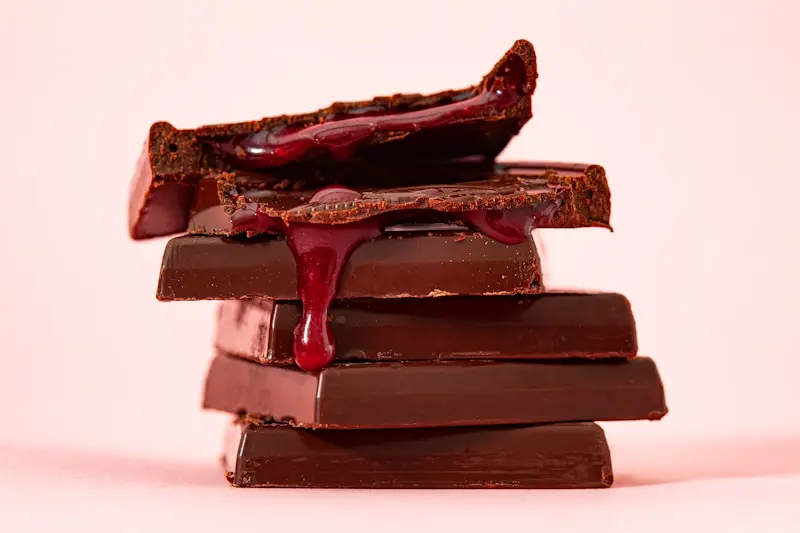
When it comes to making chocolate desserts or baked goods, you can choose between cocoa powder or chocolate bars. While cocoa powder is straightforward to use, melting chocolate bars is trickier. Pastry chefs call chocolate a finicky ingredient — when heated it can burn, seize up, or turn into a sticky mess. So how do you avoid those pitfalls?
If you’re planning to make a cream, filling, or glaze, the first step is melting the chocolate. Although that seems simple, results don’t always meet expectations. The main challenge is choosing the right chocolate. The ideal option is professional-grade chocolate, often sold in drops, but it’s usually available only at specialty stores. Fondue chocolate is another good choice and can be found where they sell fondue supplies. If you can’t get those, regular chocolate bars work as long as they’re fully natural and dark. Avoid bars with additives — they’ll melt into a sticky lump — and steer clear of milk chocolate, which doesn’t melt well.
When melting chocolate, remember that it dislikes high heat and any moisture. Melt chocolate in short bursts in the microwave or use a double boiler. Take care not to overheat it, and make sure no water droplets get into the bowl.
If you melt the chocolate correctly, you can make a variety of treats. Pour it into molds, let it cool at room temperature, then transfer it to the refrigerator to set. Mix in fresh berries, nuts, or fruit for filled chocolates. Use a piping bag to add decorations. Melted chocolate also makes a great glaze for cakes. Add a little olive oil for a glossy finish; add spirits or spices for extra aroma. Remember that melted chocolate sets quickly, so work efficiently.
To make a classic chocolate cream Combine 150 g of chocolate with 150 ml of boiling cream and wait for the chocolate to melt. Stir in one egg yolk and a small piece of butter. Add flavoring that suits your dessert — rum, cognac, liqueur, mint, jasmine, lemon zest, or lemon juice. Mix well and let the cream cool in a cool place overnight. Use this cream for cake layers and éclairs, or pipe it into shapes. Melt over a double boiler to turn this cream into a glaze.
There’s another recipe for chocolate glaze that uses gelatin. Combine 1.5 cups of water, 2 cups of sugar, and 250 ml of heavy cream in a saucepan and bring to a boil. Add 5 tablespoons of cocoa powder and mix thoroughly. Cool the mixture until warm, then stir in 12 g of melted gelatin.
In addition to cream and glaze, chocolate is widely used in making cakes and puddings. Here’s a recipe for chocolate in molds. Boil 1 cup of milk with 1 tablespoon of cocoa, remove from heat, then add 1 cup of sugar and 70 g of chopped chocolate. Stir until the chocolate is completely dissolved, then let the mixture cool. Add 5 egg yolks, 2 whole eggs, and vanilla, and strain the mixture. Pour it into molds placed in a baking tray filled with water. Cover the tray and bake until slightly set at 150°C (about 300°F). Serve the chocolate directly in the molds, garnished with whipped cream.
As for cocoa powder, add it to any white cream to create a dark filling. Baking is also easier with cocoa powder; add it at the very end of mixing the batter. If you want a cake that’s nearly black, you don’t need much cocoa. Instead, mix a couple of tablespoons of cocoa with 1 tablespoon of olive oil; the fat helps deepen the powder’s color.
You can also make simple hedgehog candies with a filling. Toast various nuts, chop them, and mix with butter or sweetened condensed milk. Grate chocolate and roll the nut mixture into balls, then coat them in the grated chocolate. For smooth candies, place the nut mixture on a rack and drizzle with glaze.
Finally, here’s a recipe for a chocolate cake with brandy and prunes. Soak 200 g of dried fruits for 2 hours with 4 tablespoons of brandy. Chop 75 g of chocolate, add 25 g of cocoa powder and 2/3 cup of sugar, pour in 150 ml of boiling water, and mix until smooth. Whip 4 egg whites and beat them with 1/3 cup of sugar and 75 g of flour. Fold the egg whites into the chocolate mixture to create a liquid batter. Pour into a parchment-lined pan, sprinkle with prunes, and bake for about half an hour at 190°C (about 375°F). Let the sponge cool in the pan, then remove it, drizzle with glaze, and top with fresh berries and fruit.