
Building in the mountains, in the forest, or on the steppe is one thing. Building near a large lake is quite another.
Before erecting a city, a port, or a train station near a lake, builders need to know how water levels have changed over the past 300—or at least 200—years.
Builders who recently arrived on the shores of Lake Baikal needed exactly that information. But who could provide it? There were no observation posts in the area, and hunters hadn’t worked these parts for years.
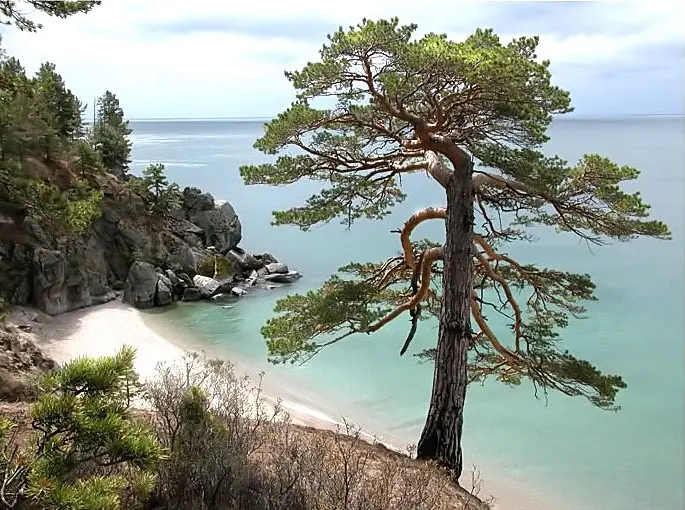
Construction couldn’t wait. A solution was found: the witnesses were the larches, pines, and cedars. Scientists “interviewed” the trees to gather the necessary information. Botanists observed that the forest grows right up to Baikal, almost reaching the water’s edge. They cut down one pine and determined it was 520 years old; it sprouted in 1438. When the tree was fifteen, the lake rose and a heavy Baikal wave damaged the young pine’s bark. The wound healed with thick resin, but the scar is still visible today.
About a thousand trees were felled. Each trunk was sliced, sanded, and examined. The trees showed that Lake Baikal’s level fluctuates from year to year, but in the past 500 years it has never risen more than three meters.