
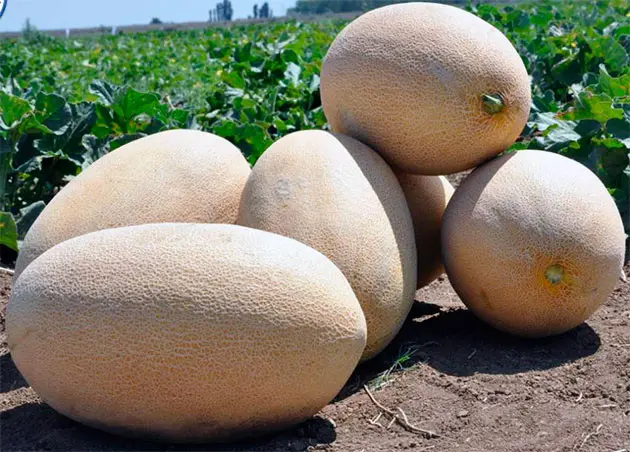
Watermelons, melons, and pumpkins are packed with medicinal benefits. Their value comes from vitamins, mineral salts, organic acids, and aromatic compounds that aid metabolism and improve nutrient absorption. That’s why melons get so much attention in Uzbekistan — a tradition that goes back centuries. Melon farming is one of the leading sectors of agriculture in the region. Let’s look at the techniques Uzbek farmers use to cultivate melons.
About the Soil and Varieties
Melons thrive in fertile chernozem soils as well as light chestnut and meadow-bog soils. Farmers choose well-warmed, well-lit plots for planting. The best preceding crops for melons are cabbage and root vegetables. In Uzbekistan, several melon varieties are cultivated, including: Khandalyak 14, Ich-kzyl Uzbek 331, Karry-kiz 700, Koy-bash 476, Kokcha 588, and Umirvaki 3748. Here’s a closer look at these varieties.
Khandalyak 14: This early-ripening variety has a growing season of 48 to 64 days. It yields an average of 2.5 kg per square meter. The fruiting period is extended, but the fruits are not very durable and have low transportability. This variety is relatively resistant to diseases and drought.
Ich-kzyl Uzbek 331: With a growing season of 80 to 90 days, it has a similar yield to the previous variety. The fruits have good storage and transportability. This variety is resistant to air drought and fusarium wilt.
Karry-kiz 700: This variety has a growing season of 100 to 115 days and can yield up to 3 kg per square meter. The fruits store well and have good transportability. The plants are minimally affected by diseases and are drought-resistant.
Koy-bash 476: With a growing season of 85 to 100 days, this variety yields over 3 kg per square meter in irrigated fields. The fruits have high transportability. The plants have moderate resistance to fusarium wilt.
Kokcha 588: This variety has a growing season of 80 to 90 days and yields about 3.5 kg per square meter. The fruits ripen uniformly and are suitable for transport and drying. Their storage quality is satisfactory, and the variety is resistant to drought and diseases.
Umirvaki 3748: This variety has a growing season of 115 to 130 days, yielding 2.5 kg per square meter. The fruits store well and are suitable for long-distance transport. This variety is relatively resistant to soil salinity but is susceptible to fusarium wilt.
The most crucial condition for achieving high melon yields is timely and proper soil treatment. Loosen the soil, eliminate weeds, and suppress pest and disease outbreaks. Well-treated soil also promotes growth of soil microorganisms, which are essential for plant health.
In Uzbekistan, the best method for preparing the soil for melon cultivation is to plow in April to a depth of 20 to 22 cm and then till again in May to a depth of 16 to 18 cm. Spring plowing or tilling provides better soil structure than autumn loosening and is more effective for weed control.
When sowing seeds in the summer (June), pre-sowing treatment includes pre-sowing irrigation to stimulate mass weed germination for subsequent removal. On saline plots, flushing irrigation is mandatory and is done using flooding techniques. Weakly saline areas are flushed by directing water through furrows.
On plots where flushing irrigation has been conducted, the soil becomes compacted and requires secondary tilling. For spring sowings, to avoid delaying pre-sowing preparation, flush saline plots after autumn tilling. For later sowing dates, flush the soil after the fallow period is lifted, then till again in spring.
Sowing and Care
Melon seeds are sown in three periods: early, mid, and late. In southern regions, the early sowing period is April 5–15, mid April 15–25, and late June 20–30. To ensure normal and uniform germination, place 4 to 5 seeds in each hole.
For mulch, use semi-rotted manure, cotton seed husks, or even coal dust. In recent years, synthetic light-transmitting or dark films have been used for soil mulching. These films help warm the air layer close to the ground and the topsoil, which benefits the growth of early melon crops.
Thin seedlings the first time when they have 1 to 2 true leaves, removing the weakest plants and leaving two or three in each cluster. Thin a second time about a month later, when plants have 4 to 5 leaves, leaving one plant per hole. Leaving two plants in a cluster does not increase yield and produces smaller fruits. With one plant per cluster, fruits receive better light and develop higher sugar content.
Thin after watering, when the soil is moist. Pulling plants out with their roots often damages the remaining plants. Because melons recover slowly from root damage, pinch or cut excess plants with a hoe rather than uprooting them. In dryland farming, thin when plants have 3 to 4 true leaves.
In irrigated areas, hill plants once or twice. The first hilling occurs when plants have 2 to 3 leaves, and the second after a month at the start of vine formation. At the second hilling, train the vines. Train vines in the direction of the prevailing winds. Experienced melon farmers growing melons on irrigated beds often perform three vine trainings, directing them toward the center of the bed.
Melon plants respond well not only to nitrogen-phosphorus fertilizers but also to potassium. Potassium, applied in optimal doses, increases disease resistance—particularly to fusarium wilt—enhances vegetative growth, boosts yield, and improves fruit quality. Typically, apply nitrogen, phosphorus, and potassium at a rate of 1.5 kg per 100 square meters of planting.
Melon crops are water-loving and require regular irrigation. Melons are more sensitive to soil moisture than watermelons because their root system is less developed. On saline soils in Uzbekistan, irrigate melon crops with small amounts of water, maintaining moisture levels around 80%. Irrigate usually through furrows. The depth and length of the irrigation furrows depend on the land’s slope, the soil’s mechanical composition, and its permeability.
Dry air is more beneficial for melons than humid air. In inclement weather, plants can be affected by damping-off, powdery mildew, anthracnose, and other diseases.
“Melon Sufferings”
Melons are susceptible to many diseases and pests. We will focus on a few key problems, since many control measures—especially agronomic ones—are similar.
Fusarium Wilt: The damage from this disease largely depends on when it appears, the variety grown, and other factors. Medium and late-ripening varieties suffer the most. In addition to reducing yield, quality suffers—sugar content, aroma, juiciness, and storage ability decline. The disease can appear from germination through formation of the second or third true leaf, and again during fruit swelling and ripening stages.
Leaves of adult plants may wilt without losing their green color. Typically, the vines of one plant wilt simultaneously. In fusarium wilt, leaves lighten, becoming grayish-silver and spotted. Depending on infection location and severity, plants can die within a week after the first external signs appear.
The causative agent is the fungus Fusarium, and infection occurs through the root system. The pathogen accumulates in the soil, so do not grow melon crops in the same field for several consecutive years. Avoid planting melons after crops like potatoes, tomatoes, or eggplants.
Fusarium thrives at temperatures between 25 and 30°C (77 to 86°F). Its growth slows above 35°C (95°F) and ceases at about 5°C (41°F). The most favorable soil moisture for the fungus is 50 to 80%. It can even grow and develop in saline soils.
Excessive irrigation, flooding, or growing plants in heavy soils with a high water table can cause fruiting shoots to wilt by late July or early August.
Control measures: Don’t grow melons on the same field for at least 6 to 7 years; remove and burn the remains of infected plants; perform deep autumn tillage; treat seeds with a 40% formalin solution for 5 minutes. Sow on raised beds so root collars sit above the soil saturation line. Maintain uniform, moderate irrigation without excessive soil moisture, and loosen the irrigation furrow after each watering. Spray melons during the budding stage with a 50% superphosphate extract or a potassium chloride solution if needed.
Powdery Mildew: Powdery mildew is one of the most common diseases affecting melon crops. In Uzbekistan, symptoms usually appear before flowering, especially in shaded areas. Initially, powdery spots are small—no more than 1 cm in diameter. Gradually the spots merge, move to the upper side of the leaf blade, and in severe cases cover it entirely. Leaves turn brown, become brittle, curl upwards, and dry out. The disease can also affect petioles and vines.
To combat powdery mildew: practice crop rotation; destroy post-harvest plant residues affected by the disease; and, at the first signs, spray plants with 80% wettable sulfur at a rate of 320–400 g per 100 square meters. Repeat every 10–12 days, with the last application 20 days before harvest.
The appearance of round or oval yellowish-brown or pinkish spots on melon leaves characterizes anthracnose, also called “medyanka.” The spots gradually enlarge and, in severe cases, cover almost the entire leaf blade. Affected leaves develop ragged holes, turn yellow, curl, and dry out, while vines thin and break. Affected fruits become misshapen and rot quickly.
To control anthracnose: destroy plant residues, practice crop rotation, maintain moderate soil moisture, and loosen the planting furrow after each irrigation. Spray plants with a 1% Bordeaux mixture and dust with ground sulfur (150 g per 100 square meters). Apply the first treatment at the first signs of the disease, treat again during fruit set, and stop treatments at least 20 days before harvest. Timely treatments significantly reduce anthracnose incidence.
A major pest of melon crops in Uzbekistan is the flower parasite dodder. This grayish plant has blue flowers. Its leaves are reduced to pale yellow bracts, and its larvae feed on the unripe seeds of the host plant.
Among other pests that damage melon crops are the following:
Melon Aphid: This sucking insect can be yellow, green, or dark brown. The melon aphid gives birth to live larvae and can produce up to 20 generations in a season. It settles on the underside of leaves and then spreads throughout the plant, sucking sap from the leaves. Affected plants curl, yellow, and dry out, and flowers drop off.
Arbakeshka Melon: This plant is found in the Tashkent region. Instead of roots, it develops suckers that attach to the roots of other plants and parasitize their sap. Each dodder plant can produce up to 1.5 million seeds, which can remain viable in the soil for many years.
To combat dodder: practice crop rotation; sow melons on virgin land when possible; perform deep autumn tillage; weed timely; and destroy plant residues. Biological controls are increasingly used, such as breeding the fly Phytomyza and releasing it into melon fields during dodder flowering. The fly lays its eggs in the dodder’s flowers.
Keep melon fields free of weeds to reduce aphid populations.
Spider Mite: This dangerous, polyphagous pest is yellow or yellowish-green in summer and reddish or orange-yellow in autumn. It settles on the underside of leaves, young shoots, buds, and ovaries, sucking sap and causing reddening or yellowing of plant parts, eventually leading to their death. Females overwinter under clumps of soil, in the surface layer of soil, under fallen leaves, and on weeds and foliage.
Control measures for spider mite: collect and destroy plant residues; perform autumn tillage; practice crop rotation; and eliminate weeds.
Storage and Processing
Storage quality depends on many factors, including the structure of the fruit’s flesh and its chemical composition. Fruits with dense flesh and high pectin content store longer than those with loose flesh. Melons intended for storage should be harvested with stems 2 to 3 cm long; cut the rest off with a sharp knife. Do not store green, unripe melons: they are low in sugar, do not ripen properly, and rot quickly. In that case, lay harvested fruits in a single layer in the field and leave them in the sun for 1½ to 2 weeks. Turn the fruits every 4 to 5 days so the ground-facing side gets sun. During this ripening period certain physiological processes occur that improve storage quality. Once ripened, transport the fruits to storage on a soft bedding in the cart to prevent bruising.
The ideal storage temperature for melons is between 2 and 4°C (36 to 39°F), with relative humidity of 70 to 80%. At higher humidity levels, fruits can be affected by fungal diseases. Store melons on shelves, in boxes, or hang them in nets. To hang fruits, attach 4 to 5 tiers of poles to columns at distances of 80 to 90 cm and hang the melons in nets. Line shelves with dry straw or sawdust and arrange fruits in a single layer so they don’t touch. It is even better to create individual compartments for each fruit on the shelves and line them with burlap. To store in boxes, line the bottom with a 10 to 15 cm layer of straw and place the fruits carefully in a single row.
In Central Asia, melons are often stored in local-style storage facilities. These are adobe structures 4–7 meters high with thick walls (up to 1.2 m) and earthen roofs. Ventilation holes are made in the walls and covered with special lids. In these stores, temperatures in autumn remain around 10 to 15°C (50 to 59°F), dropping to 4 to 7°C (39 to 45°F) in winter. In Uzbekistan, melons are stored on shelves made of tightly stretched coarse mesh or in rings made from the stems of dry reeds.
Melons can be made into jams, jellies, and preserves, and they can also be dried or candied.
Melon Jam: For jam, select fruits with thick flesh, wash them thoroughly, then peel leaving no more than 1.5 mm of skin. Cut the flesh into cubes, sprinkle with sugar, and let sit in a cool place for 2 hours. Prepare the syrup, pour it over the melon, and heat. Cook the jam in 2 to 3 batches. For 1 kg of prepared melon use 1.2 kg of sugar. For 10 jars of 0.5-liter jam you will need 5 kg 160 g of peeled fruit, 4 kg 140 g of sugar, 25 to 30 g of citric acid, and 0.3 g of vanillin.
Melon Jelly: Prepare fruits the same way as for jam. For jelly, use 1.5 kg of sugar for every 1 kg of peeled melon. Blanche cut pieces in a 10% sugar syrup for 10 to 15 minutes (using 50 g of sugar for 500 cm³ of water), then add sugar and cook the jelly until ready. Add citric acid midway to enhance aroma and flavor, and add vanillin at the end before packaging. Package the finished jelly hot in dry, pre-warmed jars and seal with metal lids as they are filled.
Dried (Candied) Melon: Dried melons are made primarily in Central Asia. Select the sweetest summer varieties. Cut fruits lengthwise into slices 2 to 4 cm thick, hang on stainless steel wire, or lay them out on shelves and dry in the sun. The yield of dried melon depends on the sugar concentration in the fruits. A quality product should be soft, sticky, and elastic.