
22
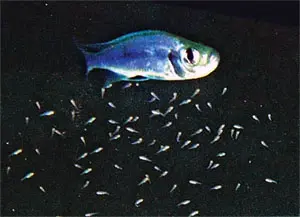
Life is tough for fish, especially for fry. Take the Caspian roach, for instance: during spawning it releases about 100,000 eggs, but only around 15 of those will grow into adult fish. The rest perish.
By contrast, catfish along the shores of West Africa have a much better survival rate — they stick together in schools and collectively fend off predators. When a large fish appears, the fry quickly form a tight ball. It’s not just a random pile: they tuck their tails in and point their sharp snouts outward. The formation sends predators running. The ball looks like a sea urchin, complete with venomous spines that predators avoid.
This unusual and fairly rare survival strategy is a striking example of adaptation.