
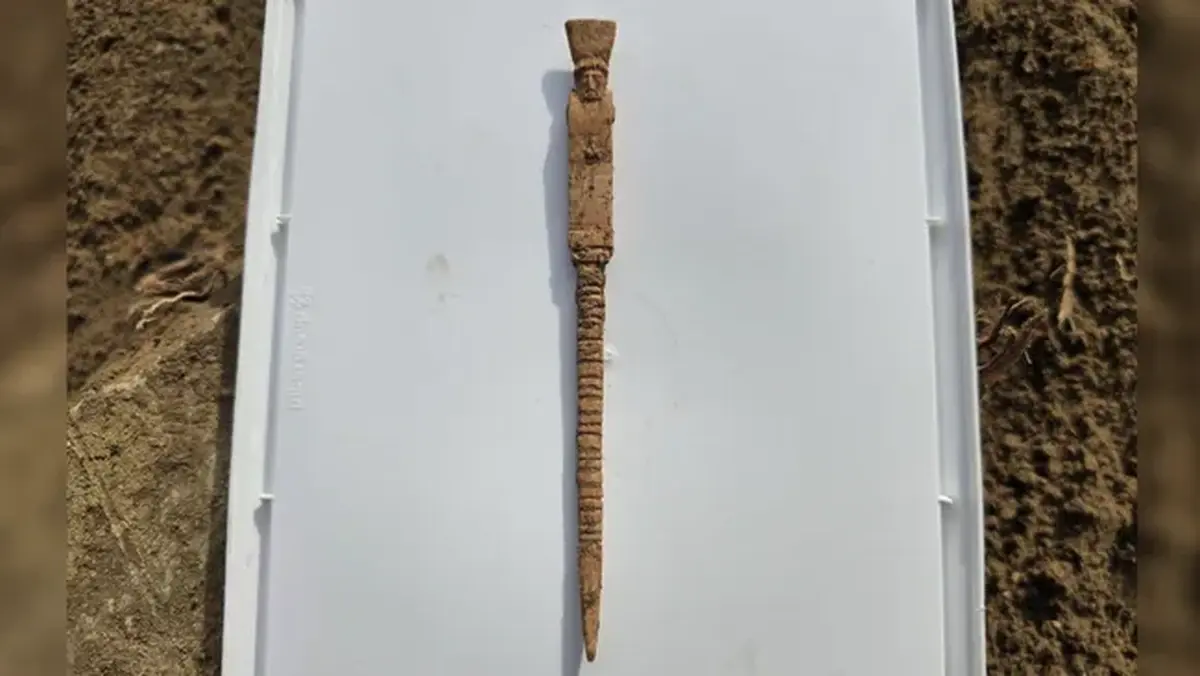
 During excavations in the ancient city of Gela, which preceded construction work, archaeologists uncovered a unique writing instrument dating back to the 5th century B.C. This stylus is topped with a figure of Dionysus, complete with a phallic symbol. At that time, was a Greek colony.
A stylus is a pointed tool used for writing or making marks on clay or wax, as reported by Live Science.
Daniela Vullo, head of the Cultural and Environmental Heritage Office of Caltanissetta (the municipality where the artifact was found), described the stylus as “a unique specimen in the archaeological landscape of its time.”

What else is known about the discovery?
The discovered by archaeologists measures 13.2 centimeters in length and was carved from bone 2,500 years ago. It features a somber depiction of Dionysus with an erect phallus. According to archaeologists, the ancient craftsman fashioned the stylus in the shape of a so-called herm of Dionysus.
Herms are ancient Greek sculptures (often made from vertical stone blocks) that typically depicted only the head and male genitals. These figures were used for protection against evil and were usually placed at crossroads, borders, and boundary points, as well as in front of temples.
Researchers suggested that this stylus may have been used by the craftsman to make marks on pottery.
“Due to its unique characteristics, this artifact deserves to be accessible for public viewing,” Ms. Vullo believes.
In addition to the stylus, archaeologists also uncovered a large quarter from the Hellenistic period (4th-1st century B.C.). Excavations are ongoing.