
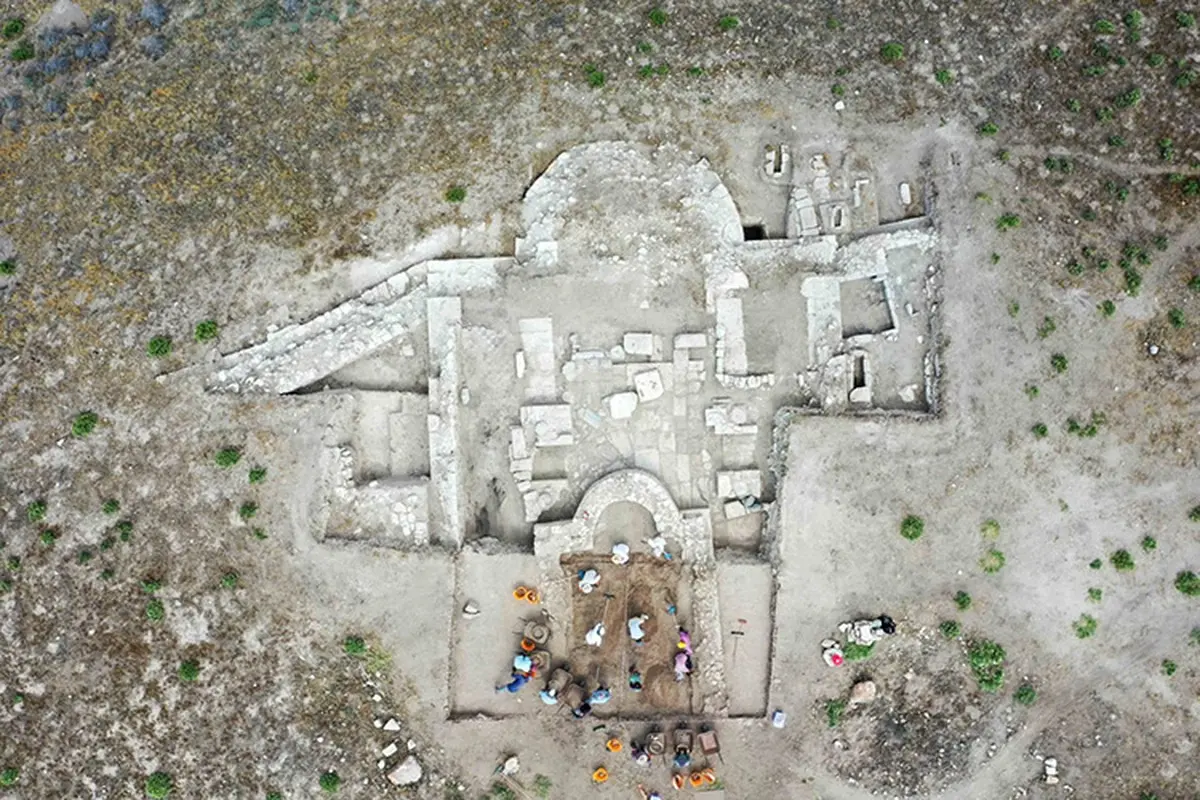
 Archaeological excavations in the ancient city of Lystra, located in the central province of Konya, have yielded a wealth of remarkable discoveries. Among the latest finds is a rare bronze , believed to date back to the Seljuk era. This artifact sheds new light on the religious life and cultural continuity in medieval Anatolia.
The Seljuk era (11th-14th centuries) marks the period of dominance of the Turkic Seljuk dynasty in the Middle East, which established a powerful Seljuk Empire (1037-1194). At its height, the state stretched from Anatolia to the Aral Sea, spreading Sunni Islam, Persian culture, and Turkic military traditions.
The excavations in Lystra are being conducted with the permission of the Turkish Ministry of Culture and Tourism of Necmettin Erbakan University (NEU) and with the support of local authorities. The project is led by prominent Turkish archaeologist Dr. Ilker Mete Mimiroglu, as reported by Arkeonews. According to him, the second year of archaeological work in Lystra has successfully concluded.
Lystra – The City Visited by Saint Paul
Ancient Lystra is known as one of the cities visited by Saint Paul, making it a significant site related to the spread of early Christianity. Lystra has long attracted historians and archaeologists due to its layered history, which spans from the Roman and late antique periods to the Seljuk and Ottoman eras.
Dr. Mimiroglu reported that the initial focus of the excavations was on the main church complex, which turned out to be much larger and more complex than scholars had anticipated.
“Last year, we continued excavating the main church and discovered that it is part of a large architectural complex. In addition to the chapel, we also found another church structure dating back to the late antique period,” explained the excavation leader.
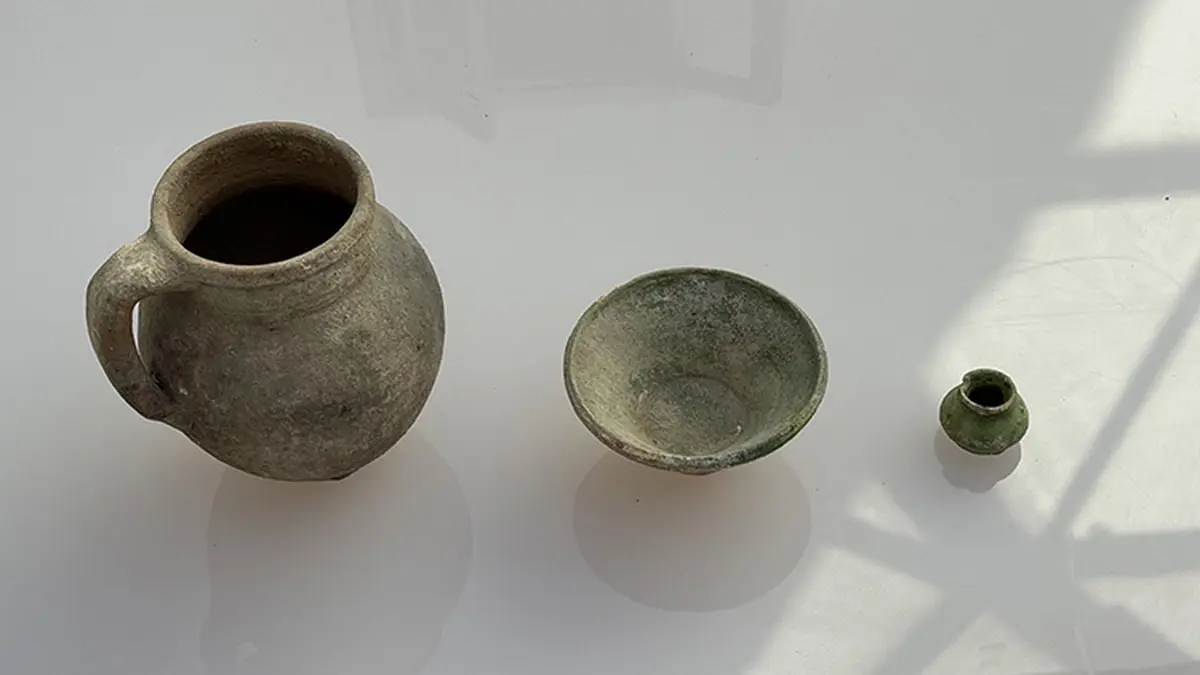
One of the most striking discoveries awaited researchers in the upper part of the church complex, where approximately 80 graves were uncovered. Many of these belonged to Christians who lived in the region during the Seljuk rule. Inside the , researchers found glazed inkpots, , and turquoise beads from that period. This confirms historical records of the presence of Christian communities during the Seljuk era. The discovery is significant, as material evidence of the daily lives of Christians during Seljuk rule in Anatolia is rare.
Triangular Bronze Amulet – An Archaeological Rarity
The standout artifact unearthed by the team this season is a bronze amulet. It was hidden inside a residential building from the Seljuk era. The triangular amulet, found next to a green glazed inkpot, is a pendant designed to be worn on a chain. Both sides of the amulet feature inscriptions arranged in two lines.
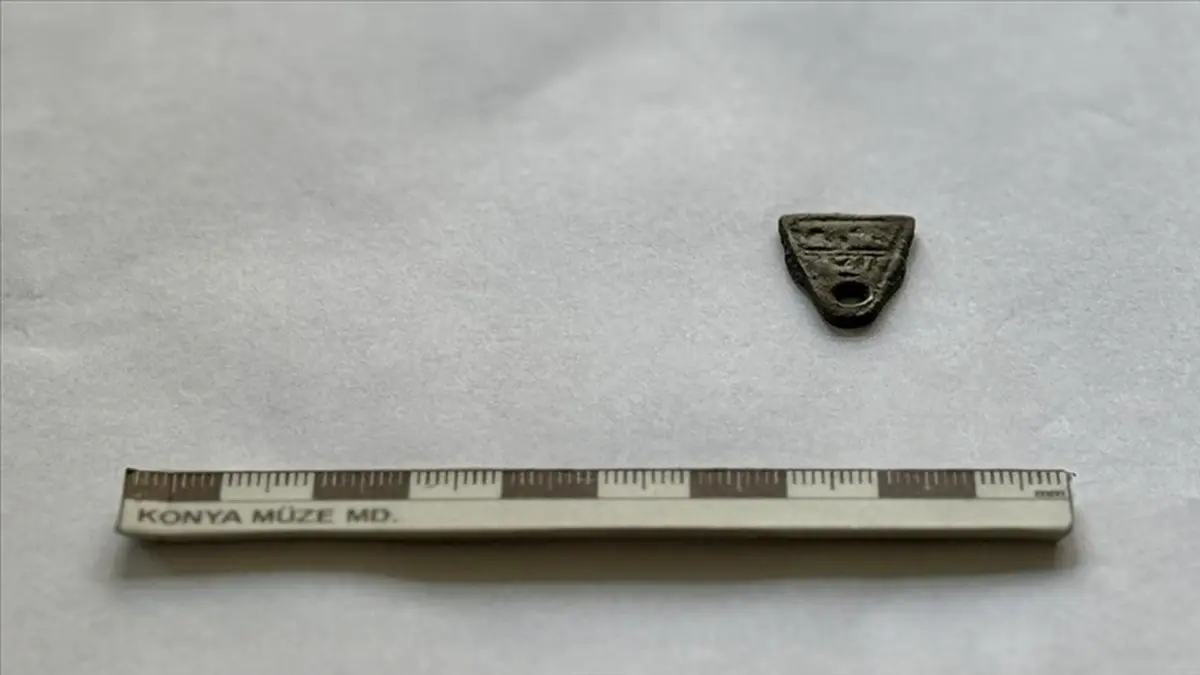
Amulets of this type are most commonly found in Central Asia, where soldiers and travelers often wore them as protective charms. Meanwhile, the discovery of such a in Lystra highlights the cultural connections between Anatolia and the broader Seljuk world.
The excavations in Lystra have not been limited to the discovery of religious structures. On the hillside, archaeologists stumbled upon residential buildings from the Ottoman period. Among the finds was an Austrian silver coin from the 17th century, serving as evidence that Lystra continued to play a significant role in regional and international trade during the Ottoman Empire.
