
 Mars once had flowing water and a thicker atmosphere, so it could have been suitable for life at some point.
Unfortunately, around 4.2 to 3.7 billion years ago, rivers, lakes, and the massive oceans began to disappear as solar winds gradually eroded Mars’s atmosphere. The question of how long the Red Planet maintained conditions suitable for life remains a topic of ongoing debate among scientists.
According to new research from scientists at New York University Abu Dhabi (NYUAD), there is evidence that ancient sand dunes within Gale Crater gradually transformed into rock due to interactions with underground water billions of years ago. Recent discoveries made by the Curiosity rover, which has been exploring Gale Crater, have shed new light on the planet’s past.
The study’s findings, published in the journal Geophysical Research: Planets, suggest that Mars may have been habitable for much longer than previously thought.
What Did the Scientists Discover?
The research was led by Dimitra Atri, the principal investigator at the university’s Center for Astrophysics and Space Science (CASS). During the study, the team examined the dunes in the Stimson formation located in Gale Crater. The Curiosity rover has observed evidence of “lithified” formations here—sand deposits that have turned to stone.

A mosaic in the Stimson formation formed due to interaction with underground water,
captured using the Mastcam (MSL/NASA/JPL-Caltech).
Given the predominantly dry conditions in the crater, scientists hypothesized that these formations likely date back to the Noachian period (around 4.1 to 3.7 billion years ago). This was a time when significant flooding occurred, driven in part by rivers flowing into the crater, as reported by Science Alert.
The team compared data collected by Curiosity’s instruments with field studies of rock formations in the United Arab Emirates desert, which are known to have also formed under the influence of water.
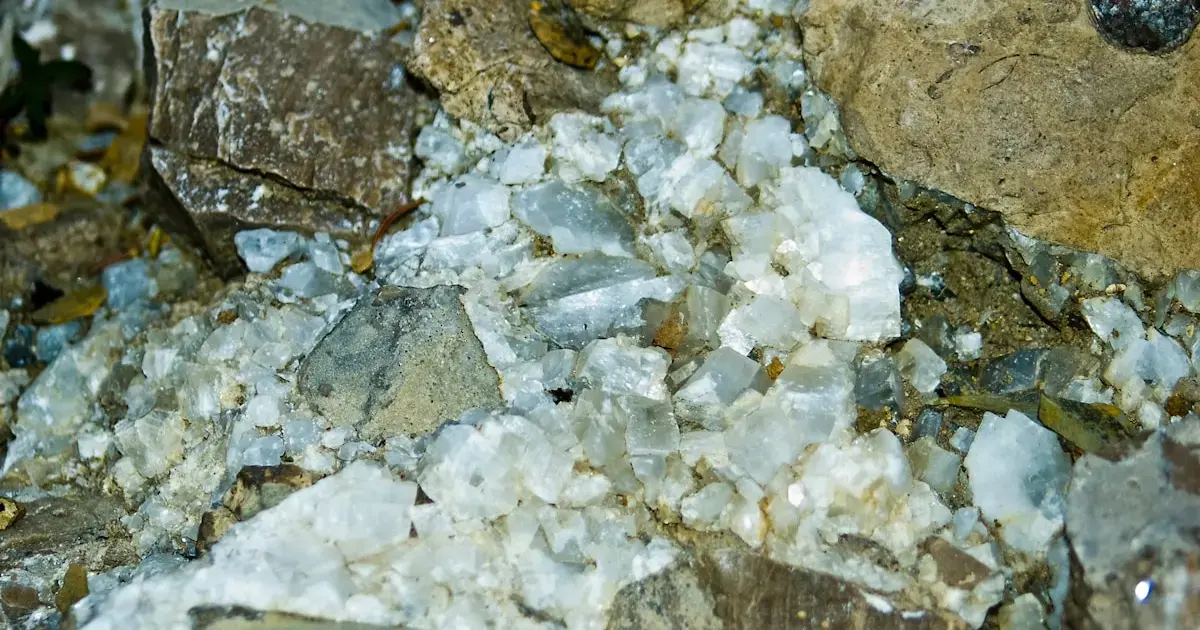
The scientists determined that the dunes in the Stimson formation are a product of late-stage water activity, meaning they formed as a result of interactions with groundwater from a nearby mountain. The team also discovered that this interaction left behind minerals such as gypsum—a soft sulfate mineral that is one form of calcium sulfate dihydrate (CaSO4) found in Earth’s deserts.
This latest research echoes similar findings presented by Atri and his colleague Vignesh Krishnamurthy at the Tenth International Conference on Mars held at the California Institute of Technology.
On Earth, sandstone deposits contain some of the oldest evidence of life, including clusters of microorganisms that cause mineral deposition. By analyzing these terrestrial analogs, Atri’s team suggested that the lithified deposits in Gale Crater may harbor remnants of ancient bacteria.
This new research could inspire future missions that will continue the search for life on the Red Planet.
Photo: Unsplash