
 Medical professionals and researchers are sounding the alarm: myopia, or nearsightedness, is rapidly spreading across the globe.
A team of researchers from the State University of New York College of Optometry (SUNY) claims that the issue goes beyond just the amount of time people spend . This is merely one of the key factors contributing to this phenomenon.
It turns out that myopia is largely influenced by:
- a tendency to stay indoors and focus on nearby objects;
- the habit of working for extended periods in low light and at close distances, and most importantly – the amount of light reaching the retina under these conditions.
What Did the Scientists Report?
The SUNY team involved 34 volunteers in their laboratory studies. Of these, 21 were myopic, while 13 had normal vision. Participants were asked to repeatedly focus (alternating between each eye) on square targets that varied in brightness and contrast.
By observing the eye movements of individuals with myopia, researchers hypothesized that activities requiring close-up focus contributed to the development of myopia through pupil constriction. This constriction limited the amount of light entering the eye, as reported by Science Alert.
“Myopia has reached nearly epidemic proportions worldwide, yet we still do not fully understand why. Our results suggest that a key factor may be the amount of light reaching the retina during prolonged close-up work, especially indoors,” noted co-author José-Manuel Alonso, a neurobiologist specializing in vision research.
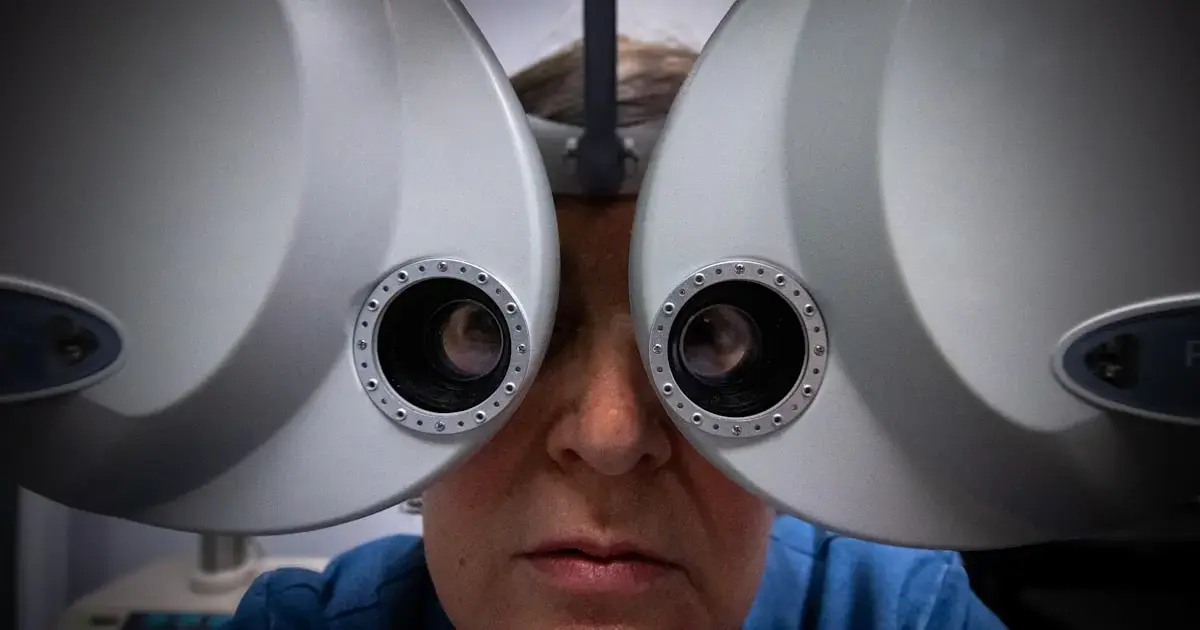
The researchers aimed to study three behavioral aspects related to viewing nearby objects: eye focusing, eye convergence, and pupil constriction. The team made adjustments to account for the activation of ON and OFF pathways in the retina, which are responsible for processing light and darkness, respectively.
Previous studies indicated that optic nerve weakening is associated with myopia; however, the underlying mechanism remained unclear. One of the key findings was that contrast played a more significant role than brightness when it came to eye convergence and pupil constriction.
The team also noted that myopic individuals tend to have their eyes turned inward even before focusing, and their pupils constrict more than those of people with normal vision.
Based on these observations, the researchers proposed a new hypothesis: in myopia, the priority is not so much on brightness as it is on focus. However, in environments with low light, this becomes a significant issue.
“In bright sunlight, the pupil constricts to protect the eye while still allowing enough light to reach the retina. When people focus on nearby objects indoors, such as phones, tablets, or books, the pupil may constrict not due to brightness but to enhance image sharpness. If this is compounded by low light, the illumination of the retina significantly decreases,” explained Urusha Mahardjan, a graduate optometry student and study participant.
In their report, the team stated: “Our results support the hypothesis that myopia develops in children with insufficient retinal stimulation.”
The findings of the study were published in the journal Cell Reports.
Experts predict that by 2050, approximately 40 percent of young people worldwide will suffer from myopia.
Photo: Unsplash
