
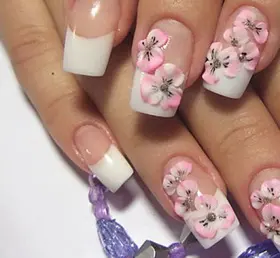
nnNail extensions trace their origins back to the 1950s when an unnamed dentist reportedly damaged a nail and tried to repair it using a paper form and acrylic, a material then used for dental prosthetics. The accuracy of the story is uncertain, but it marks the start of a new era in cosmetology—the era of nail extensions.nnNail extensions can be created using various materials: gel, acrylic, silk, linen, and even crystal. The choice of material determines the extension technique and the final cost. Acrylic and gel are the most popular options today. During the extension process, so-called tips—plastic nail extensions—or special paper forms with a Teflon coating are used. The technician determines the type of extension based on the condition of the nails, their shape, and the client’s preferences. Let’s take a closer look at each material.nnAcrylic is a durable material ideal for people who lead an active lifestyle and have naturally strong, healthy nails. Acrylic can last up to four months, which makes it a popular choice for toenail extensions since toes generally need fewer touch-ups. Acrylic can be applied to very short nails and is relatively easy to repair. However, it is not recommended for people undergoing certain medical treatments such as some antibiotic courses or chemotherapy, because those treatments can make acrylic nails more likely to lift. Acrylic also loses shine when exposed to acetone-based products, and the material gives off a distinct odor until the nails fully harden in the open air.nnGel works better for people with thin or brittle nails because it is a softer material. Gel looks very similar to a natural nail, adheres well, and keeps its shine. The gel extension process is more labor-intensive and requires a UV lamp to cure the product. If nails are especially thin, the gel application can cause discomfort or a heat sensation during curing.nnIf you decide to get nail extensions, consider your personal preferences, any allergies to nail products, and a specialist’s recommendation to choose the material that best suits your natural nail plate. Nail extensions are generally not recommended during pregnancy.nnThe nail extension process consists of several stages: n1. The shiny surface layer of the nail is removed, and the nails are treated with an antiseptic.n2. Tips are selected and attached to the nail, after which the extension material is applied.n3. Once the nail is prepared, it is degreased and filed to achieve its final shape. A topcoat is then applied to provide smoothness and a natural shine. Sculpting all nails takes about 2-3 hours.n4. After sculpting, nail polish is applied. Polish adheres much better and lasts longer on artificial nails than on natural ones.nnIn addition to the extensions, nail design is commonly offered.nnAquarium Design. This style is popular among fashion-forward clients. It gets its name from the glass-like look it creates: the artwork appears encased under a clear layer. Materials used in aquarium design include foil, rhinestones, dried flowers, gels, and paints. A design is applied to the extended nail and then covered again with the extension material.nnArtistic Painting. This can be done on both extended and natural nails. Technicians paint designs onto the nail using fine brushes, needles, and special paints. Designs range from tiny motifs to full miniature paintings.nn3D Nail Design. You can achieve this either by sculpting decorative elements separately and attaching them to the nail, or by building a three-dimensional design directly on the nail using acrylic powder and gel. Another trend is Nail Piercing. Piercing is done on artificial nails with a special drill, and rings, chains, or pendants are used as embellishments.nnArtificial nails can last a long time with regular maintenance and a proper application. Your natural nails won’t necessarily be damaged; they may even become stronger and smoother, depending on how the extensions are applied and removed. A lot depends on the quality of the removal process.nnWhen removing acrylic nails, the free edge is trimmed, and the nails are soaked in a solution that dissolves the acrylic. For gel nails, specialized tools and files are used, and the procedure should be done by an experienced technician. If a gel nail breaks, it typically must be completely removed, unlike many acrylic repairs. Do not attempt to remove extensions at home, as improper removal can severely damage the natural nail and thin the nail plate. When having nails removed at a salon, the technician will usually apply a restorative treatment. After removal, natural nails will need intensive care, so consult a technician about appropriate recovery products.nnOnce you have beautiful, long nails, remember they require careful handling and timely maintenance. Avoid subjecting your nails to heavy mechanical stress, do not file them with metal files, and steer clear of open flames!