
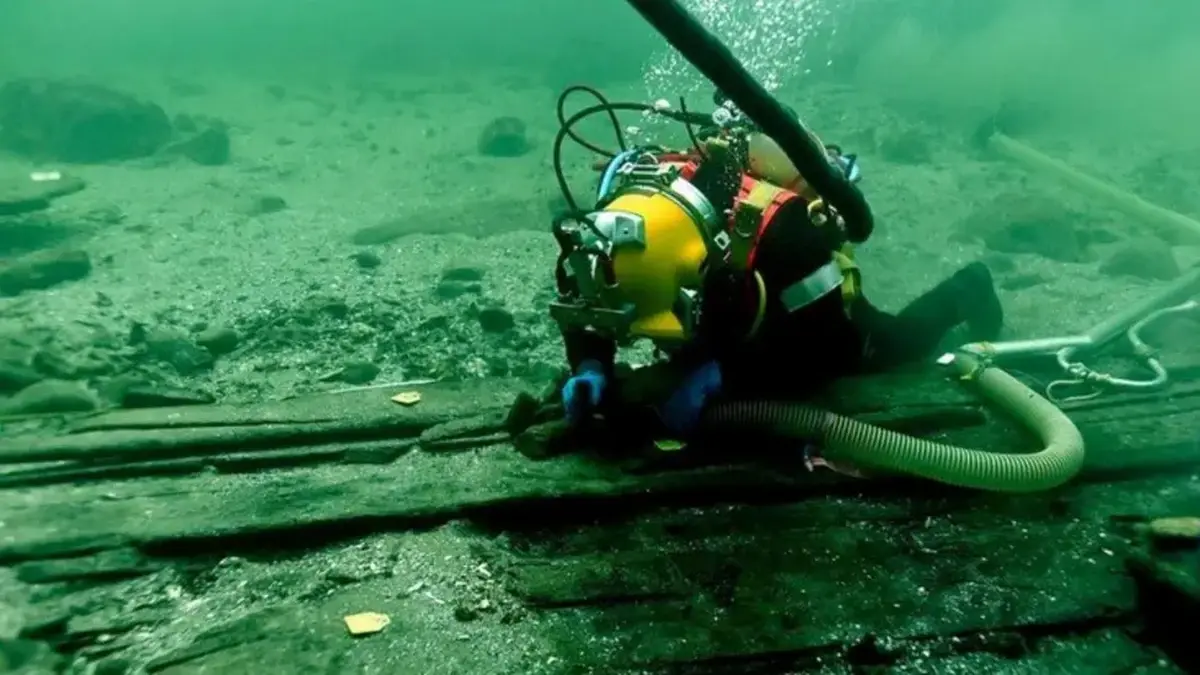
 The medieval cargo ship, known as a cog, is the largest vessel of its kind ever discovered in the world. from the Viking Ship Museum, who stumbled upon the ship, have named it Svælget 2, after the strait where it was found.
A cog, or cogge, is a medieval single-masted deck ship with a sturdy hull, high sides, and square sails. These features made the ship remarkably stable. Cogs were used as cargo, trading, and military vessels.
Experts believe that the , measuring 28 meters long, 9 meters wide, and 6 meters high, could carry up to 300 tons of cargo.
What Did the Researchers Report?
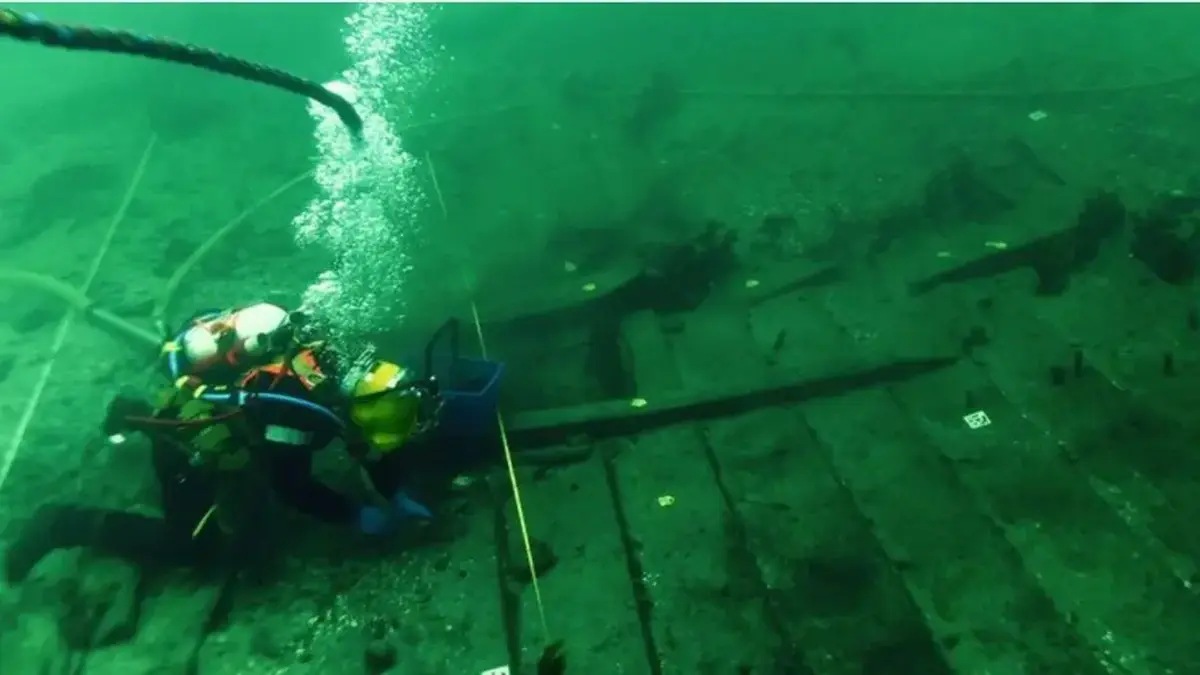
Interestingly, the team discovered the ship in the strait between Denmark and Sweden while conducting a seabed survey ahead of the construction of a new district in the Danish capital.
The Svælget 2 had lain at a depth of 13 meters for centuries, cleverly hidden from the elements that typically destroy ships near the coast.
To preserve the integrity of the sunken vessel, archaeologists used specialized “underwater vacuum cleaners” to remove centuries-old layers of sand and silt.
Experts have dated the ship to the year 1410. It was likely built in the Netherlands using timber sourced from an area that is now part of modern-day Poland.
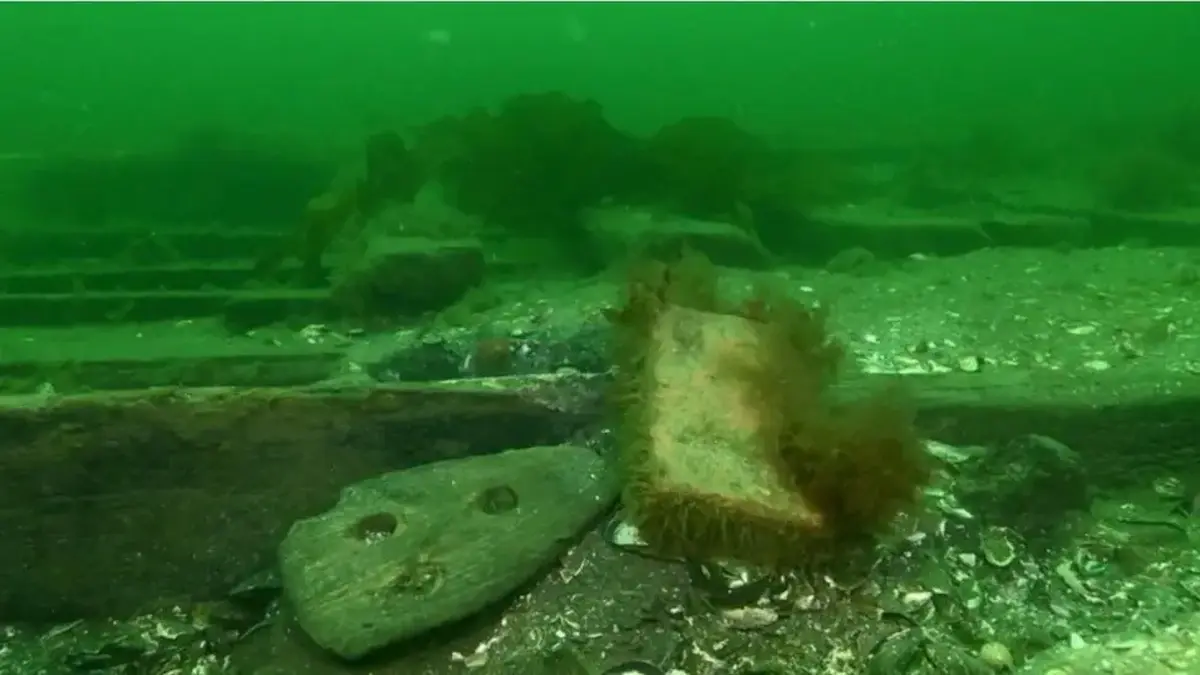
Archaeologists assert that the remains of the ship are exceptionally well-preserved. The good condition of the vessel provides a unique opportunity to study its construction in detail and learn more about medieval sailing ships of this type.
Marine archaeologist Otto Uldum, the excavation leader, described this discovery as a “landmark milestone” for scientists, as reported by BBC. The scholar noted that this enormous ship offers “a unique opportunity to learn more about both its construction and life aboard large medieval trading vessels.”
Interestingly, in the galley, which was built from bricks and tiles, archaeologists found bronze cooking vessels, ceramic bowls, and remnants of fish and meat.
According to the researchers, Svælget 2 was likely used for trading everyday goods. “Shipbuilders aimed to construct the largest possible vessels to transport bulky cargoes—salt, timber, bricks, or staple food products.”
The researchers believe that this find will help them gain new insights into maritime technologies and the medieval trading networks of Northern Europe at that time.
Photo: VIKING SHIP MUSEUM