
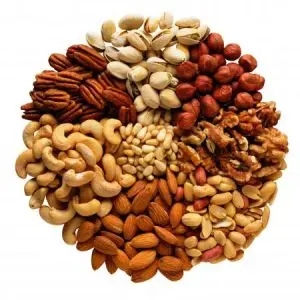
Nuts are incredibly good for your health. Although they’re calorie-dense like many other foods, they don’t necessarily lead to weight gain and they supply all three macronutrients—protein, fat, and carbohydrates—along with a wide range of vitamins and minerals. Let’s take a closer look at some common types of nuts.
Walnuts
Walnuts are often considered the healthiest of the common nuts. They contain vitamins A, B1, B2, E, PP, and C, as well as iron, cobalt, zinc, potassium, magnesium, calcium, iodine, and phosphorus. Walnuts are recommended for people with high blood pressure and anemia. They support the immune system and are useful for pregnant women, nursing mothers, and older adults. Walnuts also help recovery after surgery or illness. The husk of unripe green walnuts can be used to treat certain skin conditions. Store walnuts dried to preserve their qualities. A typical daily serving is about five walnuts.
Peanuts
Peanuts are rich in protein, vegetable oils, folic acid, amino acids, and vitamins C, A, D, E, K, B1, B2, and PP, along with sodium, calcium, potassium, magnesium, phosphorus, iron, and zinc. Peanuts benefit the nervous system, heart, liver, and other internal organs. They can help lower cholesterol levels and promote cell growth and renewal. Peanuts are particularly useful for reducing fatigue and easing insomnia, and they can support memory, attention, and hearing. Regular consumption of peanuts may reduce the risk of cardiovascular disease.
Almonds
Almonds provide B vitamins and vitamin E, protein, iron, zinc, and roughly 40% of daily calcium and magnesium needs, with more phosphorus than most other nuts. Almonds support metabolism and help nourish skin, hair, and teeth. They aid internal cleansing, can improve vision, and stimulate brain activity while being gentle on the throat. When combined with sugar, almonds are sometimes used to help with asthma and intestinal ulcers. The main contraindication is a weak digestive system, as almonds can be hard to digest for some people.
Hazelnuts
Hazelnuts contain fats, protein, carbohydrates, mineral salts, and several vitamins. Calorie for calorie, hazelnuts are roughly three times as caloric as bread, eight times as caloric as milk, and even more caloric than chocolate. Hazelnuts are recommended for people with cardiovascular disease, anemia, varicose veins, enlarged prostate, trophic ulcers of the lower leg, and capillary hemorrhages. They can be suitable for people with diabetes because of their relatively low carbohydrate content, and they’re often tolerated on strict diets without causing weight gain. Hazelnuts also contain compounds that help remove toxins from the body, particularly from the liver, and eating them can support the immune system.
Pistachios
Pistachios contain vitamins A, B1, E, and iron. They have a toning, invigorating, and strengthening effect on the body, and they can help lower heart rate in people with certain heart conditions. Pistachios support brain and liver function. They are well suited to people who do heavy physical labor and to those recovering from serious illness. Pistachios may also help with hypertension, chronic anemia, tuberculosis, and thrombophlebitis.
Pine Nuts
Pine nuts meet daily needs for amino acids and trace elements and provide substantial amounts of vitamins A, E, D, B1, B2, B6, B12, C, and PP, along with fiber and fructose. They boost overall performance and strengthen the immune system. Pine nuts are useful for people with high blood pressure, cardiovascular disease, and gastrointestinal disorders. They help normalize blood composition, regulate metabolic processes, and can support treatment for neuroses, respiratory diseases, and liver conditions, as well as during therapeutic fasting and Lent. Pine nuts are beneficial for many types of internal inflammation.
Cashews
Cashews have only recently become common on the market. They contain vitamins A, B1, B2, B3, and C, along with iron, calcium, magnesium, phosphorus, and nicotinic acid. Cashews can help combat anemia and depression, support metabolic balance, normalize heart function, and lower blood cholesterol. It can be helpful to eat cashews with mineral water.
Interesting Facts About Nuts
- The fruit of one palm, the tagua nut from Latin America, is used as an ivory substitute for chess pieces, piano keys, vases, and perfume bottles.
- A person with a nut allergy can die from a tiny crumb of nut; 90% of fatal allergic reactions are caused by nuts.
- Moldy peanuts can contain fungal toxins that harm weakened organs; this illness is often difficult to diagnose.
- In America, 40 million people eat peanut butter daily. It takes 548 peanuts to make 350 g of peanut butter.
- In India, people drink feni – a spirit made from coconuts or cashews – during holidays.
- During World War II, doctors in Fiji discovered that young coconut water could be used as a substitute for blood plasma.
- In England, some people believe that throwing a hazelnut into the fire while making a wish will make it come true.
- There are 17 varieties of walnuts, and all of them are edible.
- Peanut butter’s high smoke point makes it useful for cooking on submarines.
- The Chinese consume 40% of the world’s chestnut harvest each year.
- In Ukraine, cashews, pine nuts, almonds, and hazelnuts are the most popular nuts.
- The body can absorb only about 100 g of nuts at a time.
- In India, it is customary to break a coconut overboard for good luck.
- One walnut tree can yield nearly 500 kg of nuts.
- In America, 170 tons of peanuts are used daily in candy production.
- In some magical rituals, a walnut with a live spider inside is believed to help wishes come true.
- Soak dried walnuts in salted water for 5–6 days. To remove almond skins easily, place the almonds in boiling water for 1–2 minutes, then rinse with cold water and dry.
