
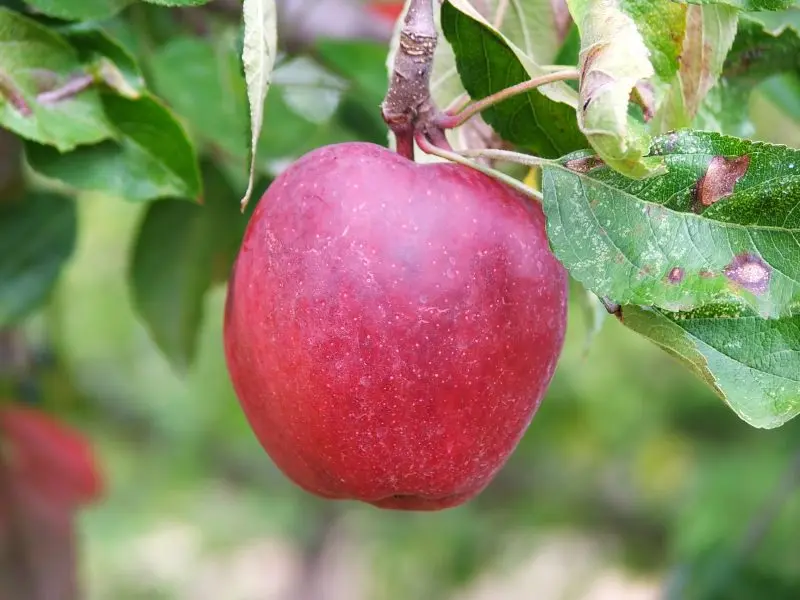
The leaves are turning crimson, winter apples are glowing, and pears gleam with a delicate sheen. It’s a pleasure to admire the fruits of your labor.
Of course, you don’t harvest fruit until it develops the color, aroma, and flavor typical of its variety. But don’t wait too long: delaying apples by 3 to 5 days can cut their storage life by two to three months or more.
That’s why fruit meant for immediate consumption or short-term storage and fruit from winter varieties intended for long-term storage or transport should be harvested at different stages of ripeness.
Here are some signs that help gardeners know when to harvest. First and foremost is color—the hue typical of the variety. Fruits usually transition from green to yellowish-green, then yellow, and in some varieties to golden-orange or red. They should also have developed the flavor characteristic of that variety.
As with apples, it’s important to harvest pears at the right time. There’s an old saying: in the fall a farmer harvests with one hand and sows with the other.
We’ve previously discussed how to plant seedlings. Let’s quickly revisit some rules to avoid common mistakes.
First, don’t plant trees too close together. When they’re small the spacing may seem generous, but a few years later the canopies of closely planted trees will overlap. That reduces light inside the canopy and causes branches to grow upward. Fruit buds form on the outer edges of the canopy, which makes it hard to reach fruit at the top. Maintain the spacing recommended for each species and variety of fruit tree.
Gardeners often make mistakes when applying fertilizers. Excessive organic fertilizer can cause lush vegetative growth in young trees, which slows fruiting. High doses of chemical fertilizer can raise the salt concentration in the soil and harm the trees. Small doses, especially on poor soils, do little to improve growth and fruiting. For these reasons, adhere to the optimal fertilizer dosage for the soil composition of each plot. Less fertilizer is needed for fertile loam, while sandy and clay soils require more.
Poor fruit set in apple, plum, and cherry trees is often due to planting incompatible pollinator varieties. The trees may bloom heavily but produce little or no fruit. Plant a compatible pollinator with a similar bloom time next to single-variety trees. If space is limited, graft pollinator scions into the canopy of the main variety.