
 According to an expert, robotic police officers will be patrolling our streets by 2031. These real-life “Robocops” will be capable of detecting, pursuing, and apprehending suspects, said Professor Ivan San from the University of Delaware in an interview with the online portal Daily Mail. He explained that police forces worldwide are already facing challenges in controlling rising crime rates and organized criminal networks due to personnel shortages.
Humanoid robots are already in use in China, and Professor San anticipates that this concept will soon take root in other countries as well. He predicts that by 2031, robotic police will be able to recognize human faces to identify criminals, pursue them, and make arrests. Today, , and this technology is continuously improving.
Technical Capabilities and Effectiveness
While robots will likely need a human partner, they will become indispensable in dangerous situations. According to the professor, their capabilities are virtually limitless: for instance, during a robbery, they can take complete control of the situation.
The expert provided impressive examples of the technical advantages of machines:
- They can pursue a suspect for five miles without feeling fatigued.
- During a chase, their systems automatically scan biometric data and physical characteristics of the individual.
- Artificial intelligence can determine from a distance of 200 meters whether a suspect is armed.
A regular officer cannot achieve such feats. Despite the complex legal and ethical issues involved, the professor believes that the emergence of robotic police is inevitable. “The use of force and high-speed pursuits is not a fantasy; it’s a reality that is approaching,” he emphasized. The expert predicts that these robots will take on direct law enforcement duties within a few years.
AI at the Service of Officers
Alongside robotic partners, regular police officers are likely to receive helmets equipped with AI support to enhance their effectiveness. For example, in critical situations, artificial intelligence will assist officers in making life-or-death decisions: whether to open fire or not.
At the same time, Professor San warned that before fully integrating “Robocops” into community life, numerous legal aspects and privacy issues must be addressed. This is particularly relevant to ethical challenges, as recent studies have shown that , creating new risks in law enforcement. However, experts emphasize that if it is properly controlled and used in accordance with ethical standards. Currently, Professor San is conducting a global survey among police officers, including in the UK, to gauge their attitudes toward AI technologies.
As part of the study, officers are shown two types of devices. The “service” robot specializes in patrolling and interacting with citizens, while the “crime fighter” model is capable of pursuing and physically apprehending suspects.
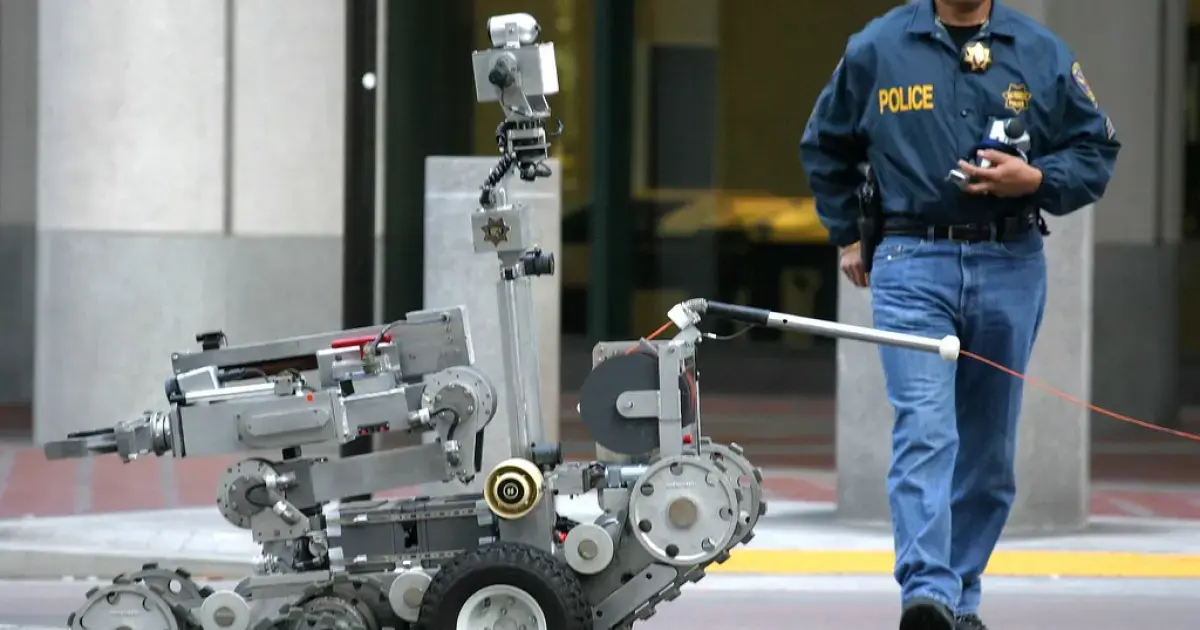
Professor San expects that in Western countries, including the UK, officers will prefer the “fighters.” “Combat robots can minimize the danger and unpredictability of risky situations,” he noted. The expert drew an analogy with bomb disposal robots, which are already saving lives, adding that one such machine can replace three officers, as it does not require rest or breaks.
A Global Trend: From China to the UK
Professor San bases his insights on research published in the Asian Journal of Criminology. Although the survey was conducted among Chinese officers, it reflects a broader trend of technological transformation. China, the USA, Singapore, and the UAE are already piloting robotic systems with varying levels of autonomy. While their current use is often “symbolic,” the situation is expected to change rapidly.
Examples of robots already in operation worldwide:
- The Xavier robot in Singapore patrols public spaces, detects “undesirable social behavior” (such as smoking), and relays information to officers.
- AnBot in China is integrated into security systems at transportation hubs for monitoring and identifying individuals.
- Robots in the UAE perform service functions, greeting tourists and providing multilingual assistance during large events.
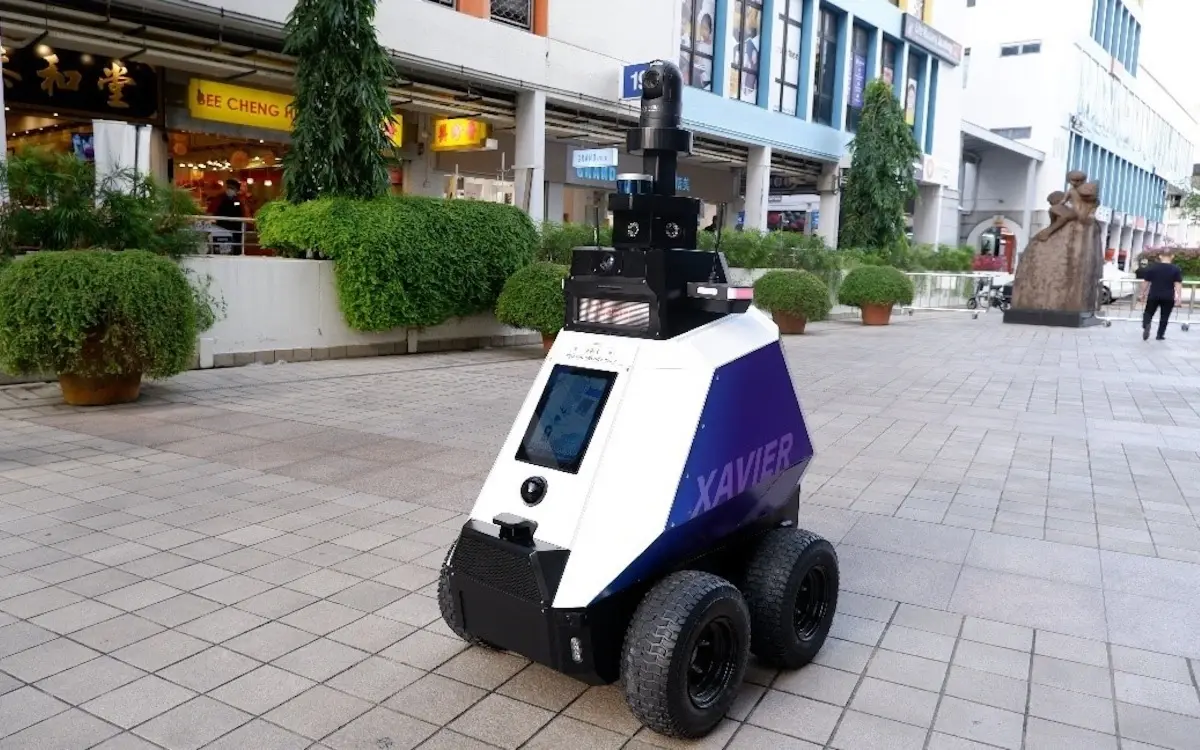
Robot Xavier in Singapore
Officers support “combat” robots because they find them useful for gathering information and apprehending criminals, significantly enhancing safety for individuals interacting with armed suspects. Professor San also presented these points at the AAAS conference in Phoenix.
British police are already actively employing a wide range of artificial intelligence technologies. Research shows that by utilizing:
- Mobile units with real-time facial recognition.
- Tools for detecting deepfakes.
- Instant translation and transcription services.
- Rapid analysis of video from CCTV and media files.
- Smart audio and video editing tools.
- Digital forensic analysis and automation of processes.
- Smart control rooms with AI sorting of calls and digital chatbots.
The implementation of police robots and AI support is becoming a true new frontier in the transformation of global policing. This will significantly enhance officer safety by shifting the most dangerous tasks to machines.
Photo: Unsplash
