
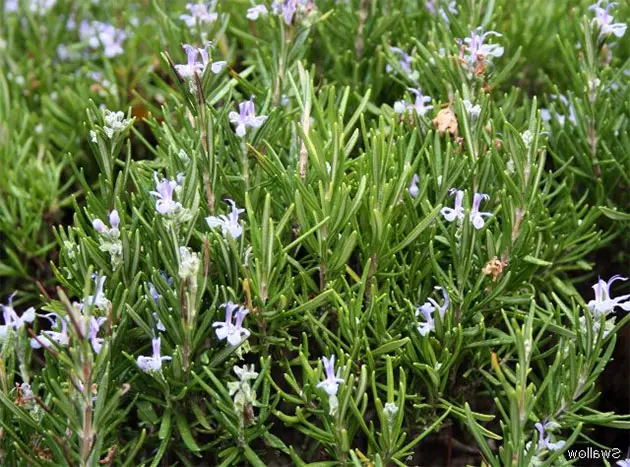
Few plants were as renowned in antiquity or as popular in the Middle Ages as rosemary. The Romans dedicated it to the goddess Venus and used it to decorate their homes. Many superstitions surrounded the herb: people believed rosemary could bring joy and happiness, ward off bad dreams, and — most famously — preserve youth.
At the courts of French and Italian kings, gardeners harvested young sprigs with pale lilac or blue flowers, bundling them for queens and ladies-in-waiting to use in rosemary baths and medicinal extracts. The Louvre called it “Magical Rosemary,” and court gardeners cultivated potted plants up to six feet tall.
Rosemary blooms from February through May and, with careful tending, can flower again in September. Its pleasant, sweet aroma comes from its leaves, which are rich in essential oils and resins.
This drought-resistant, heat-loving plant is also cultivated in our country — in Crimea, in many parts of the Caucasus, and in some areas of Central Asia. There, rosemary can survive the winter outdoors. When temperatures drop below 50°F (10°C), its above-ground parts often die back, but they regrow in spring. In northern regions, it is dug up for the winter.
Rosemary is grown for medicinal use, as well as for use as a spice and as a decorative houseplant. The leaves and the tips of the shoots are harvested during flowering for medicinal preparations.
In modern herbal practice, rosemary is used as a digestive aid and a nerve tonic, and as a stimulant for weakness and exhaustion after serious illness or prolonged physical or mental strain. Rosemary essential oil is used topically for rubs in cases of convulsions, paralysis, and dyspepsia.
Here’s how to prepare a rosemary infusion:
Steep 2 teaspoons of dried leaves in 200 mL of boiling water. Let it sit to infuse, then cool and sip it throughout the day.
Traditional Bulgarian medicine recommends rosemary infusion for internal use in cases of epilepsy, to regulate menstrual cycles, for jaundice, and to ease menopausal symptoms.
Rosemary contains small amounts of alkaloids that can temporarily raise blood pressure and strengthen heart contractions, which should be considered before taking its decoctions during periods of fatigue. It stimulates the appetite, cleanses the gastrointestinal tract, and helps regulate digestion. Folk medicine recommends rosemary decoctions for dropsy.
In many European countries, rosemary is a common culinary herb. Historically, people added it to salads and sauces. In the Middle Ages, they placed sprigs in cupboards and chests to repel moths, which is why people grew rosemary both outdoors and indoors.
Grow rosemary on your windowsill. This hardy plant withstands prolonged drought but needs frequent watering in summer for best growth. Propagate it in spring by taking cuttings from the tips of the shoots. Plant 1.5 to 2-inch (3.5–4.5 cm) cuttings in a nursery bed; they will root in about 3 to 3.5 weeks with regular moisture. Cover them with plastic wrap or jars to encourage quick rooting. Grow rosemary from seeds as an alternative; the seeds germinate easily. Use a soil mix of turf, leaf mold, and sand (4:2:1).
Move the plant to a balcony in summer. Bring it indoors before frost; sudden temperature changes can cause excessive leaf drop.
Prune the crown every early spring, or as early as mid-February.
Keep rosemary at a winter temperature between 54°F and 57°F (12°C to 14°C) to encourage abundant blooming in spring.
