
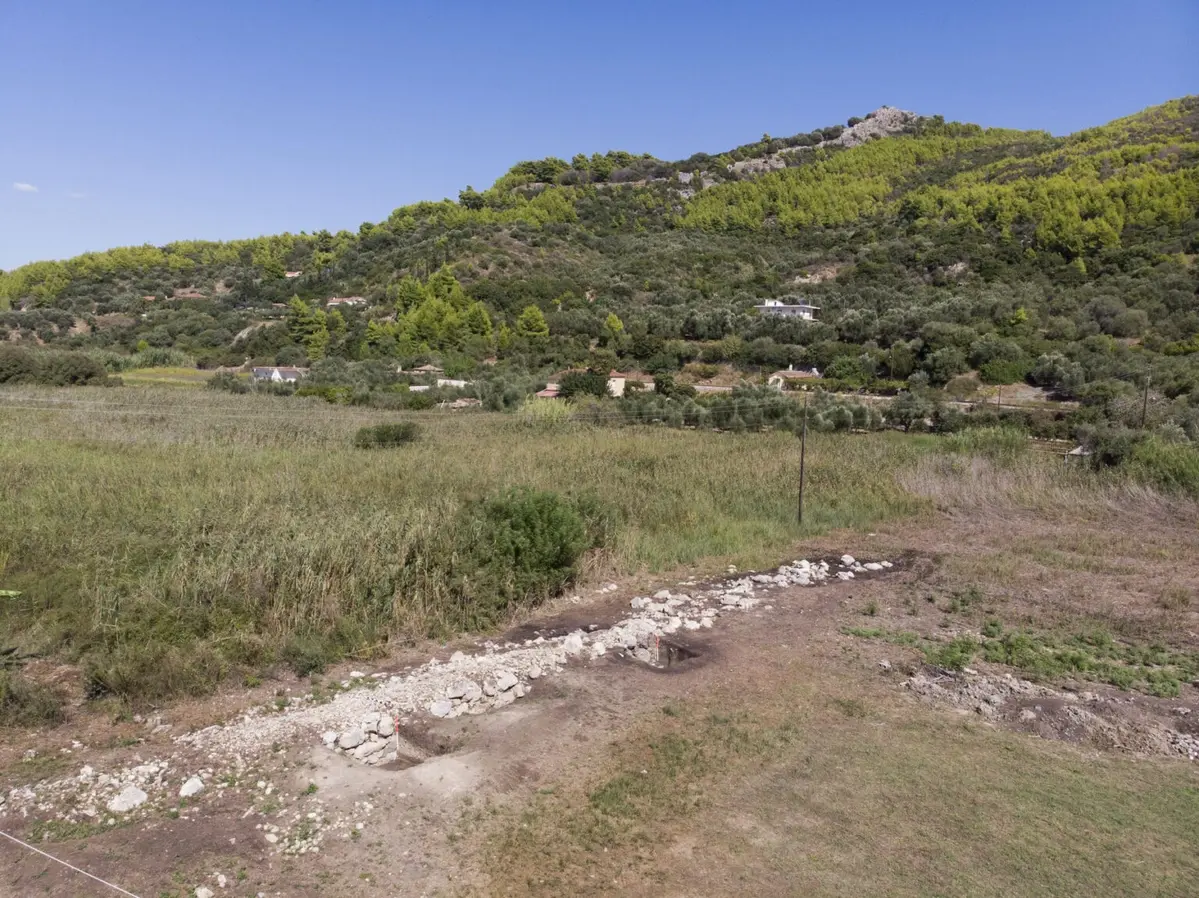
of the 6th-century BCE temple, now in their fifth year at the Kleidi-Samikon archaeological site in western Greece, have revealed a unique archive of bronze tablets.
Researchers usually call the ancient structure on the shore of the Ionian Sea the Temple of Poseidon. Early in the project, the team identified the building as the lost sanctuary of Poseidon of Samos mentioned in ancient sources. The Greco-Roman geographer Strabo wrote specifically about the sanctuary.
In earlier seasons of excavation, researchers from the Austrian Archaeological Institute, together with their Greek colleagues from the Ilia Antiquities Authority, made a number of remarkable discoveries at the site.
A temple with an unusual two-room layout
First, the team led by archaeologists Birgitta Eder and Erofili-Iris Kolia noticed the atypical layout for an Archaic-period temple. The building, measuring 28 by 9.5 meters, unlike many temples of the time, had two large independent rooms with a central row of columns running along the axis.
The researchers suggested that this distinctive architectural design reflected multiple functions the building performed in antiquity. One hall may have been used for rituals and ceremonies, while the other served administrative and archival purposes.
In previous seasons the team found a large inscription on a bronze plate and an almost intact marble perirrhanterion — a basin used for ritual purification before entering the sanctuary.
Traces of fire and a hidden archive
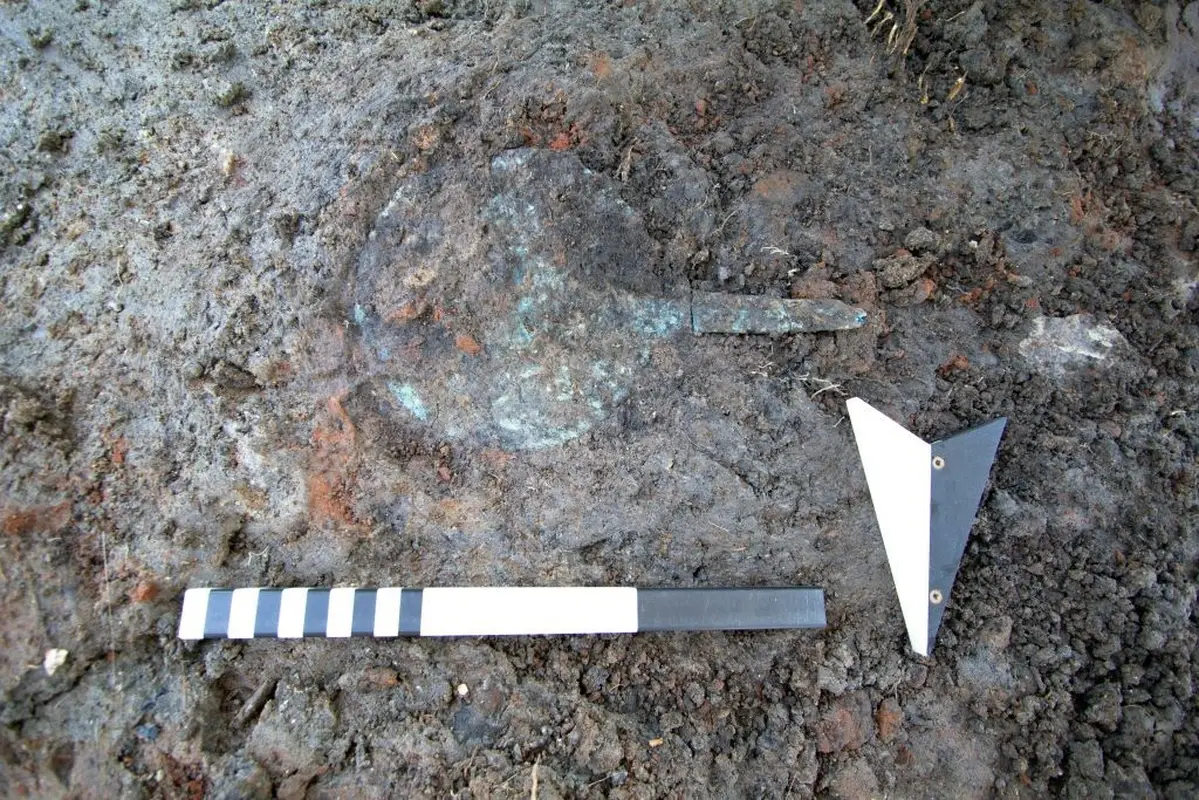
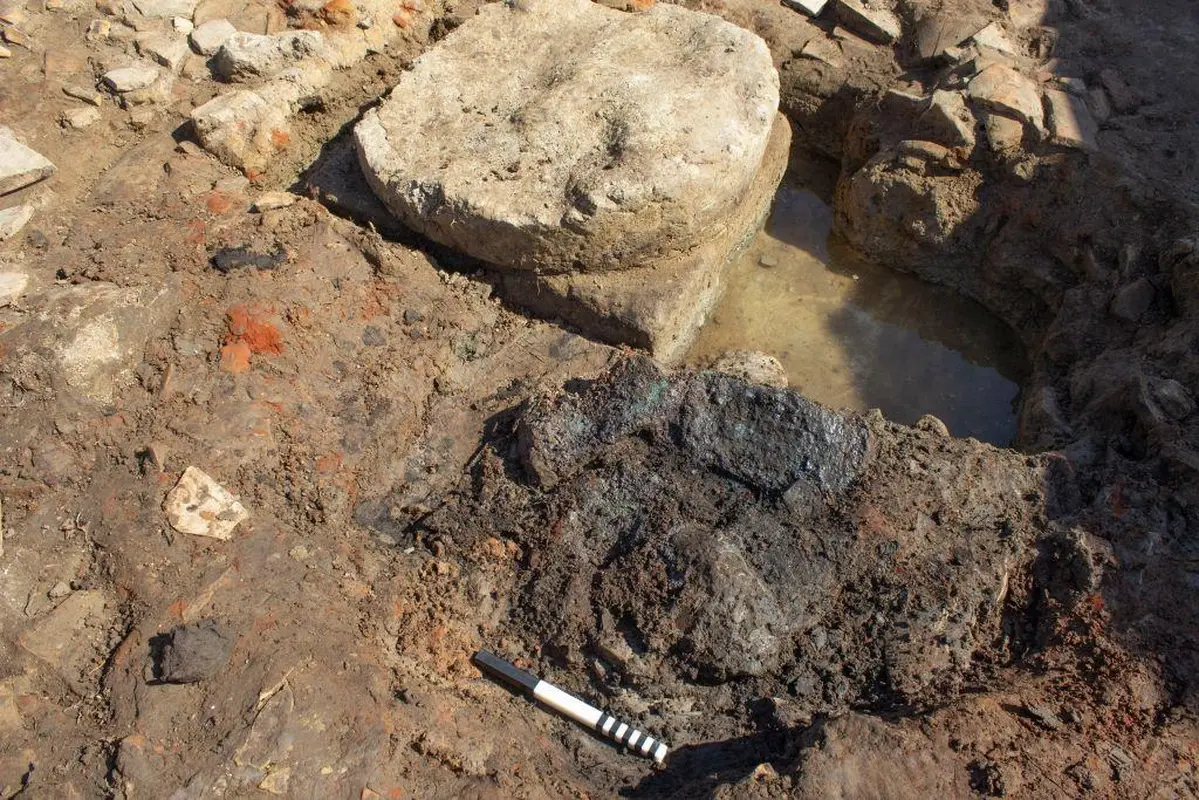
In the fifth year of excavation, archaeologists removed a thick layer of Laconian roof tiles that once covered the structure. Beneath those tiles they found signs of a destructive fire that likely caused the temple’s collapse in antiquity.
On the floor the team uncovered numerous , including a striking number of bronze sheets severely damaged by fire and groundwater. Despite their fragmentary condition, these metal artifacts are extremely valuable, Arkeonews reported in its coverage.
After analyzing the bronze tablets together with the previously discovered large inscription, the researchers proposed that this hall may have functioned as an archive where important documents — laws, treaties, dedications, and so on — were kept.
If this interpretation is confirmed, the Kleidi-Samikon temple would become an important example of how sacred spaces in Ancient Greece also served administrative functions.
Monumental decorative elements
Another remarkable find consists of three fragments of a large disk-shaped acroterion — an architectural ornament placed at the top of the temple roof. The acroterion, at least one meter in diameter, was painted black and red and featured multiple layered relief bands. Experts say this monumental decoration further confirms the sanctuary’s importance to the ancient Greeks.