
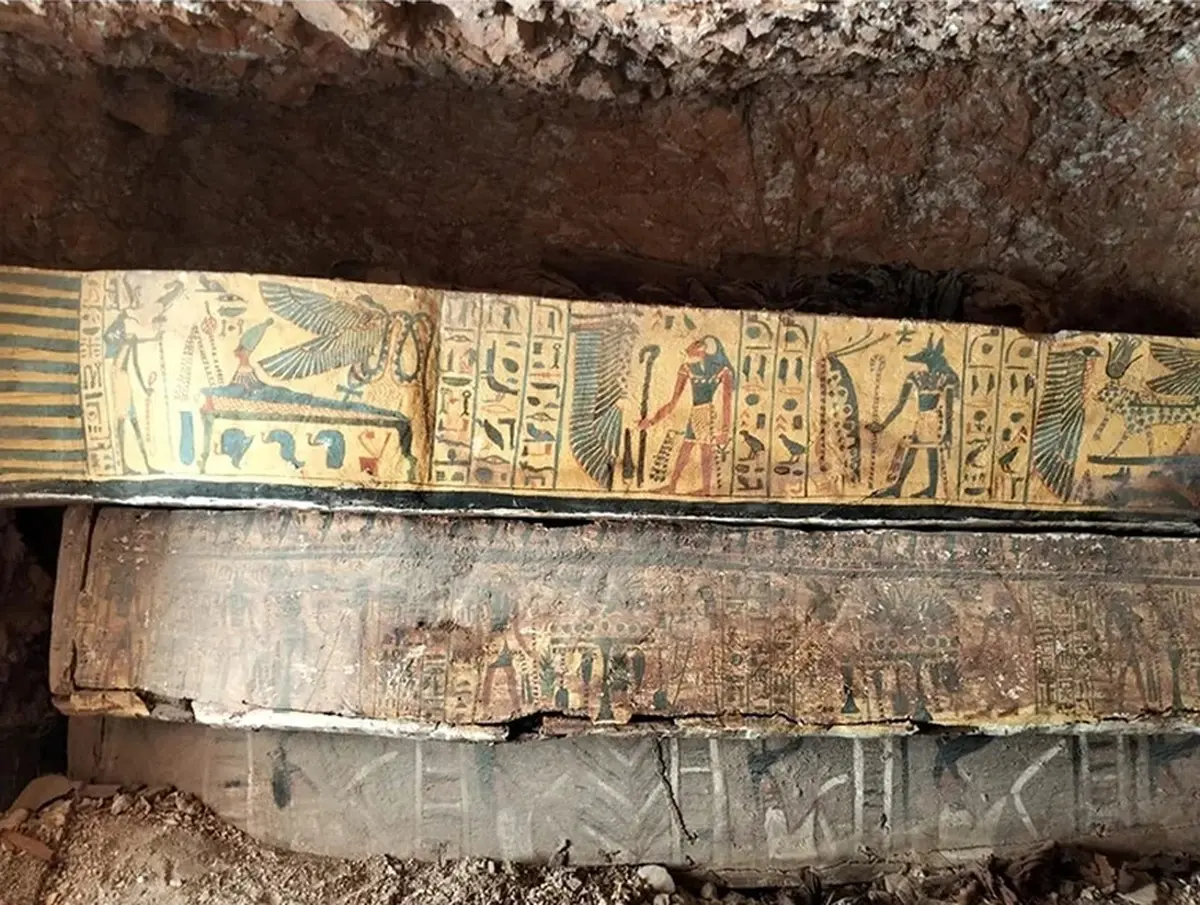
This remarkable funerary hoard, which researchers have dated to the Third Intermediate Period (about 1070–664 BCE), stands apart from most Egyptian burials.
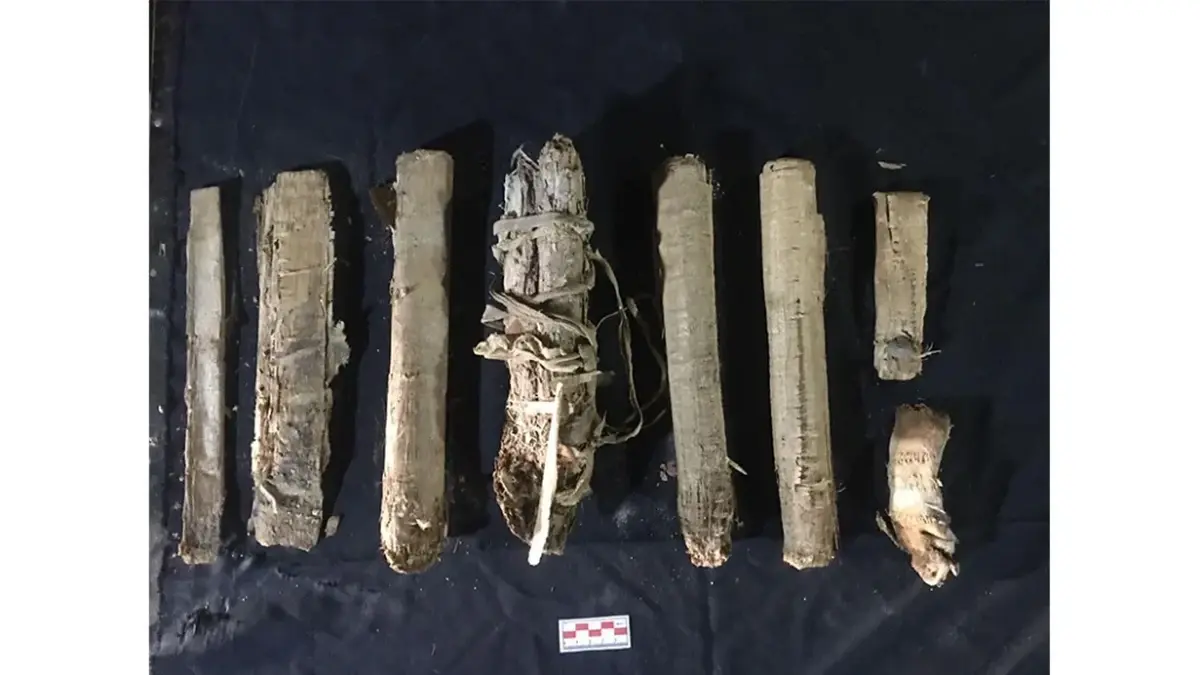
In , on the west bank of the Nile, archaeologists uncovered 22 brightly painted wooden coffins containing the mummies of women who bore the title “Chantress of Amun.” They also found eight rare sealed inside a ceramic vessel.
Egypt’s Ministry of Tourism and Antiquities announced the discovery after excavations by a joint mission of the Supreme Council of Antiquities and the Zahi Hawass Foundation for Archaeology and Heritage.
Archaeologists located the stash in the southwest sector of the courtyard of the tomb of Sennepa in the Qurna area — part of the vast Theban necropolis.
A carefully planned burial cache
The team found a rectangular chamber with and papyri carved directly into the bedrock. The niche appears not to have been the original burial place but a secondary cache where coffins were moved from other tombs.
The 22 painted coffins were stacked in neat tiers, with the lids placed separately — probably to maximize space. The arrangement points to a planned, controlled reburial rather than a hurried concealment.
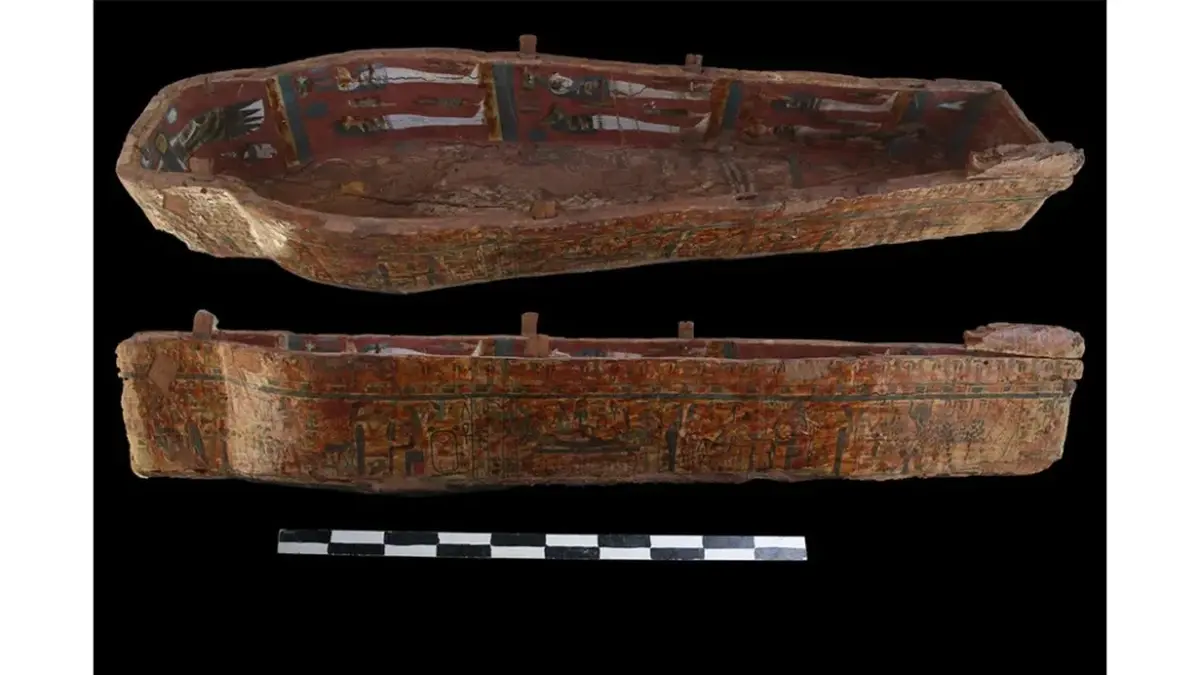
Mummified remains remained inside the coffins, which is especially important because many Third Intermediate Period burials were looted in antiquity. Most of the coffins lack the names of the deceased, but they do bear titles, with “Chantress of Amun” appearing most frequently.
Who were the Chantresses of Amun?
During the Third Intermediate Period, Egypt experienced political fragmentation after the decline of the New Kingdom. Thebes, however, remained under the influence of the powerful priests of Amun, Arkeonews reported.
Women holding the title “Chantress of Amun” played a central role in temple rituals. They performed songs and took part in ceremonial performances connected with the cult of Amun at the vast Karnak temple complex.
The fact that the coffins bear the women’s title instead of their personal names suggests that religious rank likely mattered more than family ties. The newly discovered cache offers rare material evidence of collective burial practices and sheds light on the social status of religious functionaries in Thebes.
A sealed archive
Archaeologists found eight papyri inside a large ceramic vessel, and several of the rolls were sealed with clay stoppers.
Experts have described the papyri as an informational treasure awaiting translation. If the seals indeed protected the texts from decay, the documents could shed unprecedented light on temple administration, funerary liturgy, embalming procedures, and related practices.
The find has prompted new searches
Along with the coffins and papyri, archaeologists recovered ceramic vessels likely used in mummification rituals. Such vessels typically held natron, oils, resins, or fragments of linen associated with embalming.
The presence of coffins, mummies, ritual vessels, and sealed papyri together in one chamber supports the idea that the burial was carefully organized.
Because the wooden coffins are fragile, archaeologists moved quickly to conserve the finds.
Excavations are ongoing. Archaeologists are now searching for the original tombs from which the Chantresses of Amun’s coffins were transferred.