
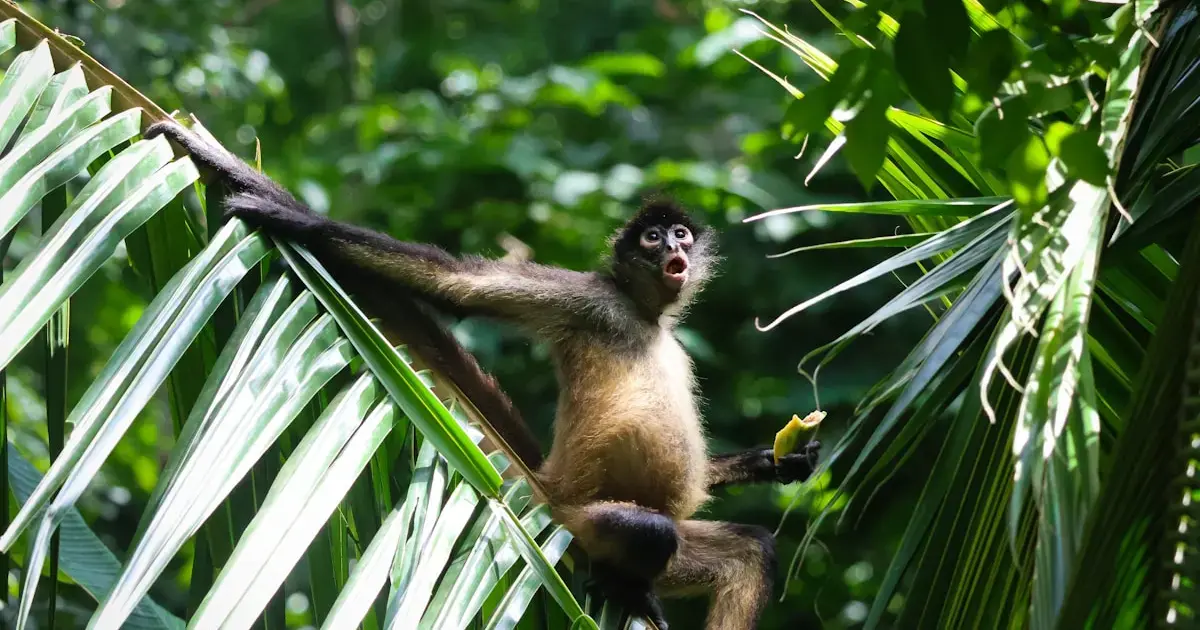
 For seven years, researchers observed Geoffroy’s spider monkeys on the Yucatán Peninsula in Mexico, uncovering a sophisticated system of exchanging “insider” information about food among these monkeys.
A team from Heriot-Watt University, the University of Edinburgh (UK), and the National Autonomous University of Mexico documented how individual monkeys moved between groups, sharing information about where to find the ripest fruit.
The observations by ecologists, zoo psychologists, and biologists shed new light on this species’ social behavior, where group members form small subgroups and later reunite in different combinations to share what they know.
The primates often banded together in subgroups of three or more to exchange information more effectively about the locations of trees bearing ripe fruit.
The study, published in npj Complexity, says the animals not only supplemented each other’s knowledge but also “combined information in such a way as to create new knowledge,” the authors wrote.
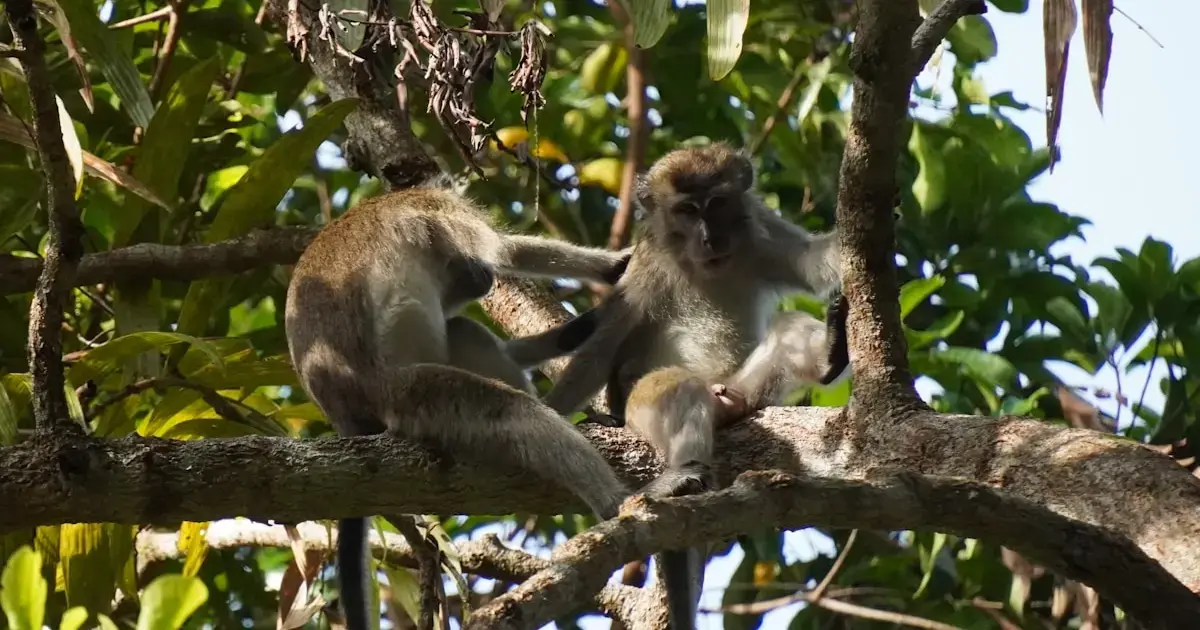
“For example, one group indicated the location of a food source, while another provided the timing of its fruiting,” the authors explained. One subgroup may never gather twice to search for food, The Guardian reported.
The team calls this a clear example of collective intelligence in the wild.
Dr. Matthew Silk, an ecologist at the University of Edinburgh, emphasized, “This is not random communication. It is a sophisticated system for exchanging insider information about where the best fruit trees grow in the forest.”
Silk said he and his colleagues tracked the movements of individual monkeys and mapped the core areas that each monkey knows well. “Some parts of the forest are known to several monkeys, like the most popular restaurant in town, while other areas are known only to one or two monkeys, like a hidden treasure,” he added.
Another co-author, Ross Walker, a graduate student at Heriot-Watt University, developed a mathematical model to analyze the system. He found an optimal compromise between monkeys staying together and spreading too thin. “It’s best when primates explore different areas but meet often enough to exchange the knowledge they’ve gained,” the researcher said.
Geoffroy’s spider monkey, or the black-handed spider monkey, is currently endangered. The researchers believe that this systematic searching for food helps these animals survive.
Photo: Unsplash