
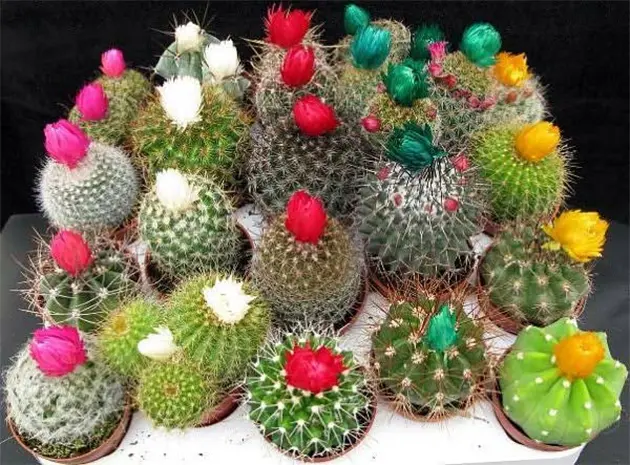
In spring, cacti should be repotted to replace compacted soil with a lighter mix.
Succulents—fleshy plants that include cacti—come from many regions, so they don’t all break dormancy at the same time. Cacti vary widely, and when they wake in spring, they’ll let you know.
When a cactus comes to life, it develops green tips. This signals that it’s time to repot. For this, you’ll need spacious pots and a suitable soil mix. A cactus repotted in spring quickly establishes itself in the new soil. However, there are exceptions: cacti that start growing in January or February should be repotted after they bloom.
Repotted plants should be kept in a shaded area for a week before being placed on a windowsill or balcony, where they should be watered moderately. During winter, cacti become unaccustomed to sunlight, and their skin becomes delicate and vulnerable. Therefore, they require some shade in their permanent location. If this isn’t provided, they may suffer sunburn. To create shade, you can use tulle or gauze.
A debate often arises among gardeners: to water or not to water? Cacti are drought-resistant, but during hot weather, they should be watered to prevent overheating. However, overwatering is a no-go. In damp weather, when the air is very humid, don’t water the pots. Warning: these plants suffer from being watered with hard water. Spraying them is especially harmful. Hard water leaves mineral deposits on the plant surface, which can block the stomata and interfere with respiration. Boil the water to reduce minerals. A significant amount of lime settles as scale on the walls of containers.
The temperature of the water is also important. For watering, the optimal temperature is 95–104°F (35–40°C), and for spraying, it should be even warmer.
At the beginning of summer, on dry sunny days, you can graft cacti when needed.
Start by washing your hands thoroughly, like a surgeon. Disinfect the knife blade with alcohol or cologne after each cut.
The rootstock—the plant to which the cutting is grafted—should be in a growth stage (about a month after repotting).
Cacti are grafted differently than fruit trees; there’s a specific technique involved. The first condition is that the diameters of the cambial rings of both the rootstock and the scion must match.
It’s significantly easier to graft small seedlings. Press the scion firmly against any point of the cambium. Dust exposed tissue with sulfur powder.
The success of the graft depends not only on the plant but also on the skill of the gardener. For instance, the ability to make quick and even cuts is crucial. Practice on carrots or potatoes first. Learn how to quickly make a tight bandage to prevent the scion from slipping out. The easiest way to do this is with rings cut from balloons.
After the operation, place the cactus in a warm, bright (but not sunny!) location. Water it moderately. Do not spray it, as water droplets that land on the cut site can cause rot.
After one and a half to two weeks, remove the bandage and place the cactus in its designated spot.
