
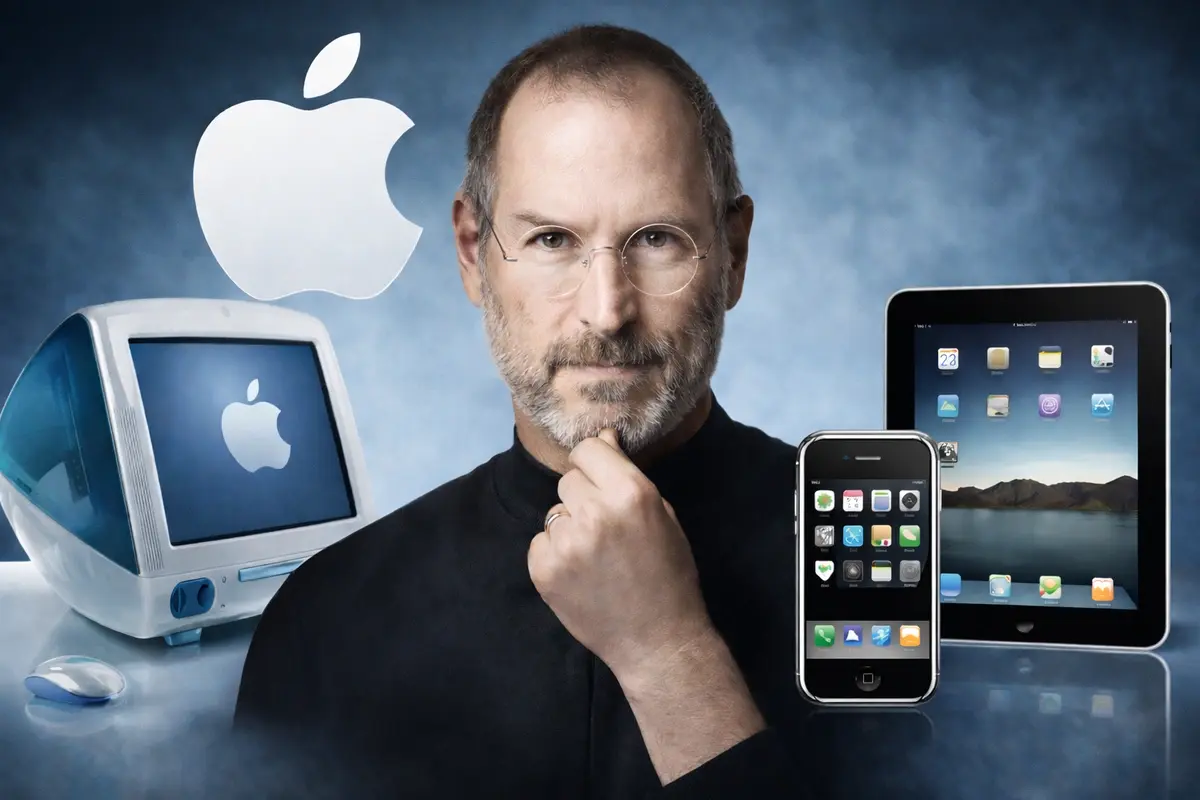
 In the American Business Hall of Fame, the founder of Apple stands alongside Thomas Edison and . An entrepreneur, inventor, and industrial designer who prioritized the “philosophy” of product development, he entered history as the creator of one of the first personal computers with significant commercial potential, a pioneer of the information technology era, and a charismatic leader known for his reputation as a “self-centered maniac of Silicon Valley.” His successes in organizing profitable projects and promoting cutting-edge technologies led commentators to recognize the minimalist billionaire as a “role model for all executives” while also dubbing him “the toughest boss in America.” A nonconformist, hippie, Zen Buddhist, pirate, tyrant, perfectionist, aesthetic, ascetic, and visionary who creatively imagined the future and actively influenced its formation—this was the essence of the controversial figure of Steve Jobs, who “rushed not to where the puck was, but to where it would be.”
The Rejection of Genius
The promising prodigy was born on February 24, 1955, out of wedlock to young scientists who were forced to give the baby up for adoption. His biological mother, Joanne Schieble, came from a Catholic family of German immigrants and was studying for her master’s degree at the University of Wisconsin, while his father, Syrian-born Abdulfattah (John) Jandali, worked there as a teaching assistant. To avoid upsetting her family, who disapproved of the relationship, the 23-year-old mother decided to hide her pregnancy, give birth to a private doctor in San Francisco, and place the child with a childless couple.
Steve Jobs’ adoption kept his whereabouts a secret from his biological parents, and he met his younger sister and the woman who gave him life only after the death of his adoptive mother—31 years later. He did not blame his biological mother and expressed gratitude for allowing him to come into the world, although the revelation that he had been abandoned at birth caused the sensitive and emotional Steve considerable distress. Maintaining friendly relations with Joanne Simpson and her daughter Mona (who became a writer), Steve ignored his father, who had left his biological mother.
Jandali left the university to open his own food establishment. Unaware of what his son had become, he boasted to his daughter that he had a café in Silicon Valley “where Steve Jobs himself used to come.” When Jandali accidentally learned that the generous tipper was actually his son, he unsuccessfully tried to contact him, but Jobs, who was already a millionaire at 25 and wary of blackmail, had no interest in meeting. “To me, these people are just sperm and egg donors,” Steve said of his biological parents, contrasting them with the people who raised him.
Steve Jobs’ Parents
The Garage Wunderkind
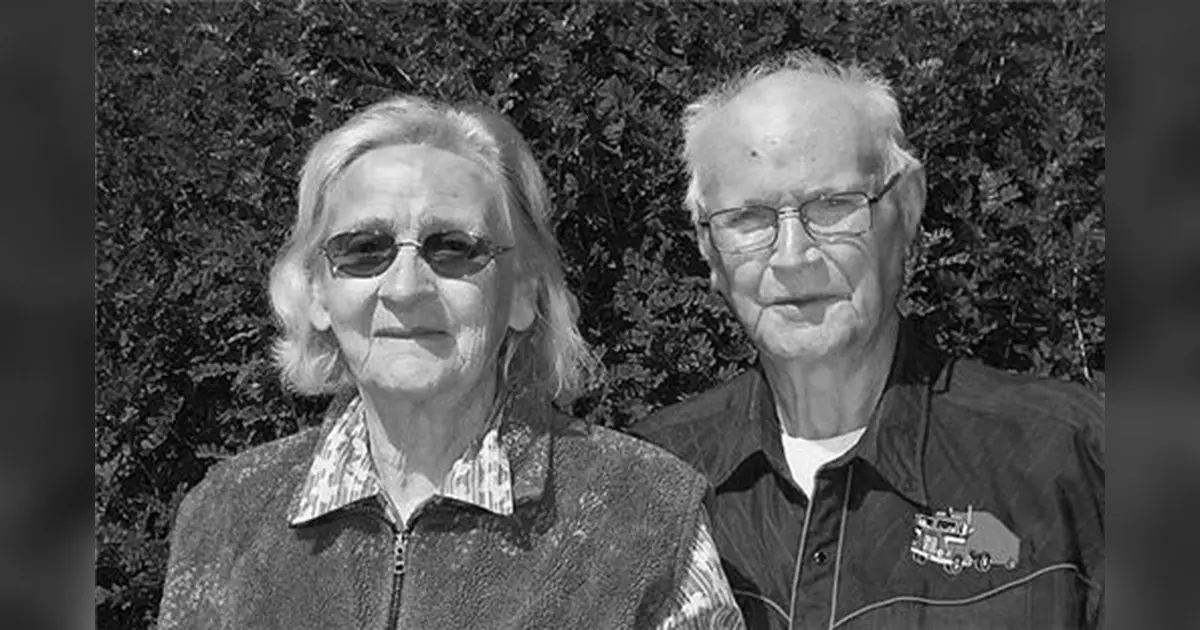
A condition set by the biological mother for the adoptive parents was that they had a higher education, but the lack of degrees in the adoptive parents, Paul Jobs and his wife Clara (née Agopyan), was compensated by a written commitment to pay for the boy’s college education. To earn money for Steve’s education, mechanic Paul Jobs worked at a financial company and repaired old cars in the family garage for sale. At the same time, he sparked his son’s interest in the trade, and through cars, Steve was introduced to the basics of electronics in his childhood. Clara Jobs worked as an accountant at a high-tech company in Silicon Valley.
In Mountain View, where the family moved with their two adopted children five years later from San Francisco, Steve took apart and reassembled televisions and radios, which interested him more than school. Teachers had to stimulate the student’s interest in learning with “bribes” of snacks and DIY kits. As a result of this approach, Steve excelled in exams so brilliantly that he was ready to be promoted from fourth grade straight to seventh. By his parents’ decision, he was enrolled in the sixth grade at Crittenden Middle School, but it turned out to be a poor choice due to the criminal neighborhood.
To avoid bullies, the Jobs family had to spend all their earnings on purchasing a house in the more affluent southern Los Altos. Subsequently, Steve attended Homestead High School in Cupertino, while his father found work as a mechanic at a laser manufacturing company in a town in Silicon Valley. The Jobs’ neighbor was a local engineer who introduced Steve to the research club at Hewlett-Packard. There, the young man saw a personal computer for the first time, and the programmable calculator impressed him greatly.
Hungry and Reckless
Club members worked on their own projects, and Steve was assembling a digital frequency meter. For the necessary parts, 13-year-old Jobs confidently approached the head of Hewlett-Packard: he simply called Bill Hewlett and, in addition to the parts, received a job on the HP assembly line after completing his first year at Homestead. At the same time, Steve delivered newspapers and worked in a warehouse at an electronics store. By age 15, the teenager already had his own car, which he upgraded with a modified engine and traded for a red Fiat.
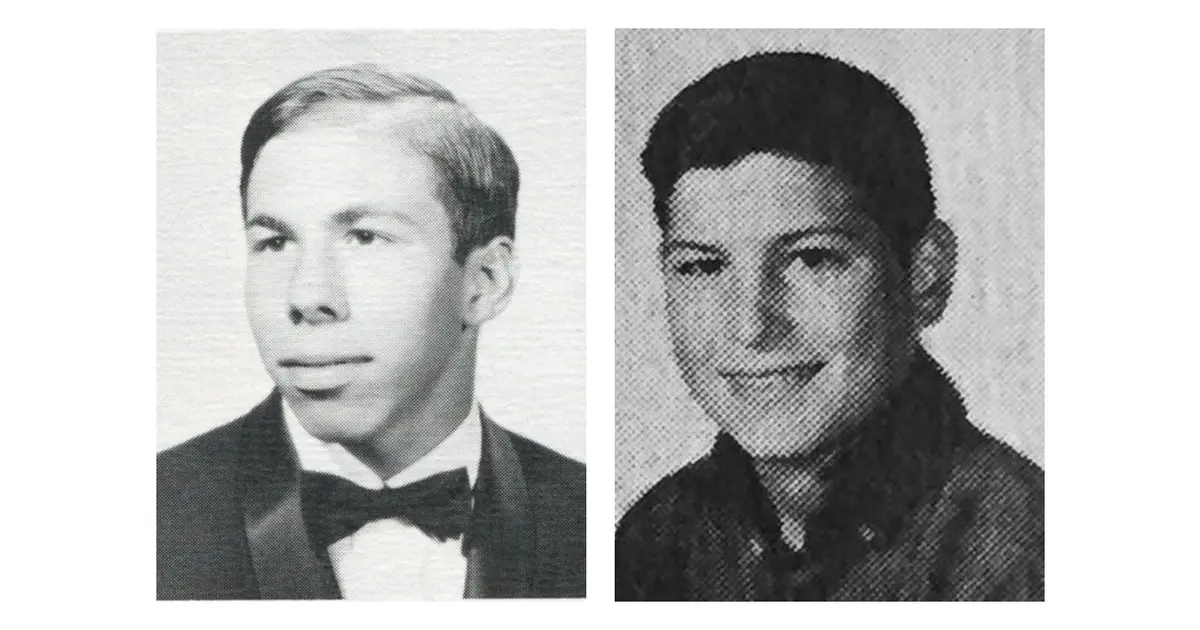
Soon, Steve Jobs began listening to Bob Dylan, became fascinated with , mingled with hippies, smoked marijuana, and experimented with LSD (later he referred to psychoactive substances as the most important experience of his life, associating it with “expanding consciousness” and seeking out creative people with similar preferences). In his youth, Steve met his future friend and partner in revolutionary developments, Stephen Wozniak, with whom he began collaborating in 1971 by crafting and successfully selling a homemade device that hacked phone codes.
After getting into trouble with the police over the homemade Blue Box device, the friends ceased their dubious business of making “blue boxes,” but that experience laid the groundwork for their future collaboration: inventor Wozniak would create brilliant innovations, while marketer Jobs would devise ways to present them on the market for maximum profit (not all the earnings were shared fairly, as Jobs considered his contribution to the joint business more significant). Steve believed that the secret to productive creativity was to “stay hungry, stay foolish.”
Stephen Wozniak and Steve Jobs, 1969
The Path to Success
After graduating from high school, Steve Jobs enrolled in the dream Reed College in Oregon in 1972, but left after just six months. With no other housing, the young man continued living with friends in the dormitory, and to make ends meet, he resorted to collecting bottles from and exhausting trips to a Krishna temple for free Sunday meals. In between food scavenging, Steve Jobs attended calligraphy courses, which would later prove useful in creating beautiful fonts for Apple.
In 1975, along with a friend from Reed College (and later the first employee of Apple), Daniel Kottke, Jobs traveled to India in search of spiritual enlightenment, returning as a Buddhist in traditional Indian attire with a shaved head. Zen Buddhism significantly influenced Steve Jobs’ aesthetic sensibilities, as he always leaned towards simplicity and minimalism in self-expression and design (most of his 43 patents were not for technological innovations but for design effects), and he relied on intuition when making decisions.
On April 1, 1976, 20-year-old Steve Jobs, along with electronics engineer and programmer Stephen Wozniak, founded a company to produce their own computers, Apple Computer (which operated from 1977). It is believed that without Jobs’ commercialization, Wozniak’s invention of the Apple I could have remained an unmarketable garage project. The Apple II computer was the first mass-market product of the company initiated by Steve Jobs. The name, which translates to “Apple,” was also a marketing move: it was non-threatening and ahead of competitors in the phone directory.
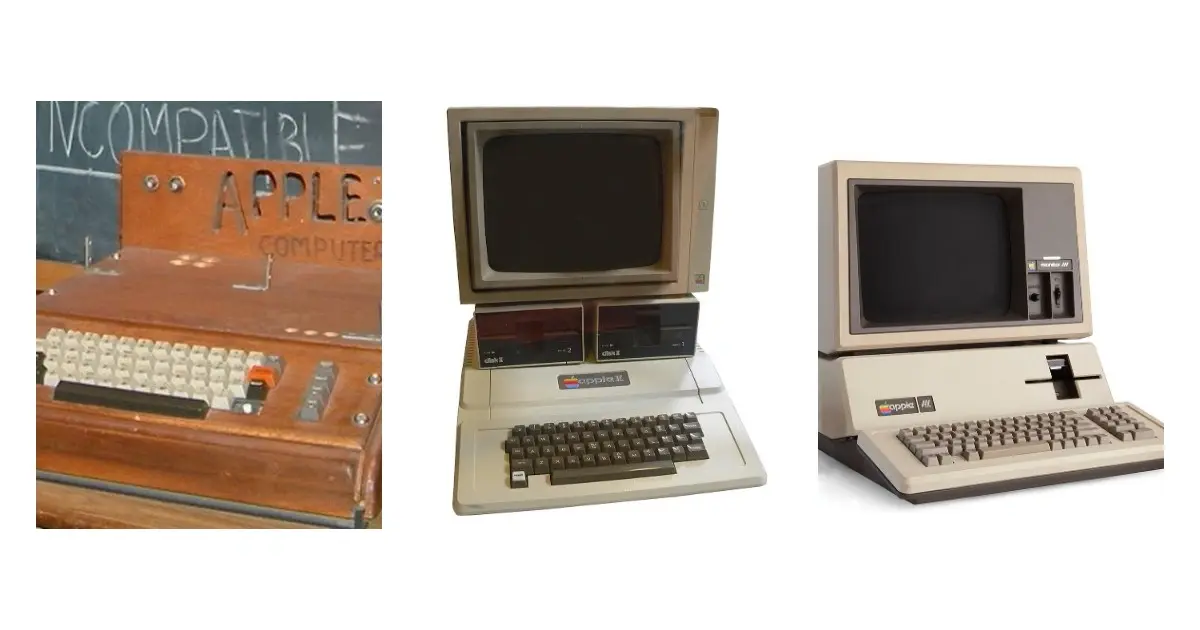
Apple Computers: I, II, III
Jobs’ Philosophy
At the time of the company’s founding, Jobs had worked for a while on a fruit farm in Oregon, where he was inspired by the fruit that symbolized inspiration, knowledge, and scientific progress on one hand (the first company logo depicted under an apple tree), while on the other, it was associated with simplicity and accessibility, appearing friendly and non-intimidating. Jobs’ idea was to create technologies that did not give the impression of complexity. The designer of the logo, Rob Janoff, “bit” the apple to distinguish the fruit from a cherry. There was also a play on words: bite (укус) sounds like byte, a unit of information measurement.
“Creativity is just connecting things,” Steve Jobs noted. “When you’re a creator and someone asks you how you did something, it makes you feel a little shy and even guilty because you didn’t really create anything; you just saw something and connected different pieces of your experience to synthesize something new. This happens because creative people have experienced and seen more than others, or because they think about it more.” Jobs primarily thought about the “philosophy” of creating new products, which mattered more to him than material rewards (it is known that he worked as Apple’s CEO for a formal salary of $1).
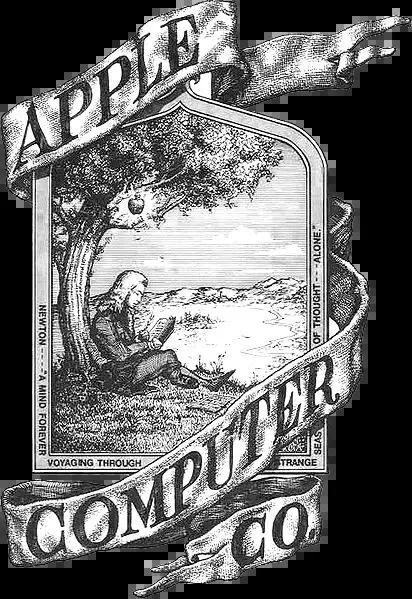
The First Apple Logo
Like other American computer companies of the time that sought to compete with the computer giant IBM, Apple was founded in a garage and attracted its first investors with a few available prototypes displayed against a backdrop of impressive surroundings made of empty boxes. Jobs was not averse to poaching specialists and technological piracy (he once said, “It’s better to be a pirate than to join the navy,” and even hung a black pirate flag over the main Apple building). Despite this, just ten years after its founding, the company had 4,000 employees, was valued at $2 billion, and was considered one of the leaders in the personal computer market.
The Greatest Business Achievement
When Jobs saw the commercial potential in a mouse-driven graphical interface, it led to the creation of the Apple Lisa and Macintosh computers. Becoming the CEO of Apple in 1981, for a long time, Steve Jobs held no managerial position in the company, although he retained full power and earned a profit of $486 million. After losing a power struggle to the board of directors in 1985, the founder of Apple left his brainchild and created a company to develop a computer platform for universities and businesses called NeXT.
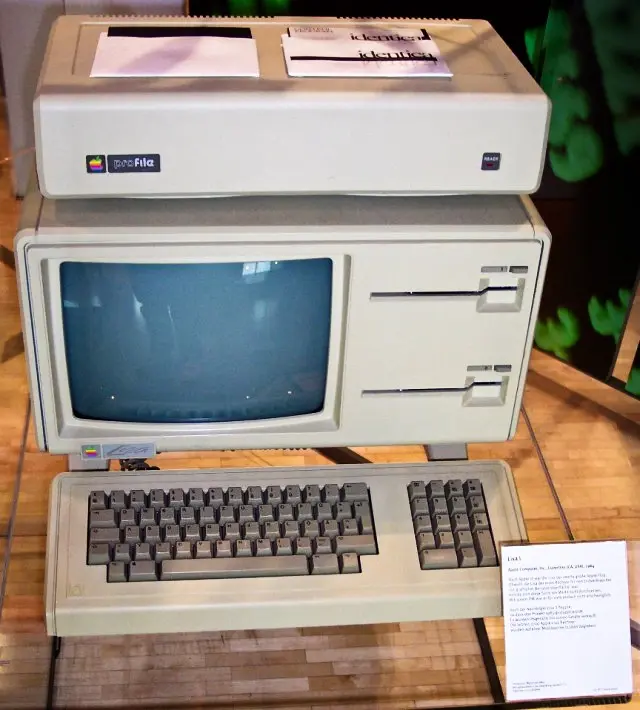
Apple Lisa Computer
A year later, the energetic entrepreneur acquired the computer graphics division of Lucasfilm, transforming it into Pixar (its box office hits “Finding Nemo,” “The Incredibles,” “Ratatouille,” “Toy Story,” and others received for Best Animated Feature), which became part of The Walt Disney Company in 2006, making its leader and owner a member of Disney’s board of directors and the largest private shareholder. Before that, in 1997, Steve Jobs regained control of Apple, leading the corporation and saving it from bankruptcy. The revival of Apple (which began to turn a profit just a year later) is considered one of the greatest achievements in business history.

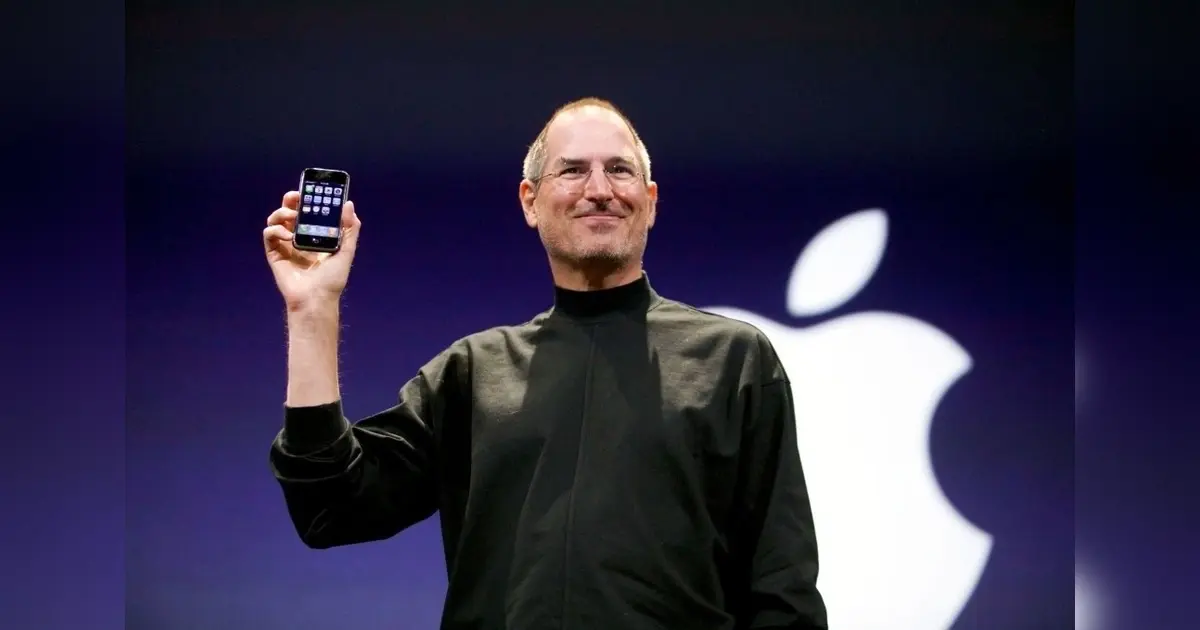
Over the next decade, Jobs oversaw the development of the iMac, iTunes, iPod, iPhone, and iPad, introduced consumers to the world’s thinnest laptop, the MacBook Air, and was responsible for the growth of Apple Store, iTunes Store, App Store, and iBookstore. The success of these products and services provided Apple with several years of stable financial growth, allowing it to become the most valuable company in the world in 2011. For his significant impact on the technology and music industries, Jobs received numerous awards and public recognition. An unparalleled speaker, he elevated the presentation of innovative products to the level of artistic events and captivating shows.
The Human Side of Genius
At the same time, Steve Jobs’ complex personality, authoritarian leadership style, perfectionism, and conflicts with colleagues, who feared crossing his path lest they lose their jobs, were often criticized. In a year, he could fire 3,000 people, including his own mentor, and conversely, “spare” those with whom he disagreed on business matters. For employees, the leader had a familiar phrase: “Complete crap.” Those words were to be understood as: “Prove that this is the best solution.” Jobs was accused of fostering a cult of personality (when Stephen Wozniak received job title #1, Jobs became #0 to avoid being second), aggressive competition with rivals, and a desire for total control over products even after they were sold to consumers (he notably censored the ability to view pornography on his devices).
Steve Jobs was constantly in legal disputes or arguments and combined charisma, charm, bravado, calmness, and determination to maintain a “reality distortion field,” convincing people of the reality of the impossible: this applied to both production tasks and the characteristics of announced products. An example of his ability to mobilize a team could be his phrases: “My role model is The Beatles—greatness in business is never created by one person; it is achieved by a team”; “If for some reason we stumble, make a few irreparable mistakes, and lose the competition to IBM and Microsoft, dark times will come for the computer industry.”
When Jobs once lured Pepsi’s president John Sculley to become Apple’s CEO, he used hyperbole: “Do you want to spend your whole life selling sweet water, or will you come with me and change the world?” he said in 1983 to the top manager, who would two years later achieve Jobs’ ousting from Apple. The next time, during a speech at the Smithsonian Institution in 1995, Steve Jobs would say: “John Sculley destroyed Apple by arming the company’s employees with false values. He replaced people with the right principles with those with the wrong ones, and they made millions, caring about their own well-being rather than the company and its users.”
Steve Jobs’ Spiritual Views
Reflecting on his life, the Apple founder called his ousting from the company “the best thing that ever happened to me”: “I got rid of the baggage of a successful person and rediscovered the lightness and doubts of a beginner. It freed me and marked the beginning of my most creative period.” Embracing the concept of Think Different, Steve Jobs built his product advertising campaign around images of well-known figures: Albert Einstein, , Thomas Edison, , Mahatma Gandhi, , and other figures who resonated with him. “By telling who our hero is, we communicated our values,” Steve Jobs said.
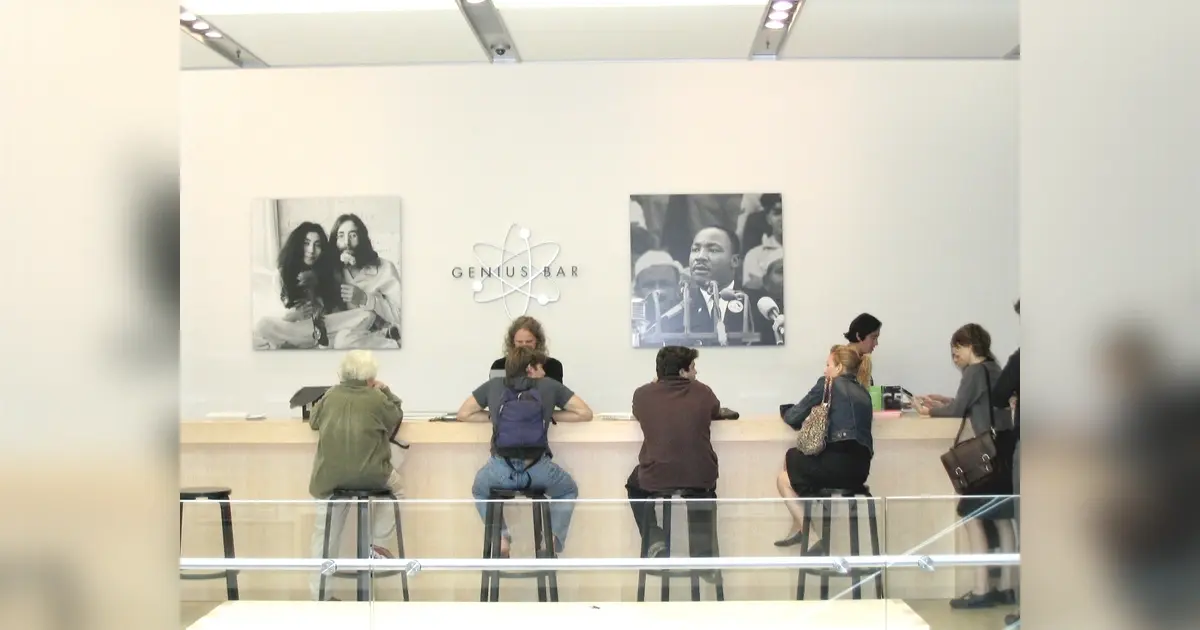
Genius Bar at the New York Apple Store
The net worth of the owner, nearly 5.5 million shares of Apple valued at $2.1 billion and 138 million shares of Disney worth $4.4 billion, was estimated by Forbes in 2011 at $7 billion, placing Steve Jobs at 39th on the list of the richest Americans. However, his spiritual practices made the inventor a committed vegetarian who periodically experimented with fasting. He never flaunted his wealth, lived in a sparsely furnished house, and adhered to the principles of Zen Buddhism and Bauhaus in his private life.
Jobs had his own comfortable uniform, consisting of a modest black turtleneck by Issey Miyake, blue Levi’s jeans, and New Balance sneakers. He drove a silver Mercedes-Benz without license plates. California law allows six months to obtain plates for new vehicles, so the billionaire rented a new SL 55 AMG every six months. Celebrities offered him reserved parking spots, but he declined them out of modesty. However, at the same time, Jobs could occupy a disabled parking space, prompting wits to joke: “Park differently!”
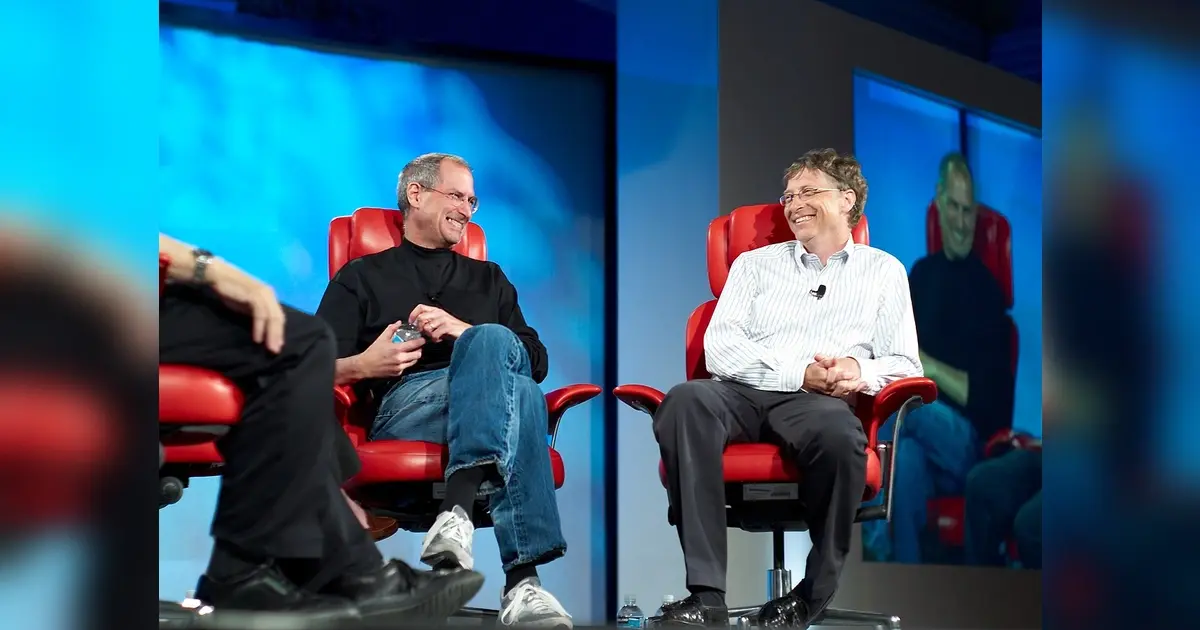
Steve Jobs and Bill Gates, 2007
Steve Jobs’ Personal Life
The emotional man struggled to contain his feelings and emotions, particularly when it came to matters of the heart. Those around him were always aware of his passions and romantic nature, but his mistakes also became public knowledge and subjects of criticism when warranted. One such example was Steve Jobs’ first fatherhood, which did not add to his honor. Why Jobs long refused to acknowledge his daughter, after whom he named the project Lisa, is his personal affair, although the details of his relationship with the girl’s mother negatively impacted the company’s image.
Not recognizing the connection between the newborn’s name and the computer’s title, the inventor added to the workload of the company’s PR managers: they had to come up with a more or less suitable interpretation of Local Integrated Systems Architecture, which led to a plethora of parodic variants, the most famous of which was Lisa: Invented Stupid Acronym. Lisa Brennan was born in May 1978 to Jobs’ friend Chrisann Brennan, with whom Steve had been involved since the spring of 1972. With this hippie girl, Jobs had settled in a mountain cabin above Los Altos before finishing school when he left his parents’ home.
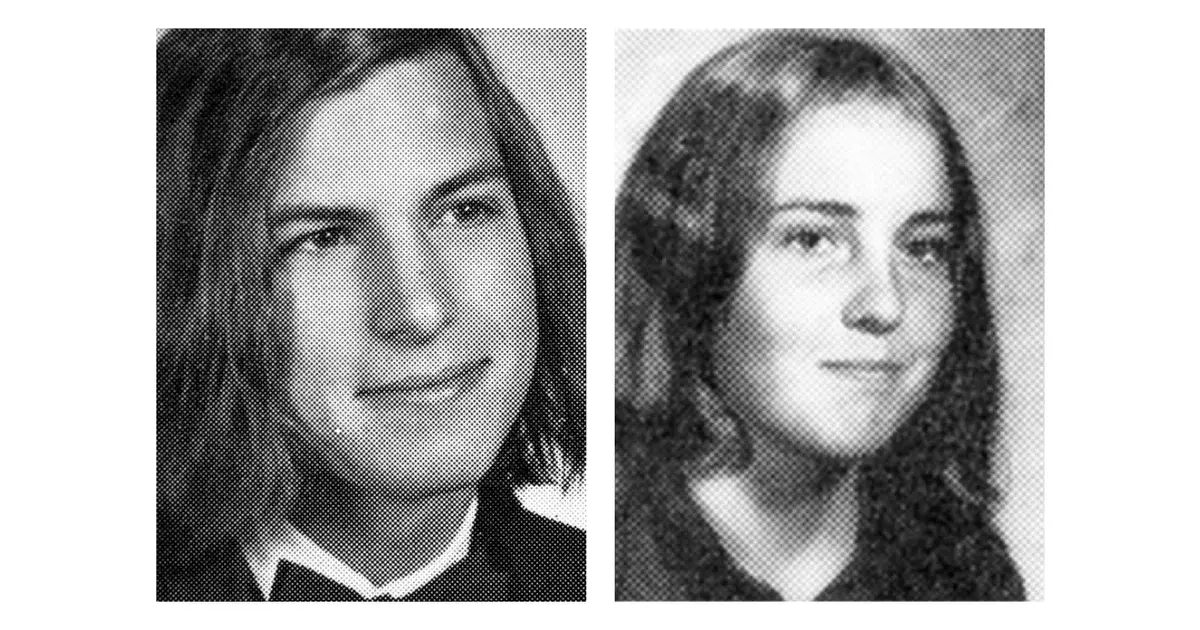
Steve Jobs and Chrisann Brennan, 1972.
Chris was painting at the time, while Steve attempted to write poetry and played guitar. They both practiced Zen, experimented with LSD, worked odd jobs, hitchhiked, and traveled to India in search of “enlightenment” recipes. However, they returned separately from their last trip and broke up once again. A few months later, Chris became pregnant, and Steve pretended it didn’t concern him. At the same time, Jobs persuaded Chris not to give the child up for adoption, as his mother had done with him, and chose the name Lisa for the girl, which he also used for his new computer.
Learning from Mistakes
After undergoing a genetic test a year later, Jobs confirmed his paternity (the probability was 94.41%) and committed to paying child support. He rented an apartment for his daughter and her mother in Palo Alto and paid for the girl’s education. For four years, Lisa even lived with Steve Jobs’ family while attending school and got along well with her father. Jobs acknowledged that he shouldn’t have behaved that way, and if he had the chance to change anything, he would have taken it. “I just wasn’t ready for such changes in my life back then, but now it would be different,” Steve Jobs explained.
Subsequent relationships with women held good prospects for Steve. Thanks to a romance with his next partner, Barbara Yassinsky, Jobs acquired the image of a successful businessman. His new love, of Polish and Polynesian descent, worked at an advertising agency that provided services to Jobs’ company. The couple was together until 1982, after which Steve began a relationship with the older folk singer Joan Baez (at the time of their acquaintance, she was just over 40)—as Jobs’ friend from Reed College, Elizabeth Holmes, said, “perhaps because she was the lover of his favorite musician Bob Dylan.” The relationship with the cheerful and intelligent woman lasted three years.
And the most beautiful woman in his life (according to Steve himself) and his first true love, Jobs met in 1985. Tina Redse was a computer consultant and, like Steve Jobs, was in search of harmony. A passionate fire ignited between them, but harmony was not to be: she rejected his marriage proposal, stating that it would pain her to watch the despotic Jobs mistreat those around him. “I couldn’t live with that, but I wouldn’t take on the task of reforming a legend,” the woman said.
Steve Jobs’ Marriage
The only wife of the Apple founder was a bank employee, eight years younger than him. The love story between Steve Jobs and Laurene Powell began with a chance meeting in October 1989 at his lecture at Stanford Business School (the girl was invited to the audience by friends). On January 1, 1990, Jobs proposed to Laurene and… did not remind her of himself for several months due to work commitments. Jobs’ inattentiveness hurt the girl, and she decided to leave him, but Steve gifted his fiancée a ring and took her on vacation to Hawaii, where she became pregnant.
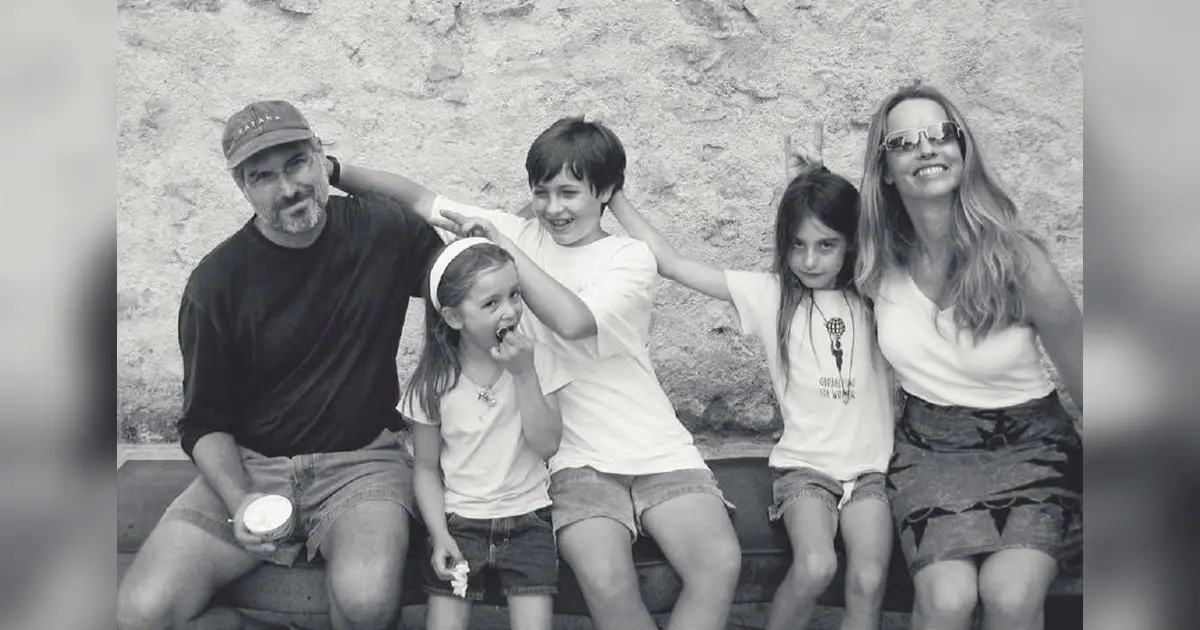
Steve Jobs’ Family
The wedding took place in the spring of 1991. The ceremony in Yosemite National Park was conducted by Jobs’ Zen mentor, monk Kobun Chino Otogawa. In marriage, Steve Jobs was happy. In September, he became the father of a son, Reed, and four years later, Steve Jobs’ wife gave birth to a daughter, Erin, and three years later, Laurene Powell Jobs presented her husband with a third child, Eve. What kind of father was Steve Jobs? Loving: he especially cared for his daughters. Steve Jobs’ children have now grown up; son Reed resembles his father but has a softer character than his dad.
Steve Jobs found new meaning in life and tried to spend more time with his family. This became especially relevant after he was diagnosed with pancreatic cancer in October 2003. After performing surgery to remove the tumor and later transplanting a liver, doctors allowed him a few more years to continue working at Apple and presenting the company’s products. From January 2011, Steve Jobs’ health deteriorated; he took an indefinite leave of absence and in August stepped down as CEO with the words: “The time has come.”
Illness and Death
Health problems could likely have been reduced or postponed had Steve Jobs not delayed surgery for nine months—he resisted surgical intervention, which he later regretted. The inventor attempted to stop the disease through mediums, relying on herbal remedies, a plant-based diet, acupuncture, and other alternative medicine methods. During the lost time, the tumor metastasized to the liver, and Jobs began secretly undergoing chemotherapy. To prevent the company’s stock from falling, the Apple founder kept many details hidden, presenting wishful thinking as reality.
Reports about Steve Jobs’ health were framed as treatment for a “common viral infection” and “hormonal imbalance.” In reality, the emaciated patient was no longer helped by painkillers. Jobs was in depression and had no appetite. Few believed the optimistic updates about the major shareholder’s condition. The situation was worsened by a false publication on August 28, 2008, by Bloomberg news agency of a pre-prepared obituary. Jobs constantly thought about death, which did not add strength to his fight for life.
“Remembering that you are going to die is the best way to avoid the trap of thinking you have something to lose,” Steve Jobs’ words from his 2005 speech to Stanford graduates took on special meaning now. “You are naked, so there is no reason not to follow your heart.” Steve Jobs died in his California home surrounded by his wife, children, and sister around 3 PM on October 5, 2011. An autopsy was not performed. The last words of the visionary who brought the future closer were exclamations of wonder: “Wow! Wow! Wow!”
