
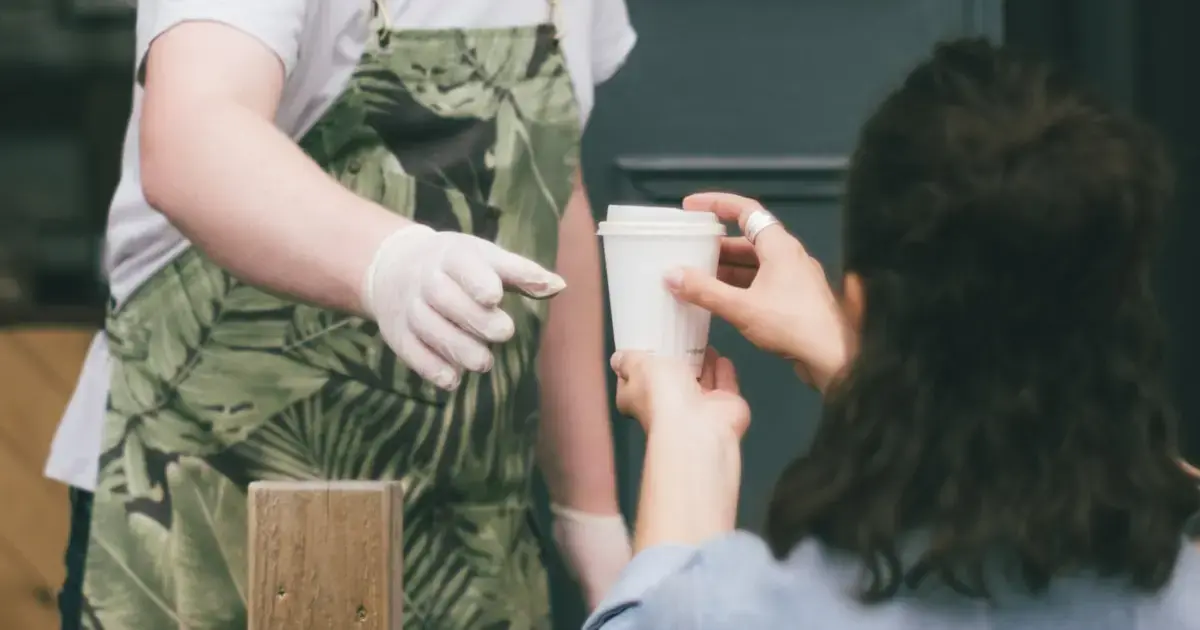
 For most of us, to go is simply a convenient way to perk up. However, the cup is typically made of plastic or has a thin plastic lining. In such cases, there’s a high likelihood that it will release a significant number of microplastic fragments directly into your drink.
This was highlighted by Xiangyu Liu, a researcher at Griffith University in Australia and co-author of a new study.
are defined as plastic fragments ranging from 1 micrometer to 5 millimeters in size. These particles enter the environment, our food, and ultimately, our bodies.
What Did the Scientists Discover?
Initially, Xiangyu Liu and his colleagues conducted a meta-analysis of 30 previous studies. The researchers examined the behavior of common plastics like polyethylene and polypropylene under various conditions. Temperature emerged as a crucial factor influencing this behavior.
As the temperature of the liquid inside the cup increases, the release of microplastics generally rises. The authors of the studies reviewed reported emissions ranging from several hundred to 8 million particles per liter, depending on the type of container material.
Interestingly, the duration of the drink’s stay in the plastic cup was not a priority factor, unlike the initial temperature of the liquid at the moment it came into contact with the plastic.
In the next phase of their work, the scientists tested 400 coffee cups. Some were made of polyethylene, while others were paper cups with a thin plastic lining inside.
The researchers studied the behavior of these cups at temperatures of 5 °C (typical for iced coffee) and 60 °C (as in hot coffee). It turned out that both types of cups released microplastics. The scientists identified two main trends, as reported by Science Alert.

First: regardless of temperature, paper cups with plastic linings released less microplastic than fully plastic cups.
Second: heating caused a more intense release of microplastics. In the case of fully plastic cups, the transition from cold to hot temperature increased particle emissions by 33 percent.
Thus, if a person drinks 300 milliliters of coffee daily from a polyethylene cup, they ingest 363,000 microplastic particles each year.
The Texture of the Cup Walls Matters Too
Using high-resolution images, the team examined the inner walls of these cups. They found that fully plastic cups had a significantly rougher surface, filled with bumps and depressions, compared to paper cups with a plastic lining.
The rougher texture facilitates the detachment of microplastic particles. Heating accelerates this process, explained Xiangyu Liu.

Should We Consider Giving Up Takeout Coffee?
The researchers believe that it’s not necessary to completely abandon this habit. Instead, we should change our approach to manage the risks.
For hot beverages, it’s better to use a reusable cup made of stainless steel, ceramic, or glass, as these materials do not release microplastics.
If a disposable cup is necessary, it’s certainly better to choose a paper one with a thin plastic lining. It releases fewer harmful particles than a plastic cup.
The study’s results were published in the Journal of Hazardous Materials: Plastics.
Photo: Unsplash