
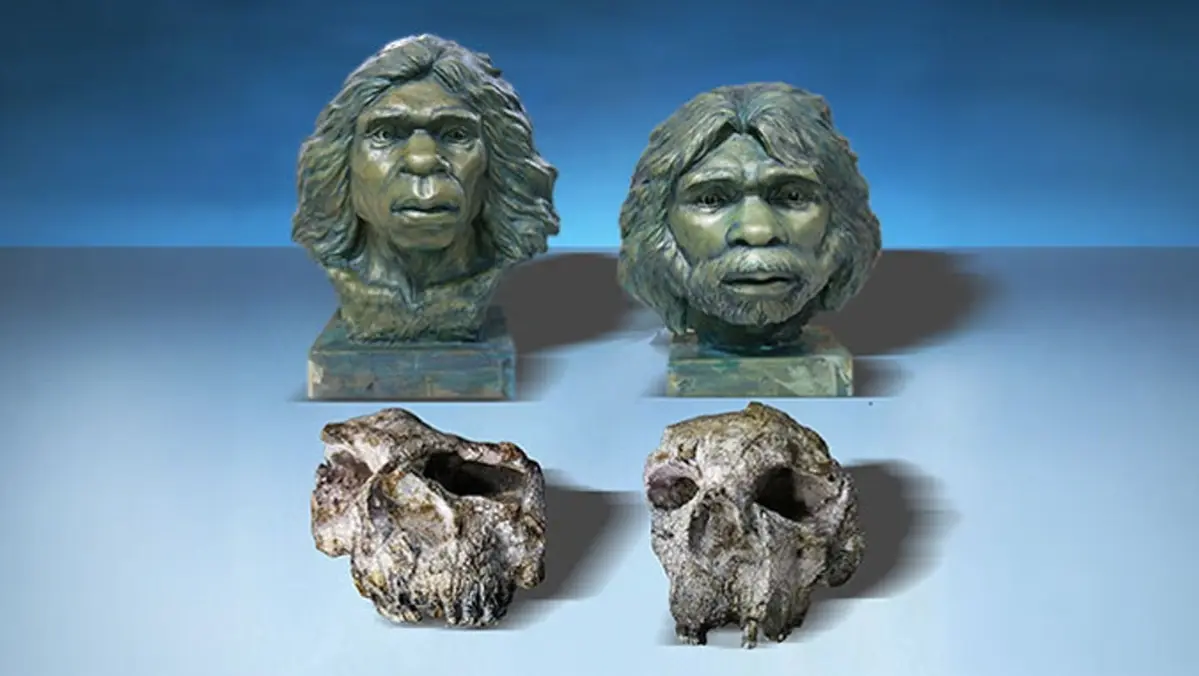
 A recent discovery of fossil remains has confirmed that the distant ancestor of modern humans—Homo erectus—appeared in East Asia hundreds of thousands of years earlier than anthropologists had believed.
The Homo erectus species originated in Africa and spread across Eurasia. For many years, the exact timing of its arrival in East Asia has been a subject of scientific debate.
The oldest Homo erectus skeleton found in this part of the world was discovered in the Yunxian area of Hubei Province, China. (This site is known for its unique fossil finds of ancient humans.) The age of these remains, according to previous research, was estimated to be 1.1 million years.
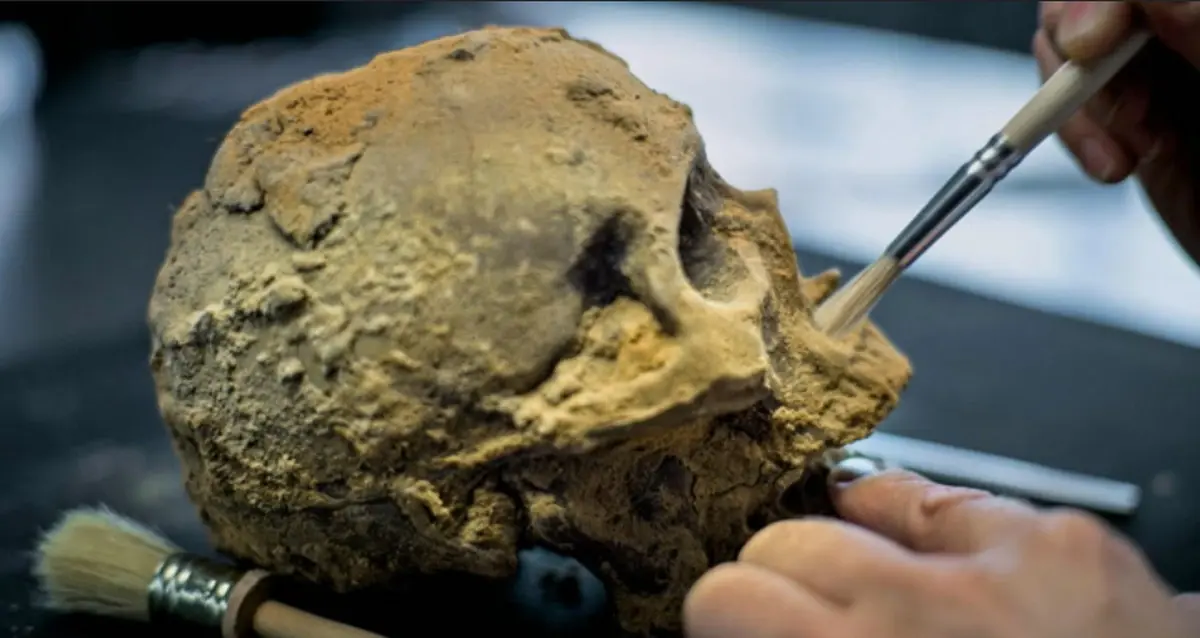
However, a new study led by Christopher Be, a professor of anthropology at the University of Hawaii at Manoa, has confirmed that this species appeared in Yunxian 1.7 million years ago—approximately 600,000 years earlier than indicated in previous studies.
As a result, this new data will compel scientists to reevaluate the timeline of the migration of of modern humans in this region.
How did scientists reach this conclusion?
The new data obtained by the team of anthropologists suggest that our prehistoric hominin ancestors spread across Asia earlier and more rapidly.
“By using a combination of H. erectus fossils from Yunxian and burial dating data, we were able to reconstruct a fairly reliable timeline for the appearance of these hominins in East Asia,” said Professor Be.
During the study, scientists assessed radioactive forms of aluminum and beryllium in the sediment layers where the fossils were found. This allowed them to determine the timing of their burial, as reported by Independent.
“By considering the decay rates of aluminum and beryllium and comparing the ratios of the two types of atoms remaining in the sediment samples surrounding the fossil, researchers can calculate how long ago it was buried,” explained Hua Tu, a co-author of the study.
As the researchers noted, while radiocarbon dating helps trace the age of samples up to 50,000 years, the radioactive method allows for precise dating of materials that are up to five million years old.
“These results challenge established assumptions about when the earliest hominins migrated from Africa to Asia,” said Professor Be.
The authors of the study expressed that they still have questions about “when and where Homo erectus first appeared, and whether they could have been among the first inhabitants of some of these places in China and other countries.”
The findings from this new work by anthropologists were published in the journal Science Advances.