
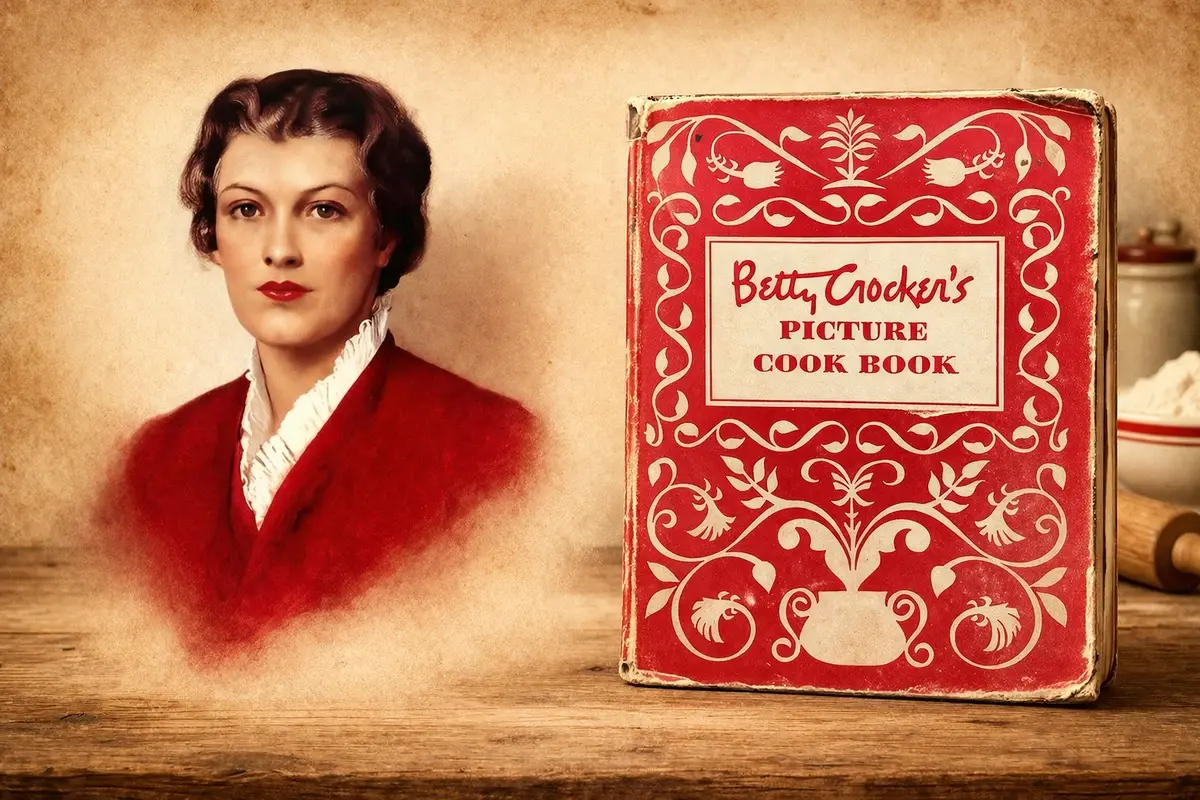
In 1921 the walls of the Washburn-Crosby office—the food empire whose Gold Medal Flour sat in nearly every American pantry—started to crack under pressure. Letters from homemakers poured in by the ton, and they weren’t compliments. Every other envelope seemed to scream “SOS.” Women of every age and income, armed with whisks and hope, begged the company to save their collapsing cakes, failing marriages, and frayed nerves.
The company was trapped: if they answered these distraught women with cold corporate form letters, the women would simply go where they felt heard—straight to the competitors. That was not an option.
They didn’t need a stamped letterhead. They needed a heroine. Someone who felt like a neighbor in every kitchen—confident, warm, experienced, skilled, and above reproach. One problem: no such woman existed. So they built her from a retired director’s last name and a pleasant-sounding first name. They committed a refined murder of reality to make perfect marketing. For years millions of Americans believed she was a living person, wrote confessions to her, and trusted her with the most intimate thing they had—the family dinner. Welcome to the investigation of one of the biggest hoaxes in culinary history.
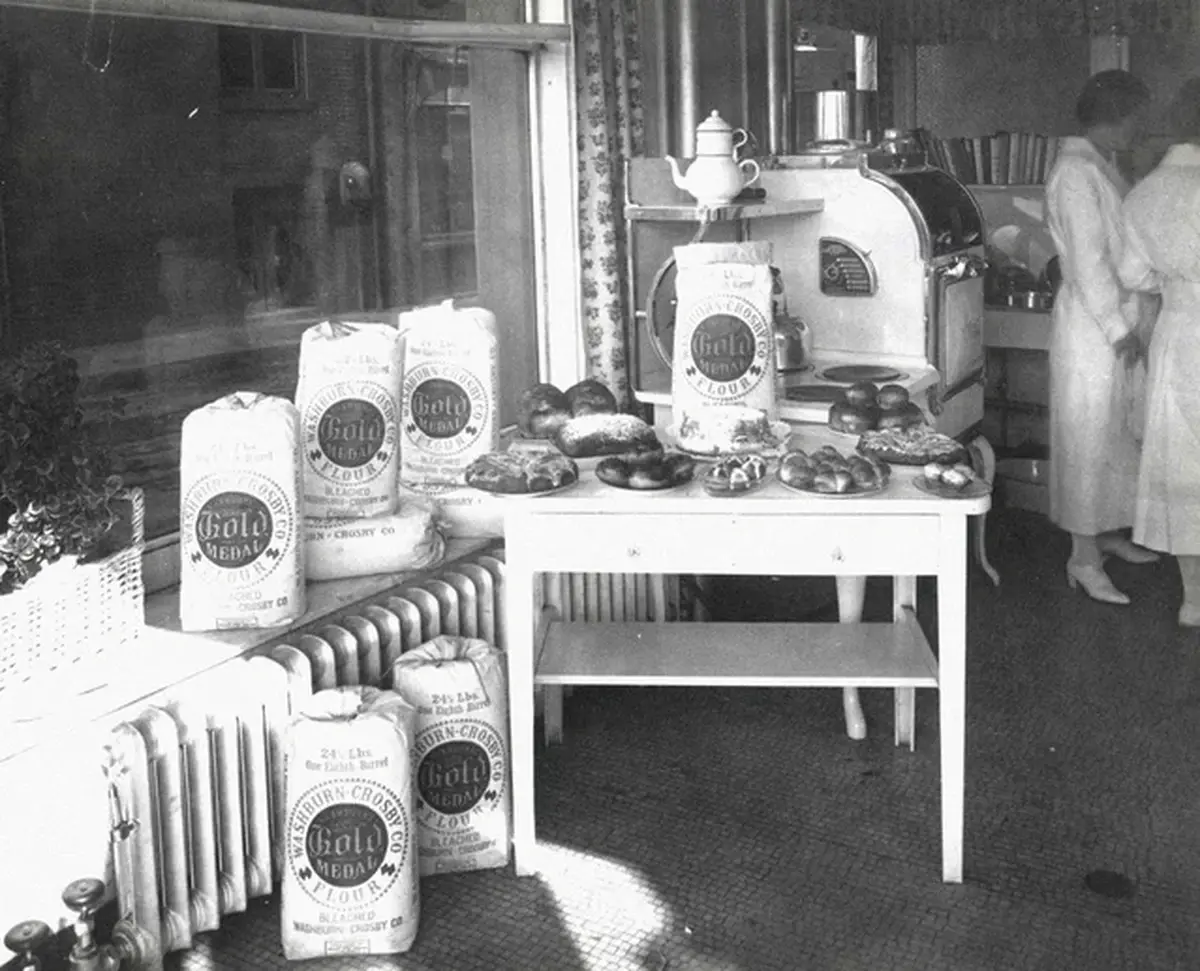
How a mail-in puzzle turned a marketing stunt into a crisis
That avalanche of letters started with a ridiculous little promotion. The company ran a newspaper contest: cut out puzzle pieces showing sacks of flour, glue them together, and mail them in to receive a kitchen spatula.
Marketers expected easy engagement and got a full-blown kitchen revolt. Along with the pasted pictures, women began stuffing their envelopes with the same desperate questions that had thrown the office into chaos. A campaign meant to amuse turned a flour maker into a 24/7 psychological hotline. The corporation had opened the door—and tens of thousands of women’s problems rushed in—so the company suddenly had to invent someone to answer them.
Operation “Signature”: how a secretary’s handwriting became an icon
Betty Crocker’s reputation didn’t grow in a cozy kitchen; it grew in an office among stacks of papers and numbers. Advertising agents constructed her to give the giant Washburn-Crosby company human traits—carefully chosen traits. They borrowed the last name from a respected director who had just retired; his reputation was rock-solid and “Crocker” sounded authoritative. They added the simple, friendly name “Betty” because it inspired trust. The result was the next-door neighbor who always had a reliable, sometimes unbeatable, recipe to share.
It soon became clear that a typewritten memo wouldn’t create the illusion of real conversation. If women were going to believe a real person was behind the advice, the company needed proof: a personal signature. So Washburn-Crosby held an internal contest among female employees for the best handwriting. This was the first major special operation in manufacturing a persona.
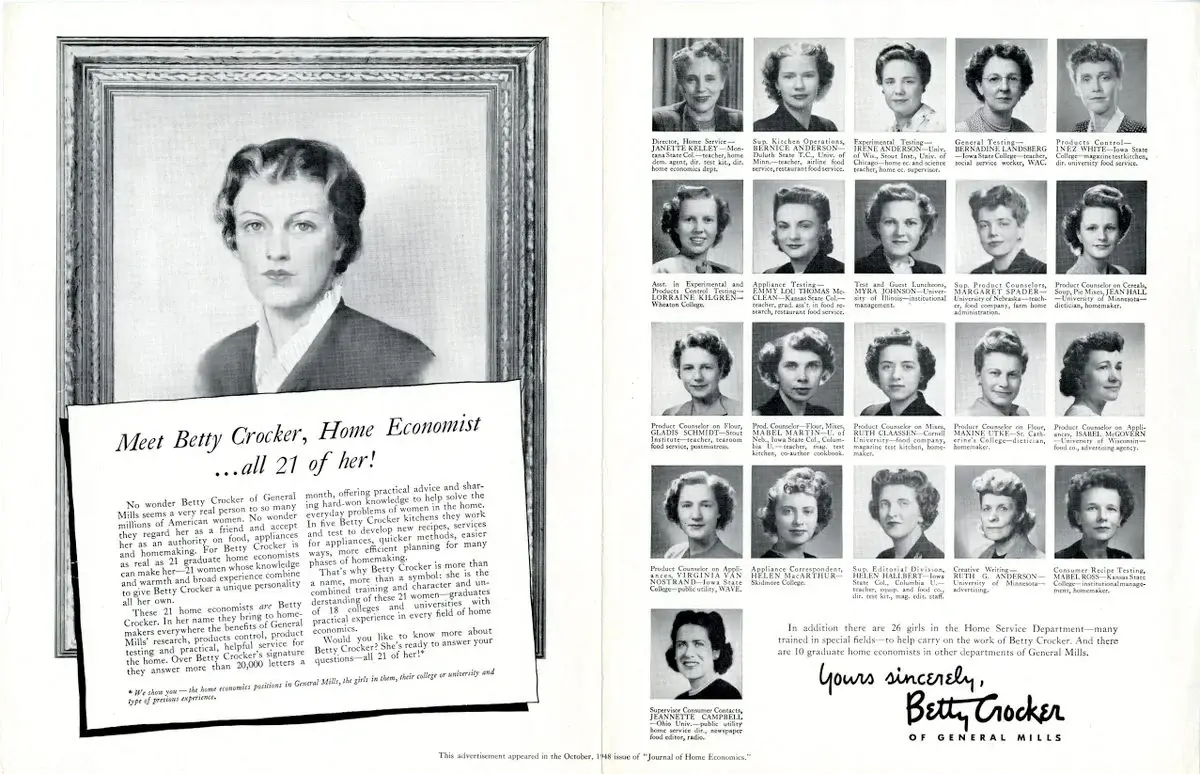
A secretary named Florence Lindberg won. Her handwriting sample was elegant yet confident. The flourish of her pen was turned into a printing plate that produced millions of identical facsimiles. That signature became so recognizable that it still appears on flour packaging today, a hundred years later. Florence didn’t receive royalties—she just followed her boss’s orders—but her hand animated the ghost and made the nation believe Betty was real.

A voice on the air: how Betty ‘spoke’ and won hearts
During the Great Depression, when American , Betty taught people how to make “bread from nothing” and meatless meatloaf. She became the country’s unofficial therapist at a time of national strain. People sent her letters full of confessions—about debts, broken hearts, and children leaving home. A team of copywriters (mostly men) answered those letters, following a strict guideline: be sympathetic but don’t go too far.
When radio made a technological leap in 1924 and radios appeared in nearly every home, the company realized paper would no longer be enough. On October 2, 1924, WCCO in Minneapolis aired the first words: “Good morning, this is Betty Crocker.” It was a shock. Listeners believed they had finally heard their heroine. The show “Betty Crocker Cooking School” became the most popular program for women—long before the world discovered other .
Neighborly radio: how a cultural trend became a corporate weapon
To understand why America swallowed the fictional Betty Crocker so easily, look at the era. In the 1920s “neighborly radio” flourished—programs hosted by real women from their own living rooms. Writer Fannie Flagg later documented this cultural layer in her Elmwood Springs stories. Her character Dorothy Smith slices the era perfectly: a woman who shares recipes and gossip, creating the illusion that she’s every listener’s best friend.
Washburn-Crosby took that model of intimacy and put it on industrial rails. At first Betty was voiced by actress Blanche Berdzall. Because radio was local, different actresses played the role in different states (about 13 actresses at one point), all reading the same script written at the company’s headquarters. It was the first networked franchise of a single character.
Listeners didn’t hear flour ads so much as the clink of spoons and the whistle of a kettle—sound effects that made it seem as if Betty really stood by the stove, much like the fictional Dorothy Smith in Flagg’s books.
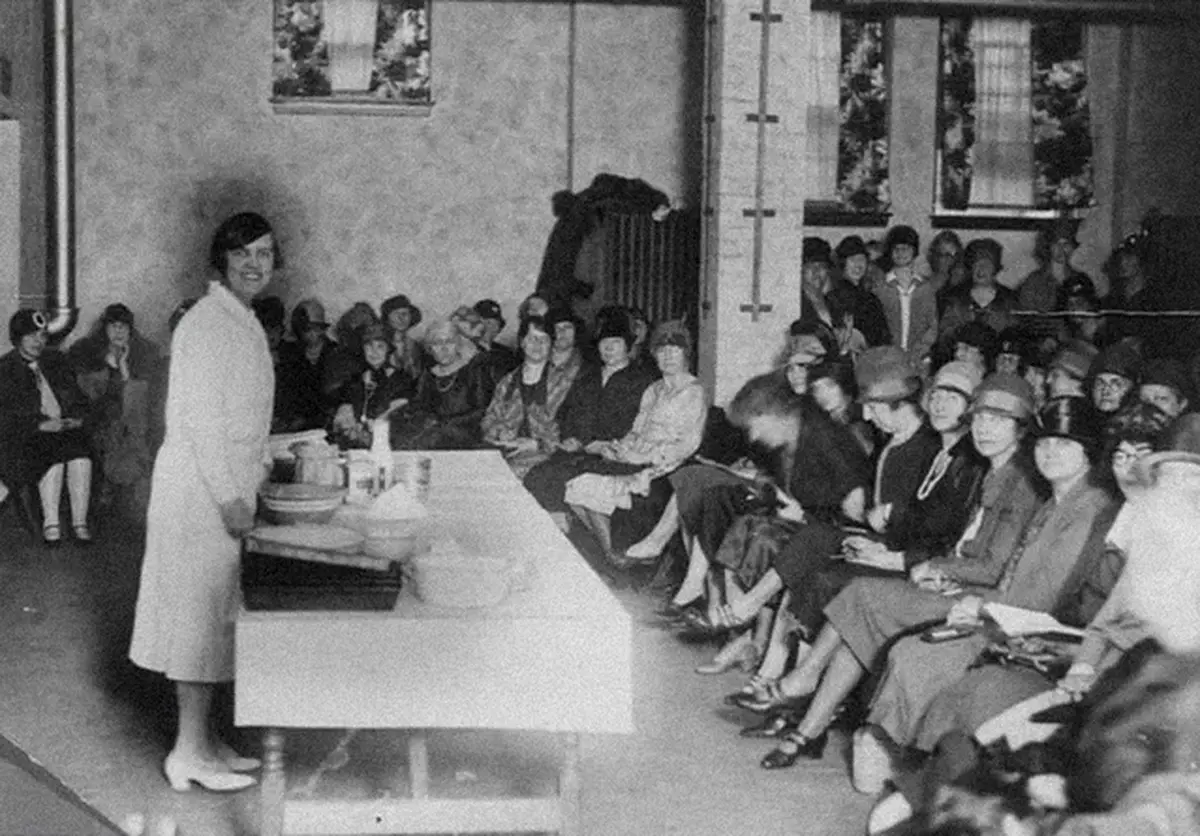
Adelaide Hawley Cumming in the role of Betty Crocker
Why the radio-friend format was a perfect trap
Betty Crocker became the first virtual friend to live in every radio set across the country. Her power relied on a keen understanding of women’s loneliness and the need to have their endless domestic labor acknowledged. To convert ordinary consumers into devoted fans, advertisers designed a strategy where every on-air tactic hit its mark:
- The “open-door” effect: the on-air imitation of home coziness shut down listeners’ critical thinking—people didn’t expect a trap from “the woman next door.”
- Interactive trust: Betty read letters on air, creating the first large-scale community where every homemaker felt heard.
- Crisis relief: during the Great Depression this voice became free support and taught the nation how to make feasts out of nothing.
- Scalable sincerity: the company used multiple actresses to deliver a single scripted persona.
The Betty Crocker story is basically a case study in how marketers either stole or perfectly calculated the intimacy of neighborhood radio. They realized that if you play “the neighbor” by the rules that later became staples of American literature, people will bring you their loyalty and money. While real women spent years building genuine community ties, Betty Crocker built an empire on an impeccable imitation of those relationships.
The kitchen lab: where science met magic
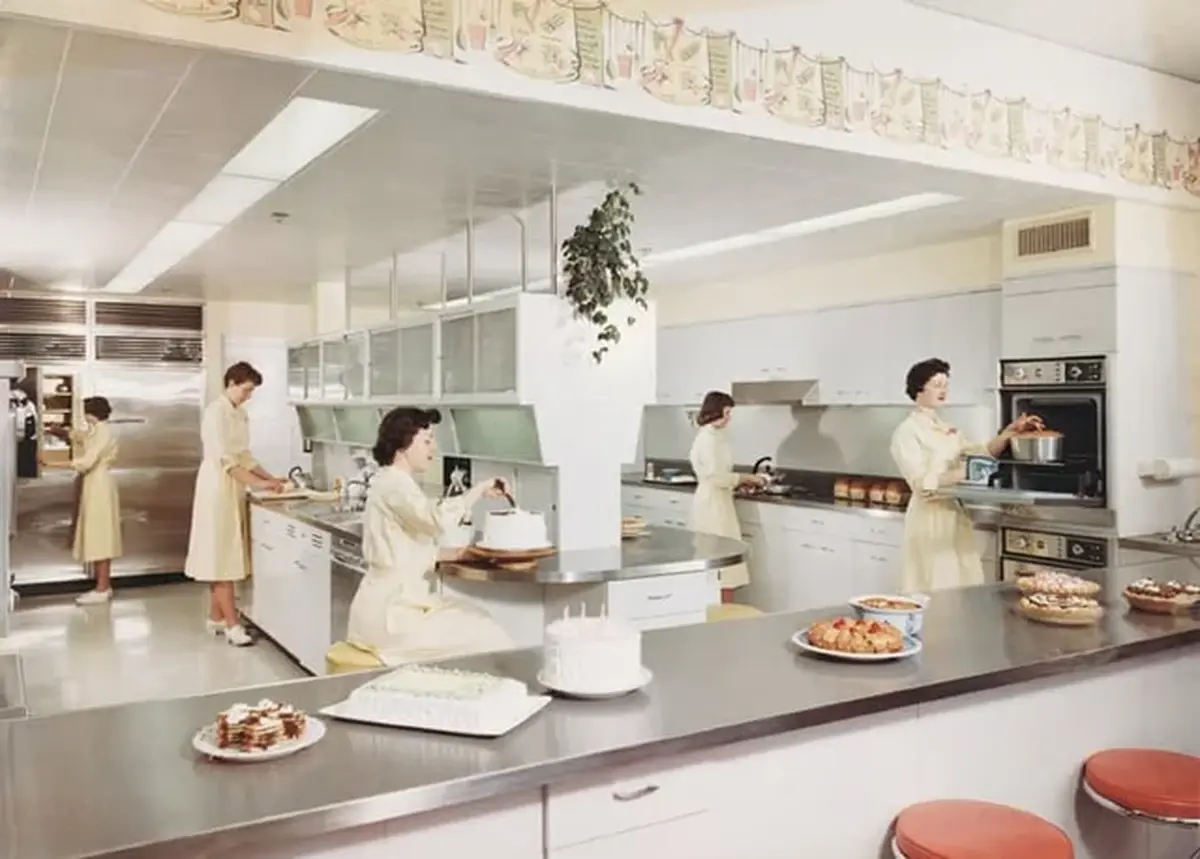
In the 1920s was a gamble. Ovens were judged by feel—“hold your hand inside until it hurts”—and scales were a luxury. Betty Crocker changed that by creating the Home Service Department—the world’s first test kitchen.
This was more than a room with a stove; it was a scientific hub. Professional home economists (yes, that was a formal profession) tested every recipe 50 to 100 times, using different grades of flour, ovens of varying quality, and even altering humidity.
What the Betty Crocker labs tested:
- Error tolerance: recipes had to work even if a homemaker forgot to sift the flour or mixed up a teaspoon and a tablespoon.
- Ingredient availability: no —only ingredients you could buy at the local country store.
- Timing: cooking times had to be precise to the minute, which was revolutionary at the time.
- Psychological comfort: instructions were written as if Betty stood nearby, reassuring, “You can do this, dear.”
Before Betty, kitchen routines were predictable only in their unpredictability. The test kitchen turned chaos into a set of clear instructions where success no longer depended on luck.
Seven faces of Betty Crocker: how the myth got makeovers
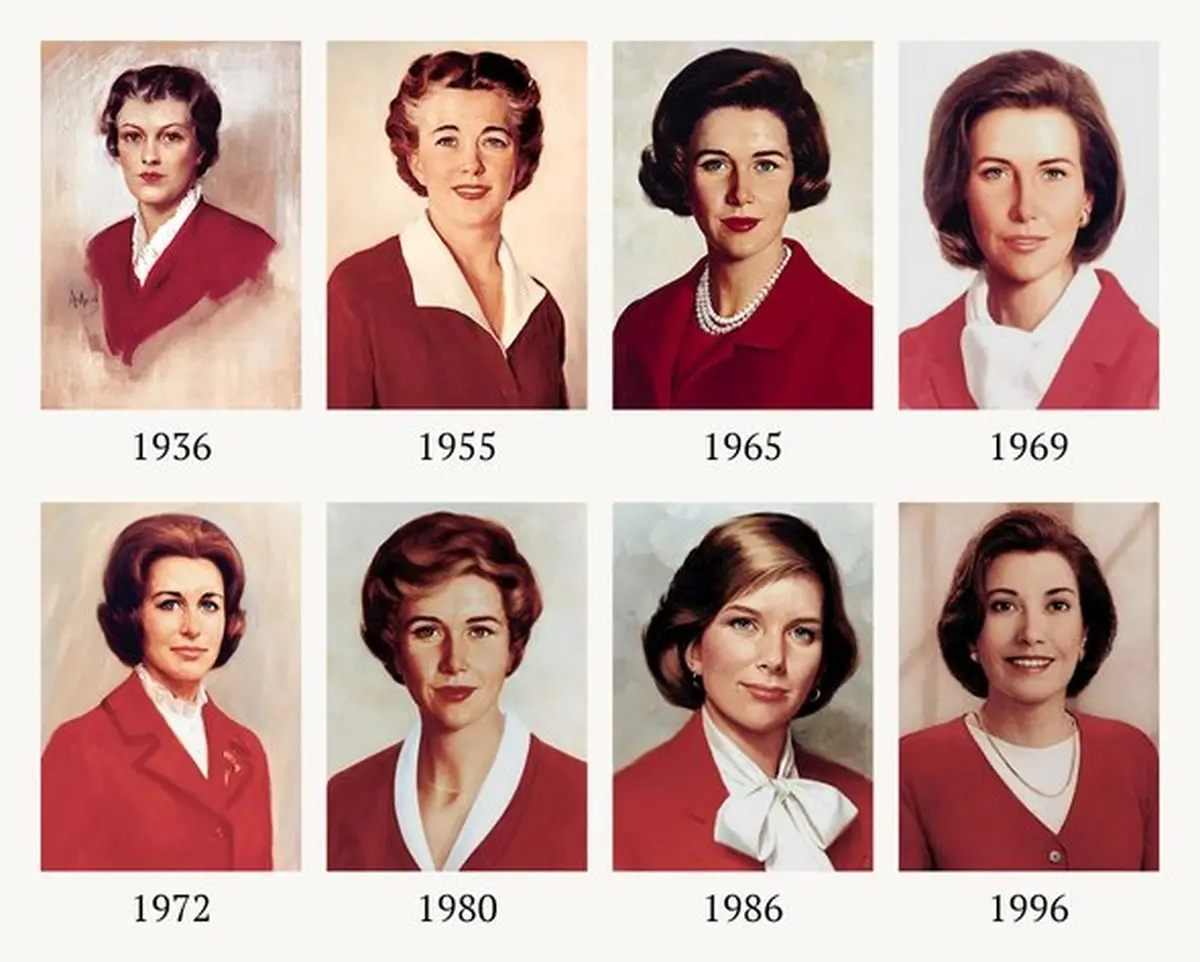
Until 1936 Betty had no face—only a signature and a voice. But the visual era demanded an image, and by then Washburn-Crosby had become General Mills and needed a concrete look to lock consumers to the brand on TV and in magazines. The first official portrait in 1936 was painted by Neysa McMein, a star illustrator who did covers for McCall’s and Liberty. Using features from real company employees, she created an image of a stern schoolmarm with a determined chin and a look that wouldn’t forgive underbaked dough.
Society changed, and Betty had to be updated so she wouldn’t look like a relic. Each redesign of her portrait became its own marketing case:
- 1955: Betty softened. She gained a slight smile, a string of pearls, and a neat coif—an idealized baby-boom housewife.
- 1965: she looked younger, with a more open gaze and less formal clothing.
- 1972: amid feminism and rising numbers of career women, Betty got a suit and the look of a businesswoman who could run a company and bake a pie.
- 1986: the image returned to warmth and hominess, with a focus on family values.
- 1996 (for the 75th anniversary): General Mills used computer modeling to blend photos of 75 real women of different ethnicities, producing a “multicultural Betty” who looked like the ideal average citizen of the world.
The brand refused to age so Betty would always seem contemporary to each new generation instead of a relic. The face on the package could be redrawn endlessly, but the core promise stayed the same—a great product and a predictable, perfect result.
The ‘one egg’ psychological trap and the guilt play
After World War II the market filled with quick-bake mixes. Betty Crocker released a “Just Add Water” product that should have been every homemaker’s dream. Instead, sales tanked. Why?
Marketers hired psychologists, including the famous Ernest Dichter, to investigate. They found women felt guilty. Producing a cake in two minutes felt like “cheating” the family. Women felt they weren’t putting their work—and therefore their love—into the food.
The solution was brilliant. They removed the powdered egg from the mix. The box now said, “Add a fresh egg.” Logically, it was extra work; psychologically, it was catharsis. Cracking a real egg made a woman feel like a creator again. Sales soared. This is a classic example of how hidden or explicit pains and guilt become a goldmine that corporations exploit for profits.
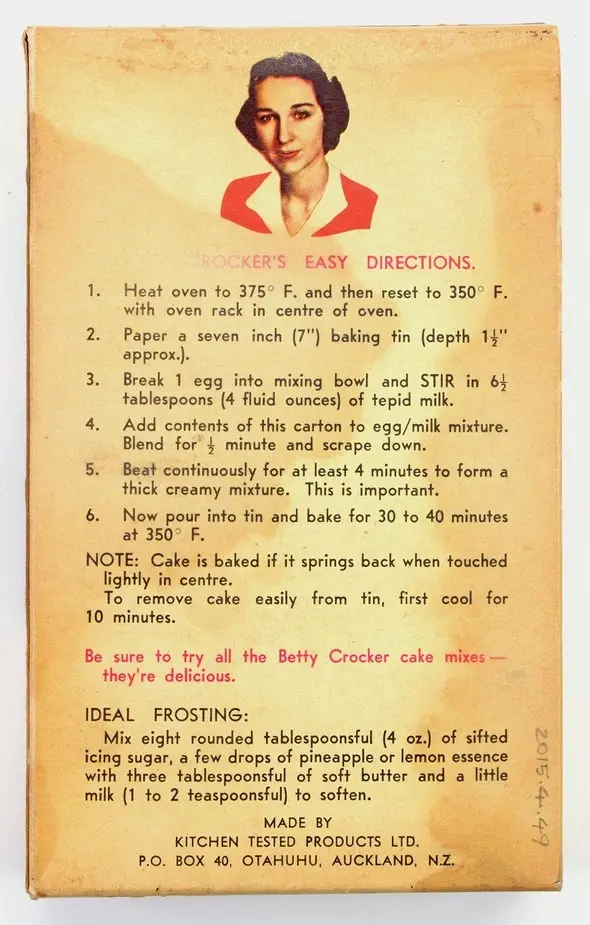
Image of Betty Crocker on the back of a pineapple cake mix box, New Zealand. 1940s
The ‘terrible’ exposé: when the truth didn’t matter
Did everyone love Betty? Was there ever an attempt to “cancel” her? Yes. The first big scandal came in 1945 when Fortune magazine published a blistering piece that stated plainly: “Betty Crocker is fake. She doesn’t exist. It’s a group of men in Minneapolis pulling the wool over your eyes.”
To the magazine’s surprise, the public shrugged. Women said, “We don’t care if she’s real as long as her recipes work.” It was the first recorded case where a virtual brand proved stronger than the facts. People willingly chose a comforting illusion over dry truth.
Still, there were legal details to manage. The company had to be careful not to break advertising laws. For example, Betty could never say, “I cooked this in my kitchen yesterday,” because that would be a direct lie. Instead she always said, “In Betty Crocker kitchens we found…” That legal wording kept General Mills out of multimillion-dollar false-advertising suits.
The red spoon: how a mark became a ‘religion’
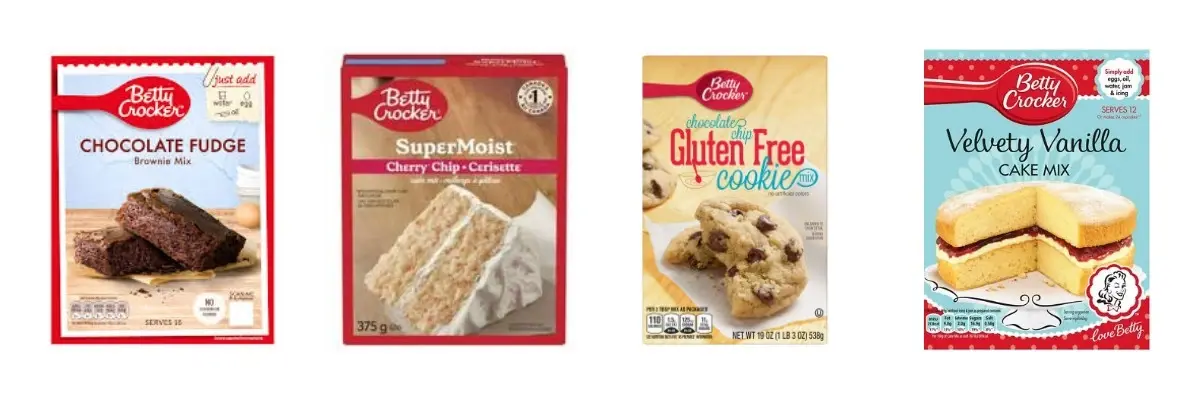
In 1954 the company introduced a red spoon logo presented as a “seal of approval.” It worked because the symbol read instantly on crowded shelves, and the bright red made packages pop among hundreds of competitors. The company used the spoon as a universal marker across its products, tying hundreds of items into a single system where shoppers automatically trusted any box with that mark.
A legacy that doesn’t exist but is everywhere
Today Betty Crocker is more than cake mix boxes. She’s a cultural code for a nation. She’s survived 20 presidents, depressions, wars, and the rise of the internet. Her Picture Cookbook (1950) still sits in about every other American home.
Even in the 21st century of TikTok and instant video recipes, BettyCrocker.com remains one of the most visited cooking sites. Why? Because the brand preserved the main thing—the feeling that somewhere out there is a wise, calm woman who knows how to save your dinner. And it doesn’t matter that, in reality, there’s a very powerful server in Minnesota behind it.
The Betty Crocker story teaches the master marketing lesson: people don’t buy a product. They buy solutions to their problems and emotional comfort. If that requires inventing a perfect woman with a flawless signature, then fine—let her exist. The important thing is that the egg is fresh and the cake rises.
Photo: General Mills Archives