
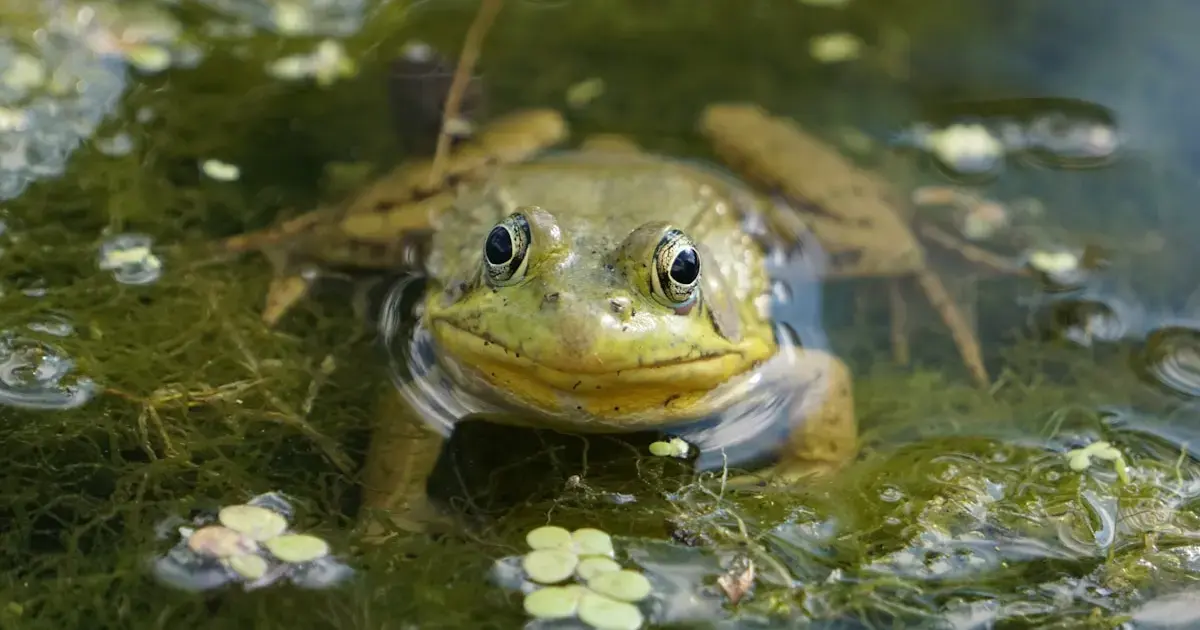
 Researchers at the University of California, Davis, have found that the sound and quality of male mating calls are significantly influenced by environmental temperature. A warmer climate makes their love songs more alluring, the scientists assert.
In early spring, male frogs’ calls are typically sluggish. However, as warm weather sets in, the tempo of their songs picks up. This change is certainly noticed by females searching for a mate.
“Frog calls really depend on the temperature of their surroundings. As the water in ponds warms up, the songs of male frogs start to sound faster and almost desperate. I can hear it with my , and female frogs pay attention to this too,” noted lead author of the study, Julianna Peckney, a graduate student in the Department of Wildlife, Fish, and Conservation Biology.
“If you listen over the course of a few weeks or longer, try to notice the difference. Imagine how a female frog perceives a male’s calls at the beginning of the season compared to later on,” Peckney said.

How Did the Researchers Reach These Conclusions?
The study, published in the journal Frontiers in Ecology and the Environment, was conducted at the Quail Ridge Ecological Reserve and the Lassen Field Station, part of the University of California’s natural reserves.
Using microphones set up along the shores of ponds, Peckney’s team recorded the love songs of Sierra tree frogs. The scientists correlated changes in vocalizations with changes in water temperature, as reported by BBC Science Focus.
Ultimately, the researchers discovered that females not only choose the most attractive singers but also perceive the quality of their songs as an indicator that environmental conditions are suitable for breeding.
According to Peckney, “As the pond warms up, the more attractive calls of males are heard earlier.”
Males typically arrive at the ponds long before females and try to produce as early as possible to outcompete rivals. Females, on the other hand, delay their arrival until conditions are optimal for the survival of their eggs. They likely gather this information from the males’ songs.
“It’s advantageous for females to arrive when it’s time to lay eggs,” noted Brian Todd, a professor of herpetology and co-author of the study.
The team believes that their findings could change scientists’ understanding of how animals respond to .
Photo: Unsplash