
 Evidence supporting this theory can be found in the numerous slips for military ships from the 3rd century, discovered by archaeologists along the Norwegian coastline.
It has long been believed that the era of the began in the late 8th century. However, authors of new archaeological studies suggest that the naval power of the Vikings dates back five centuries earlier. Leading Norwegian archaeologist Frans-Arne Stylegar claims that organized naval forces along the southern and western coasts of Norway were already active between 180 and 540 AD. According to him, the naval history of the Vikings may have started as early as the 3rd century.
Large Slips on the North Sea Coast
Along the Norwegian coast, Stylegar’s team encountered a significant number of slips for ships. Many of these structures are over 20 meters long and date back to the 2nd to 5th centuries.
The size of these slips indicates that the vessels stored within them were much larger than typical fishing boats. The concentration of these structures resembles organized naval bases. Stylegar believes that the discovered slips should be viewed in a broader geopolitical context of the North Sea, with ancient contacts between the Scandinavians and the Roman Empire being a central element of the hypothesis.

Scandinavians in the Roman Navy: Valuable Lessons
It is known that by the late 2nd and 3rd centuries, Scandinavians served as mercenaries in Roman armies. Archaeologist Dagfinn Skre suggested that participation in Roman military campaigns significantly transformed Scandinavian society after around 180 AD.
Men from the Norwegian coast may have served specifically in the Roman navy, gaining firsthand knowledge of its organization and maritime logistics at Roman naval bases in Britain and Gaul.
Upon returning home, they adapted this knowledge to Scandinavian conditions, as reported by the publication Arkeonews. According to Stylegar, the structural parallels between Roman ship architecture and Norwegian slips are too evident to ignore.
If this is the case, then Roman engineering and naval strategy may have indirectly influenced the development of early maritime power in the northern regions.
The authors of this theory did not imply that the Vikings existed in a cultural sense during the 3rd century. Scholars suggested that the structural foundations of Viking naval affairs could have been laid much earlier than previously thought.
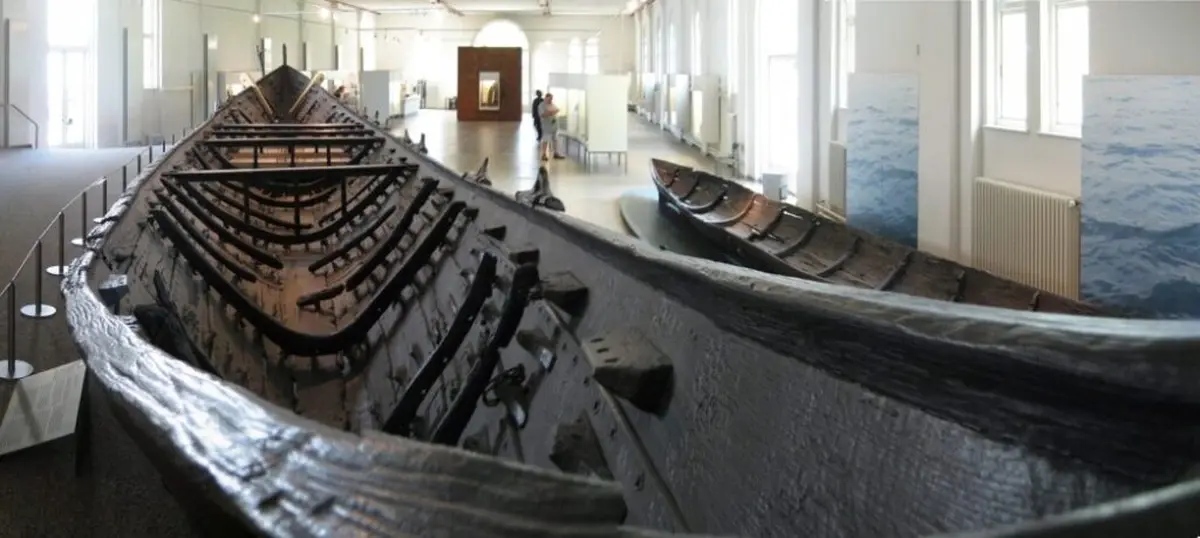
A Real Clue – The Ship from the Nydam Bog
To date, no ships from that era have been discovered in Norway. However, an important find exists in Denmark. In the 19th century, a large ship built from oak around 320 AD was recovered from the Nydam bog in southern Jutland. The vessel, approximately 23 meters long, could accommodate around 45 people (including 36 rowers).
Although this type of ship was found in another Scandinavian country, it reflects a broader naval tradition of the North Sea. According to Stylegar, such vessels could have been housed in large Norwegian slips.
Photo: Museum of Archaeology in Stavanger