
 A team of Polish researchers says Roman officers were obsessed with their furry companions. They especially adored monkeys, particularly Indian macaques, treating them like children and even giving them pets. These “gifts” were later buried alongside the monkeys, with no expense spared on lavish burial items.
What Did the Scientists Discover?
Bioarchaeologists from the University of Wrocław and the University of Warsaw uncovered the remains of thirty Asian primates at a pet cemetery in the port of Berenice, on the Red Sea coast. All date to the 1st and 2nd centuries AD, when the port was inhabited by Roman elites. Most of the skeletons were found alongside artifacts linked to military officers.
Previously, researchers had turned up a few monkey remains in other Roman territories, including an animal killed in the eruption of Mount Vesuvius. Those earlier specimens were North African Barbary macaques.
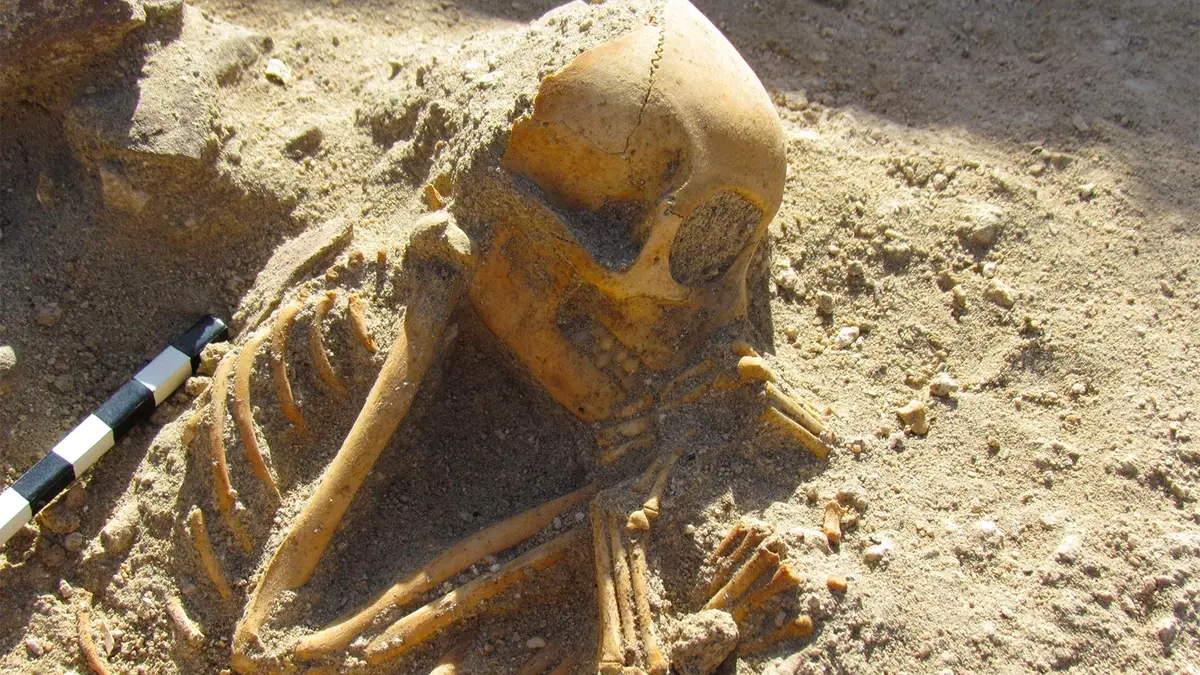
Meanwhile, the primates from the Berenice cemetery were identified as rhesus macaques, Indian macaques, and grivet monkeys. They originated either from southern India or the Indus Valley in northern India. This indicates these were among the first domesticated primates to appear in the Roman Empire and had to be imported from outside its borders.
After analyzing the burials, the team concluded that the animals were held in high regard by their military owners. For instance, the researchers discovered a monkey skeleton dated to the early 1st century AD, buried alongside the remains of a piglet, a pair of large seashells, a woven basket, and “an unusually folded piece of fabric resembling a doll.”
The team says “the pig, shells, doll, and basket with its contents undoubtedly belonged to a young macaque.” Another monkey was buried with a puppy and a kitten, IFLScience reports.
The study’s authors suggested the items found in these burials were likely the monkey’s most treasured possessions. They may have been placed in the tomb to help the animal in the afterlife. The scientists point to Pliny the Elder, who wrote that Romans regarded primates as “half-humans,” as one reason for this special treatment.
However, despite the Romans’ fascination with exotic pets, those animals often suffered from malnutrition. Still, for military leaders, having a monkey was a clear marker of elite status in local society.
In the port of Berenice, the Asian primate was the ultimate status symbol. As the researchers put it, a soldier “with an Indian macaque on a leash basked in the glow of glory, recognized as an explorer of exotic lands, a person of exceptional experience and connections.”
The findings were published in the Journal of Roman Archaeology.
Photo: Unsplash