
Snowflakes—one of winter’s most recognizable symbols—come in an astonishing variety of shapes and sizes. Each one is unique. So what is the largest snowflake ever recorded? What do snowflakes actually look like, and what determines their forms? Here’s a real-life case that sounds almost fantastical.
In 1887, Matt Coleman, a ranch owner in western Montana, reported enormous snowflakes falling onto one of his pastures during a snowstorm. He described them as “as big as milk pans.” According to the Guinness World Records, these colossal snowflakes measured 38 centimeters wide and 20 centimeters thick and still hold the record for the largest snowflakes ever documented. Even without photographic proof, Coleman’s report remains a popular example in discussions of unusual precipitation. But is it really possible for a single snowflake to be the size of a dinner plate?
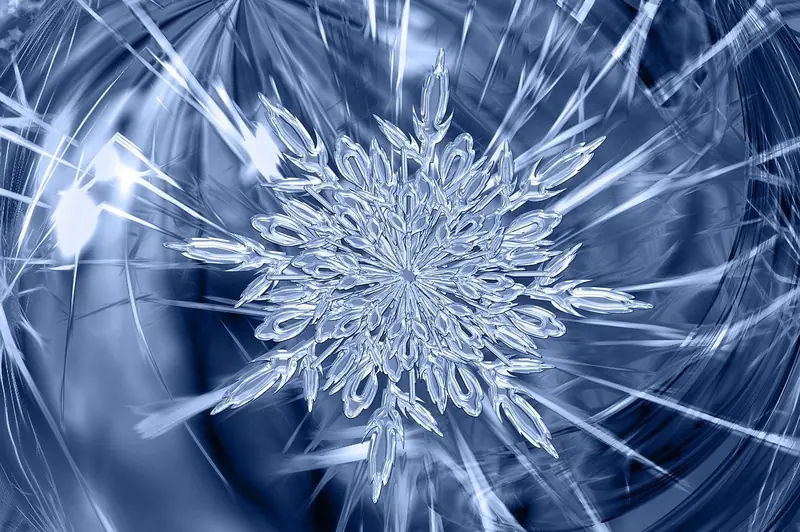
Kenneth Libbrecht, a physics professor at the California Institute of Technology who has spent much of his career photographing and studying snowflakes, has written several books on the subject and runs a dedicated website. Libbrecht says such gigantic snowflakes are “rare but not impossible.” He adds that people often misunderstand what a snowflake actually is. When most of us say “snowflake,” we usually mean an ice crystal — a tiny arrangement of water molecules in a hexagonal pattern. That hexagonal symmetry is the basic building block of all snow crystals, Libbrecht told Live Science.
Look closer and you’ll see a single snowflake can be an individual crystal or a cluster made of hundreds or even thousands of crystals. Crystals can break apart and then clump together in the air, forming aggregates. “In cold places, you often encounter these large aggregates falling from the sky,” Libbrecht said. “People call them snowflakes, but I prefer to call them aggregates.” It’s entirely possible that Coleman’s giants were not single crystals at all but masses of ice crystals that collided and stuck together.
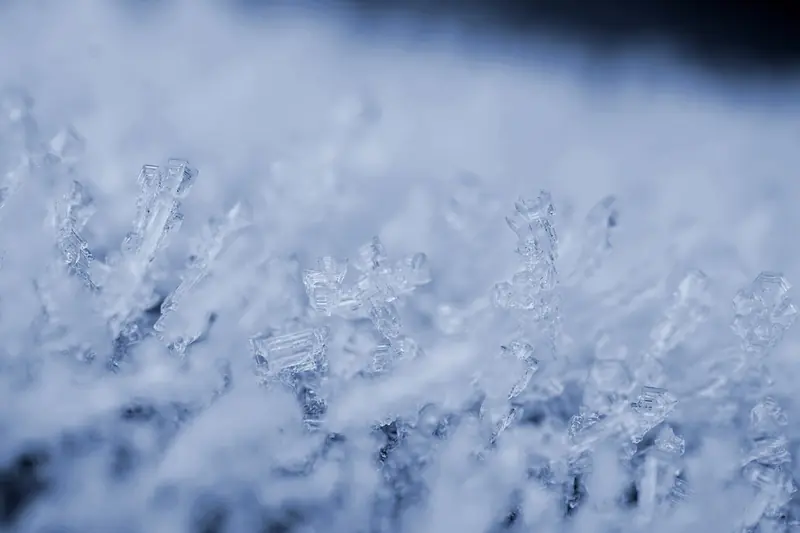
As for the largest single crystals Libbrecht has seen, they are impressive but not as enormous as the Montana report. His biggest natural crystals are typically around 10 millimeters wide — about the size of a dime. In his laboratory, Libbrecht creates ideal conditions for snowflake growth: no wind to tear crystals apart and temperatures near minus 15 degrees Celsius. Those calm, cold conditions let crystals grow much larger than they usually do outdoors, where wind and changing weather tend to break them up before they reach comparable sizes.
When it comes to shape variety, the differences are striking even among small crystals. In the 1930s, Japanese physicist Ukichiro Nakaya — who produced the world’s first artificial snowflakes — mapped the many forms snow crystals can take. Depending on the temperature and humidity during formation, crystals can appear as simple prisms and columns or as delicate rosettes and star-shaped plates with fern-like branches. Some types form just below freezing, while others require temperatures as low as minus 25 degrees Celsius. Growing snowflakes in the lab remains one of the best ways to understand how these intricate crystals form in nature.