
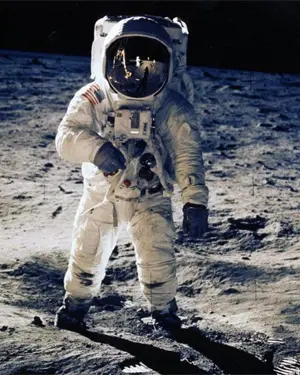
We don’t think about the oxygen in the air — our green friends, plants, take care of that. But what will supply oxygen on a spacecraft when it breaks away from its home planet and speeds through the vast emptiness of space toward distant, unknown worlds?
We could use chemical compounds. We could also use plants. But which ones? You can’t exactly take a birch or a poplar tree aboard a spaceship. And what good would they do anyway? To keep 15 people breathing, you’d need about a hectare of forest. If there are only three people on board, you’d still need a small grove.
Yet there are suitable plants on Earth. One of them is chlorella, a single-celled alga.
In just one cubic centimeter of water—about the size of a thimble—there can be up to 1 billion chlorella cells. These tiny organisms can produce oxygen, absorb carbon dioxide, and even serve as plant-based food for astronauts during their journey.
Scientists conducted early experiments. On the second spacecraft, which made history by returning living passengers—Belka and Strelka—to Earth, test tubes containing chlorella were sent into space to see how this potential companion for interplanetary travelers would withstand cosmic radiation and whether it could thrive in an extraterrestrial environment.