
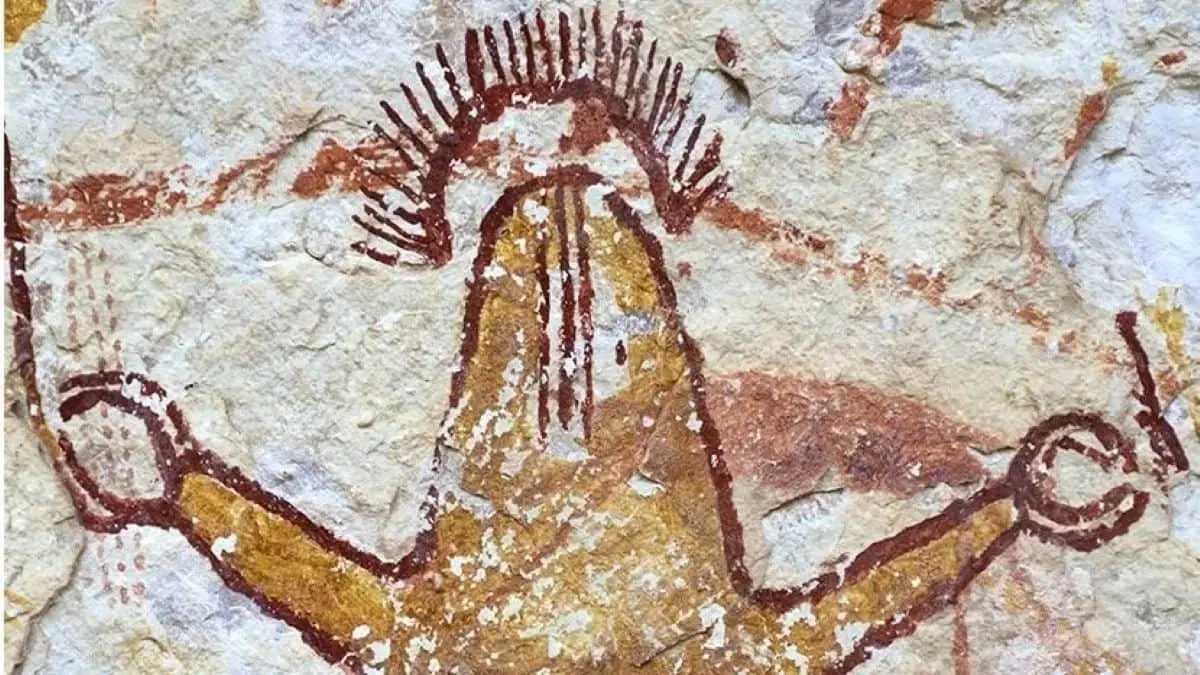
 studying ancient art in the canyons of southwestern Texas (USA) have discovered that some of North America’s most famous rock paintings are far older than previously believed.
According to new findings, in Pecos Canyon, located along the border of the United States and Mexico, were created around 6,000 years ago. These paintings are evidence of an astonishingly long and continuous artistic tradition passed down through generations in ancient hunter-gatherer societies.
This was reported in the journal Science Advances by a university team led by Professor Carolyn E. Boyd. In their work, the researchers redefined the understanding of early ritual art in North America.
What Did the Researchers Discover?
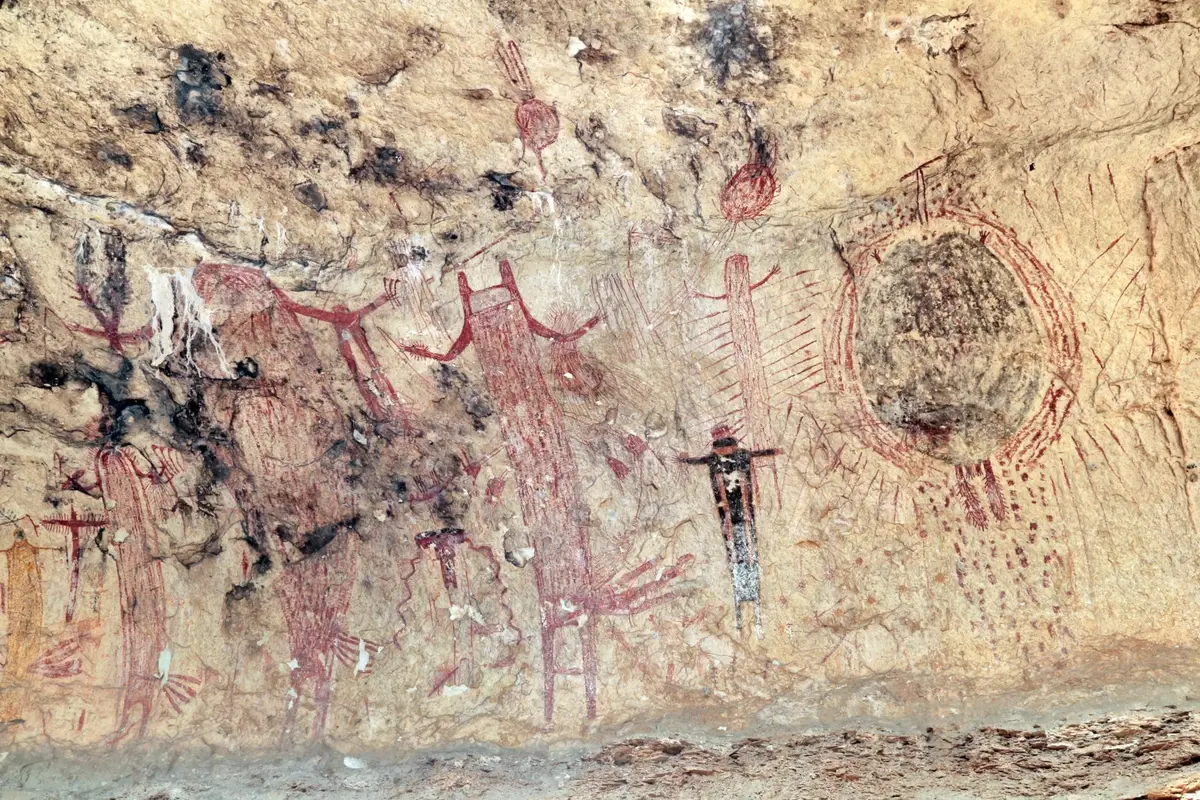
In the , located near the Rio Grande, hundreds of limestone rock shelters are scattered throughout the area. The surfaces in these natural niches are remarkably smooth—ideal for painting. Numerous frescoes have been preserved here, likely adorning the sites where rituals and ceremonies took place thousands of years ago.
Depicting people, animals, and abstract symbols on the walls, ancient artists used red ochre, black pigments, and yellow mineral dyes. Some frescoes adorned entire rock faces with numerous, carefully arranged elements, indicating a thoughtful composition.
Dating Rock Paintings is Quite Challenging
For a long time, dating ancient has been one of the most challenging tasks for archaeologists. The issue is that determining the age of mineral pigments, which do not contain organic materials, is impossible using radiocarbon dating. However, prehistoric artists often mixed these pigments with organic substances, such as plant resins or animal fats (which helped the paint adhere better to the stone).
These binding agents left microscopic traces of carbon. By dating this carbon, researchers ultimately determined when the paint was first applied, as reported by Arkeonews.
In addition to radiocarbon dating, the team employed stratigraphy, a method that determines age based on the layering of materials. This method helped scientists understand the sequence in which colors and images were applied.
By analyzing 12 locations using these methods, the team found that the art of Pecos Canyon likely originated between 5760 and 5385 years ago. The history of this art continued until about 1370 to 1035 years ago. This means that this extraordinarily long and continuous artistic tradition spans approximately 4,000 to 4,800 years.
Despite changes in climate and material culture, the core symbols and themes of the paintings remained unchanged throughout this time. More than 200 frescoes repeatedly feature the same images and symbols, emphasizing the existence of a well-formed worldview and understanding of the universe among ancient peoples.
In societies without writing, the repetition of stories and rituals played a crucial role in preserving knowledge. These rock paintings helped convey beliefs, myths, moral norms, and ceremonial practices to future generations.
The dry climate of the canyon, combined with stable temperatures and limited sunlight under the rock overhangs, contributed to the preservation of colors over millennia. However, the frescoes remain vulnerable to sudden floods, smoke, and human contact.