
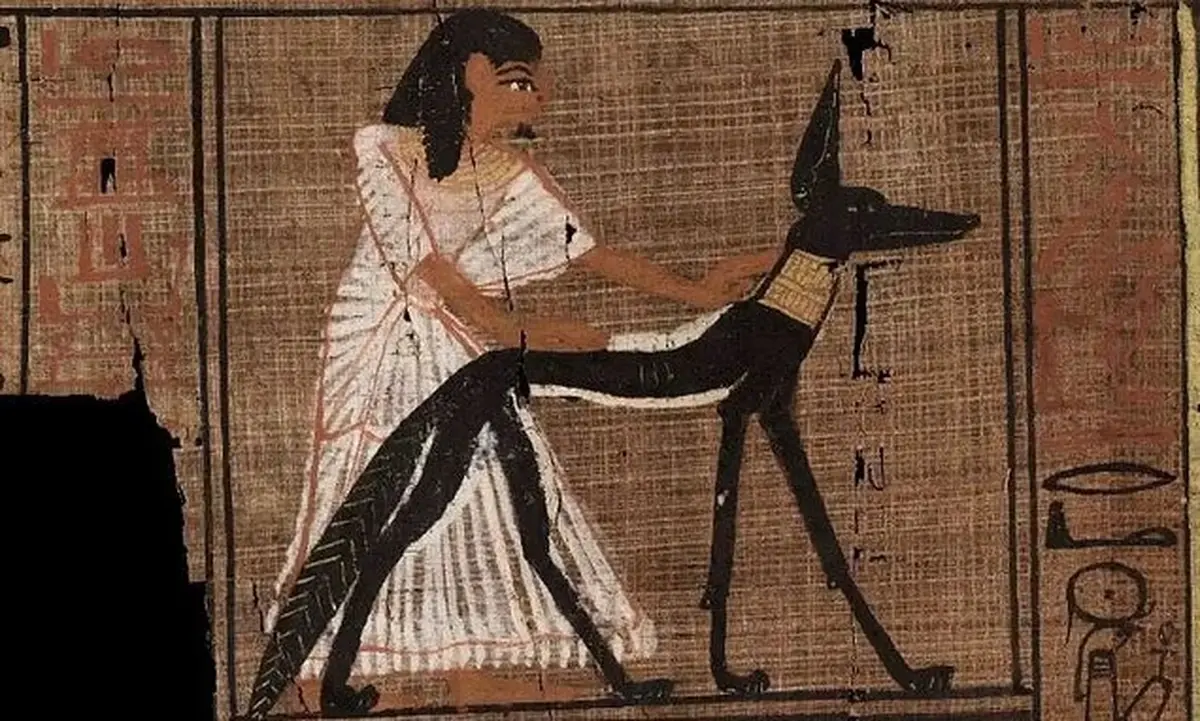
Long before people started fixing printing mistakes with white-out, absent-minded scribes in covered accidental errors with a special white pigment.
Cambridge researchers announced their discovery after they came across a clever correction in a copy of the Book of the Dead that was made for a high-ranking royal scribe named Ramose in 1278 BC.
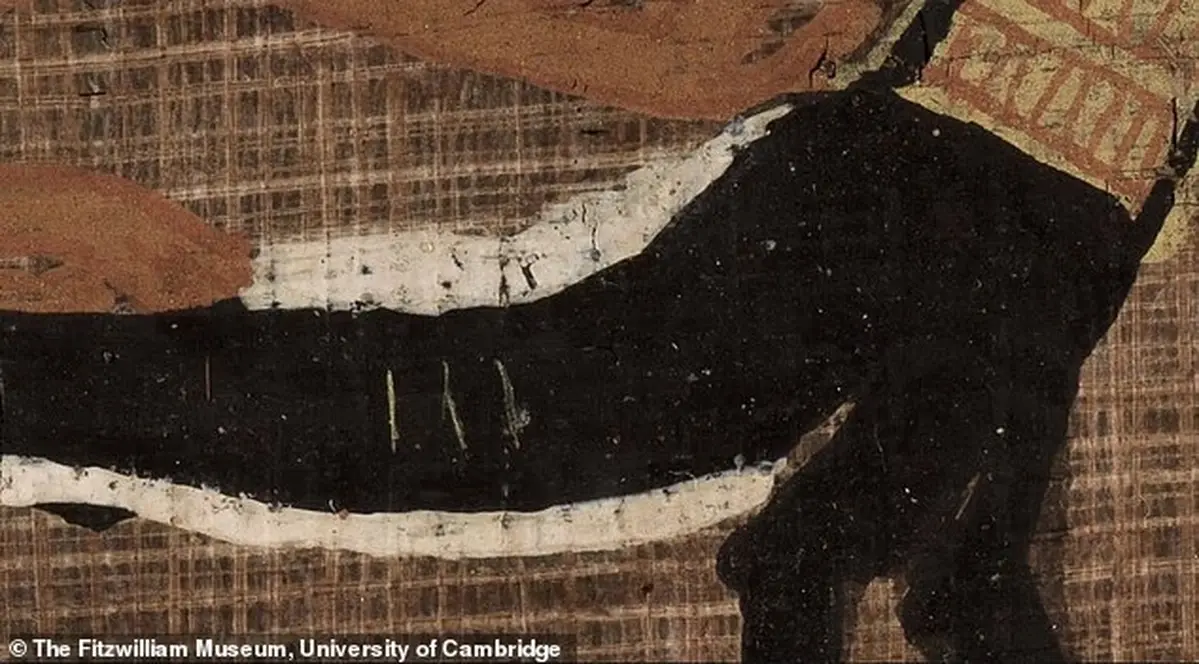
On one of the spells meant to help Ramose in the afterlife, a god with a jackal head — probably Upuaut (or Wepwawet) — is depicted, and experts noticed thick white bands along the sides of his black body, the Daily Mail reported.
Helen Strudwick, senior Egyptologist at the Fitzwilliam Museum in Cambridge, says the artist applied those corrections after finishing the image — apparently to make the jackal look slimmer.
She added, “It looks as if someone saw the original version and said, ‘He’s too fat — make him thinner.'”
That produced an ancient Egyptian “corrector,” which the researcher also calls a “polite corrector” or “liquid paper.”
Using modern analytical methods, the team looked beneath the white pigment layer and confirmed that someone had deliberately applied it over the jackal’s black body and hind legs. In other words, the white patches were not original parts of the illustration; they covered up an artist’s mistake.
What was that ancient white-out made from?
The researchers identified the exact composition of the “polite corrector.” It contained gantit (or guntit) — a mineral of white crystals — and calcite, a common mineral found in limestone and marble.
Helen Strudwick explained that calcite made the white paint thicker so the jackal’s black fur wouldn’t show through.
Using a 3D digital microscope, the scientists also detected specks of auripigment — the highly toxic yellow mineral often called “royal yellow” — embedded in the white paint. They likely added auripigment so the paint would blend better with the pale-cream color of the papyrus background.
Strudwick also recalled that this isn’t the first time anyone has found correction fluid on Egyptian papyri. She previously found similar corrections on other important artifacts, such as the Book of the Dead of Nakht in the British Museum and the Papyrus of Yuya in the Egyptian Museum in Cairo.
The copy of the Book of the Dead made for Ramose was discovered in 1922 in the ancient Egyptian necropolis of Sedment by Sir William Flinders Petrie, the prominent British archaeologist and Egyptologist (1853–1942).
