
 A team of from the University of Haifa (Israel) and the University of Cologne (Germany) has announced the discovery of a unique building in the ancient city of Hippos, near the Sea of Galilee. This structure served as a care home for the elderly approximately 1600 years ago, likely the first of its kind known to scholars.
This finding sheds new light on social welfare systems in the ancient world.
What Did the Researchers Find?
At the center of the discovery is a beautifully decorated mosaic medallion featuring a Greek inscription that reads: “Peace to the elderly.” Researchers have dated the mosaic to the late 4th or early 5th century AD. They found the inscription prominently displayed on one of the buildings in a residential area. Scholars believe it served an important social function related to the care of elderly individuals.
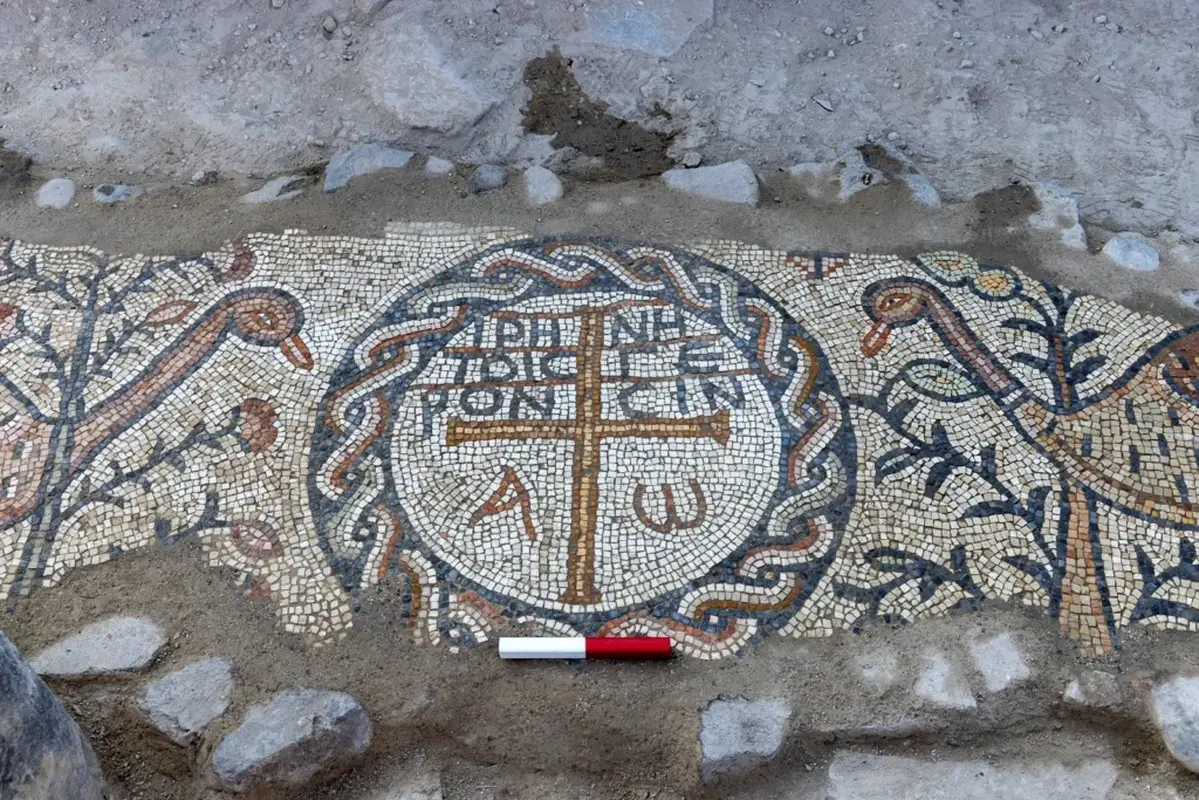
According to the study’s authors, this inscription represents the earliest material evidence of an organized institution dedicated to the care of the elderly. While historical texts from the 5th and 6th centuries mention facilities for older adults, no archaeological evidence had been found until now. Thus, the discovery in Hippos significantly contributes to the study of ancient social institutions.
Dr. Michael Eisenberg, the head of the from the University of Haifa, emphasized the broader implications of the discovery. It demonstrates that caring for the elderly was ingrained in society long before modern social welfare systems emerged.
“Caring for the elderly members of society was a well-established social value around 1600 years ago,” the scholar stated.
Professor Gregor Staab and Dr. Arleta Kowalewska from the University of Cologne published the findings in the scientific journal Zeitschrift für Papyrologie und Epigraphik. In their article, the researchers argue that the text and the location of the medallion provide compelling evidence of an official care home for the elderly. The inscription is directly addressed to these individuals, which is a rare and direct indication in an archaeological context, as reported by Arkeonews.
The city of Hippos, also known as Susita, was a significant Byzantine Christian settlement and episcopal center. It was distinguished by its grand architecture, including basilicas, churches, theaters, and wide streets lined with colonnades. The recently discovered elderly care facility was situated near the intersection of two main roads, indicating its integration into everyday urban life.
The team concluded that the mosaic medallion likely adorned the entrance to the building, symbolizing a spiritual blessing and a welcoming message to its residents. The researchers believe this institution reflects early Christian values that encouraged collective responsibility and care that extended beyond traditional family structures.
This medallion may also represent one of the earliest material examples in the Holy Land demonstrating the Christian community’s acceptance of social responsibilities that were previously placed on families. Researchers consider this a pivotal moment in the evolution of organized social assistance.
Thus, this remarkable discovery not only deepens our understanding of Byzantine society but also reveals a long history of institutional care for the elderly—a topic that remains highly relevant today.