

Are the same dietitians who’ve been telling us for years what to eat now arguing against labeling foods as good or bad?
A growing perspective among nutrition experts rejects black-and-white thinking and favors moderation. Recent studies show that categorizing foods as healthy or unhealthy can lead to disordered eating behaviors. That, in turn, can increase risks like hypertension, stroke, heart disease, and digestive problems.
Dietitians also warn that strict food labels don’t actually help with weight loss. Instead, they’re linked to overeating and weight gain.
An Unexpected Take on Unhealthy Foods
In a recent article, U.S. clinical dietitian Sheila Cadogan said that all foods can have benefits, even if their only role is to provide energy when someone is hungry. She points to research showing it isn’t a single food that causes harm but the overall pattern of a person’s diet.
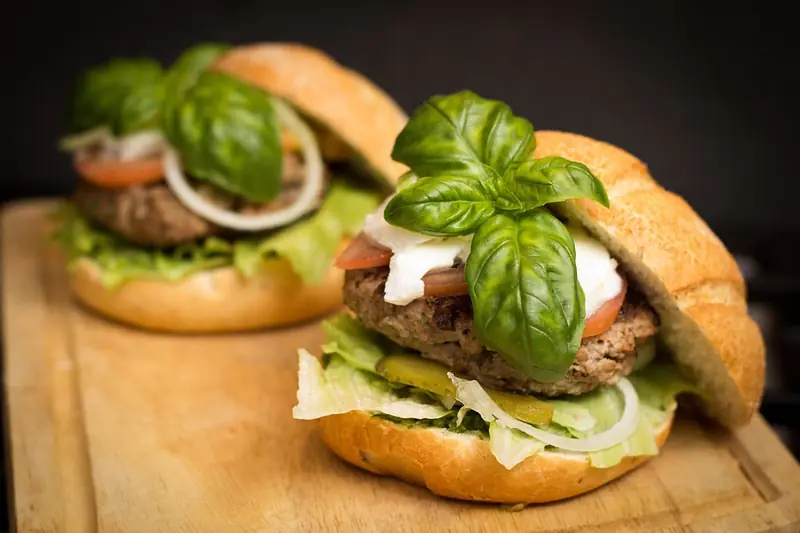 Restricting cravings for specific foods is the quickest path to overeating, according to Cadogan.
The guilt and stress that come from eating ‘unhealthy’ foods can cause more harm than a ‘forbidden’ dessert eaten in moderation.
Scientifically Supported
Other experts told the Daily Mail they agree with Cadogan’s concerns about rigid attitudes toward food.
Kathleen Lopez, a registered dietitian from New Hampshire, said, “Each of us has individual biochemistry, culture, and genetic makeup, so we respond differently to various foods.”
Lopez also agrees that food is neither inherently good nor bad; it either works for a person or it doesn’t. Avoiding entire food groups to try to lose weight — such as carbohydrates, sugar, or ultra-processed foods — rarely proves effective. The evidence supports this.
In 2012, researchers at Tel Aviv University found that participants with obesity who ate a high-protein breakfast and then had dessert that same day lost about the same amount of weight as those who skipped dessert. The participants who included dessert continued to lose weight after eight months, unlike those who completely avoided sweets.
 According to the researchers, this happened because eating one larger sweet dessert satisfied cravings for a longer time and reduced the likelihood of wanting more sweets later in the day.
Moralizing about food also poses risks to mental health. It can contribute to eating disorders such as anorexia and bulimia.
Experts have long advised people with type 2 diabetes or obesity to limit added sugar and saturated fat. But dietitians now say completely avoiding those ingredients isn’t always necessary.
According to Lopez, many Americans choose extreme eating rules out of fear of gaining weight — a phenomenon known as “fatphobia.” A 2012 study in the journal Obesity found that about 16 percent of women reported weight-based discrimination, up from 10 percent in 1995.
“You force yourself to adhere to an ‘ideal’ eating style, but that will never happen, and it’s simply impractical,” concluded Sheila Cadogan.