

When the person sleeping next to you tugs the blanket, , shifts from side to side, or puts a foot on you, sleeping together loses its magic. Sleep experts say that although these annoyances are brief and often forgotten by morning, they can be quite harmful to health.
Is “sleep divorce” a slippery slope?
In recent years a trend called “sleep divorce” has been gaining traction worldwide. Its proponents from their partners to get the best possible rest.
Actress Cameron Diaz has publicly backed the practice, saying, “We should make separate bedrooms the norm.”
Laura Bubert, a senior lecturer in psychology at the University of Westminster (UK), argues that sleeping apart can actually be beneficial.
“Sleeping in separate bedrooms allows each person to create optimal conditions for their sleep. That can mean choosing different mattresses or bedding, adjusting the lighting level, and . Each partner can adapt their habits to their own sleep schedule — for example, going to bed at a time that suits them, reading before bed, and avoiding screens in bed,” the expert wrote in The Conversation.
She says all of that leads to better sleep and, as a result, improved overall health.
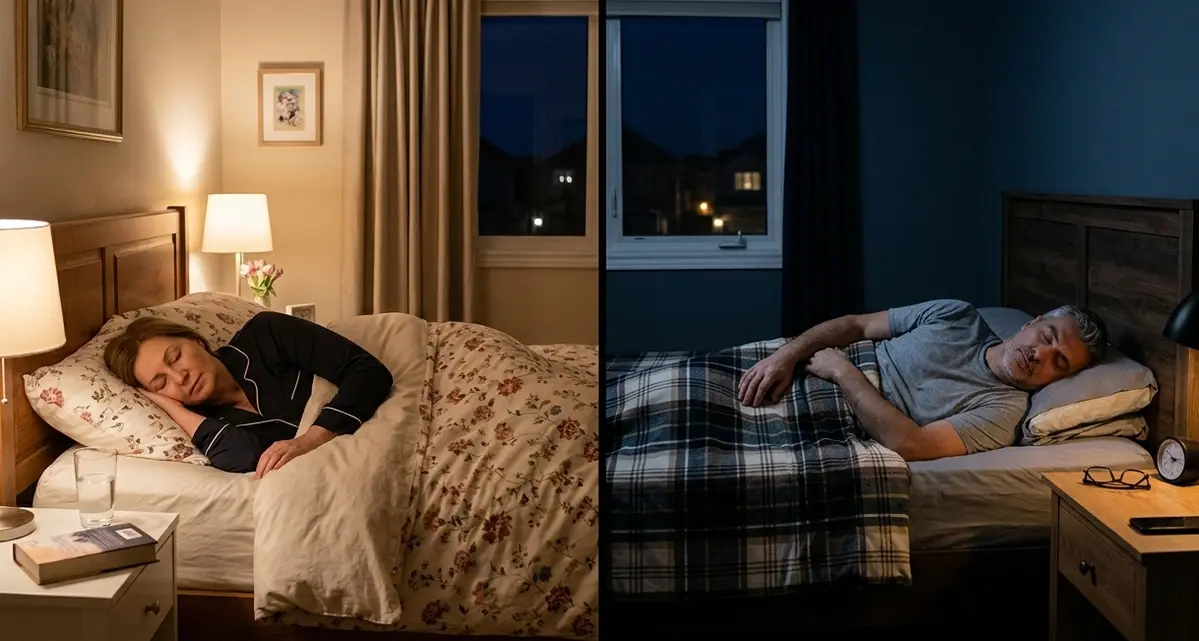
Should couples sleep apart? The pros and cons
Meanwhile, scientists at Queensland University of Technology (Australia) analyzed 18 previous sleep studies.
In one study, couples who slept in the same bed wore smartwatches with motion sensors overnight. The experiment found that partners woke each other an average of six times per night.
Another study showed that 46 percent of spouses’ movements during the night were shared — meaning when one person suddenly wakes and walks around the house, the other person does the same.
Sleep Health reports that when one partner snores or suffers from , the other partner faces serious sleep disruption and worse wellbeing.
When participants slept in the same bed, they experienced more REM dreaming. That likely reflects the sense of safety that comes from having a loved one nearby.
Of course, the ideal situation is when partners don’t disturb each other’s sleep. In that case, shared sleep strengthens the bond and provides a sense of comfort.
So couples should decide for themselves whether to sleep in the same bedroom or separate ones. And although many will prefer the latter option, there’s another perspective to consider.
Experts warn that when partners split into separate rooms, they miss important pre-bed conversations and spontaneous physical closeness, which form the foundation of a relationship.