
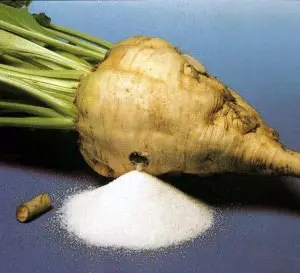
 Sugar Beet
Life can be bittersweet, literally and figuratively. Right now, thousands of tons of fruit are going to waste because there’s a shortage of sugar, and people are being advised to make preserves without sugar. But sugar-free products are often lower quality. Our bodies need sugar: it gives energy, eases fatigue, and supports the nervous system.
You can process sugar beets at home, though you won’t get the refined or granulated sugar that factories produce. You can, however, make a syrup suitable for compotes, cookies, jams, and jellies — and if you grow sugar beets in your garden, it’s within reach.
First, wash the beets thoroughly. Peel them, cut them into pieces, and place them in a stainless-steel pot for boiling. For every 22 pounds (10 kg) of beets, add about 1.5 liters (6.3 cups) of water so the beets are fully submerged. To prevent the beets from burning, place a rack or a clay or porcelain plate at the bottom of the pot. Once the beets are cooked, squeeze out the juice and continue to boil the juice until it reaches a thick, sour cream–like consistency. The resulting syrup has a pleasant sweetness and a brown color, making it suitable for a variety of sweet treats.
The beet syrup contains about 70 percent sugar, so 1 kg of syrup can replace 700 grams of sugar. Store the syrup only in glass containers. To prevent crystallization, add citric acid at a rate of 1 gram per kilogram of syrup.
Sugar beets also have medicinal properties. In folk medicine, people use beet juice to treat hypertension, kidney diseases, constipation, scurvy, and anemia. Fresh beet leaves are used for ulcers and skin swelling. Sugar beets are the most sugar-rich crop in our country, containing up to 20 percent sucrose, along with vitamins C and B, organic acids such as malic, tartaric, lactic, and citric, and minerals including phosphorus, calcium, sulfur, manganese, zinc, copper, boron, iodine, and fluorine.
If you have space, grow sugar beets in the spring to make syrup for preserves. Use the byproducts to feed livestock.