
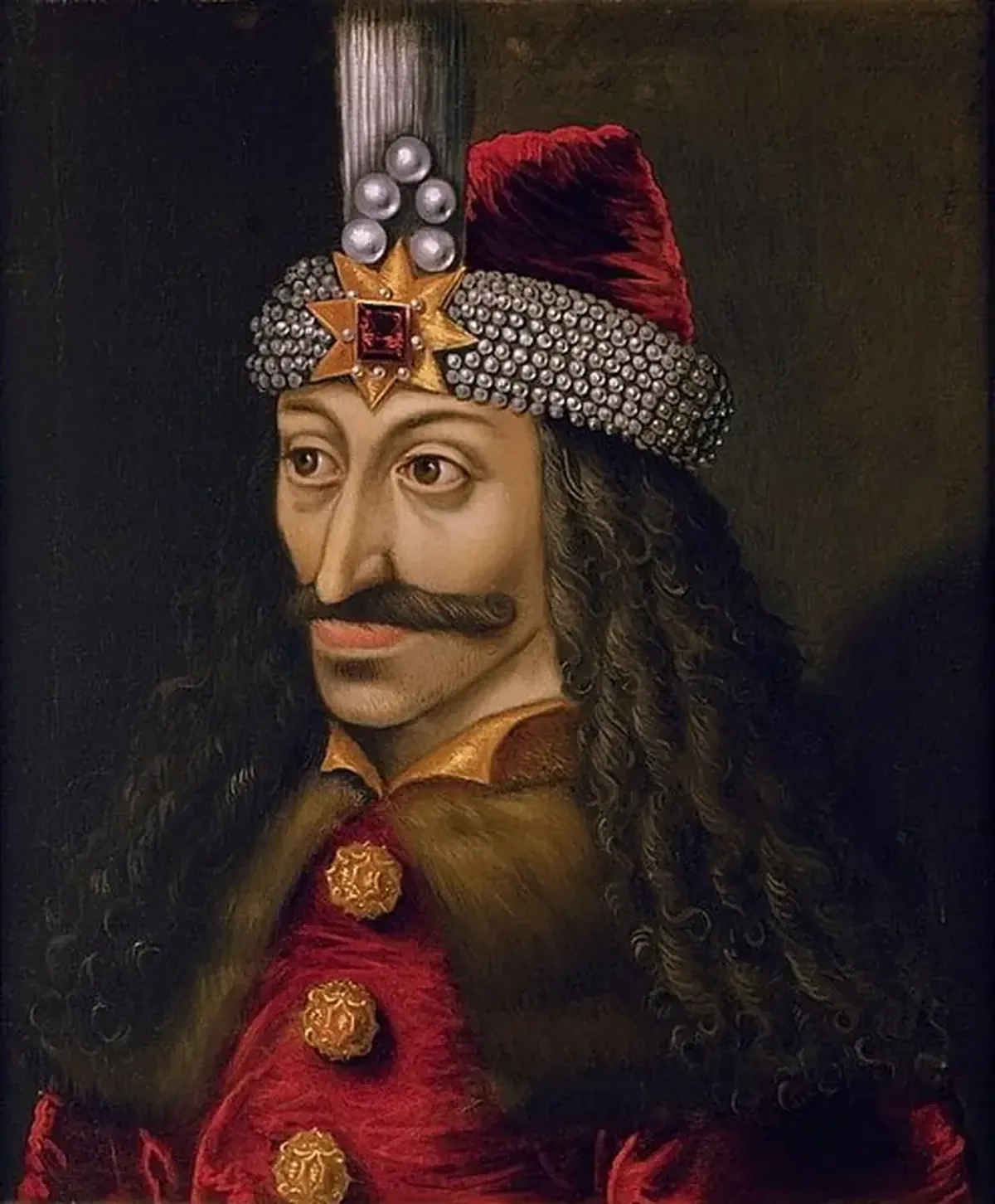
The literary Dracula traces back to a real man: Romanian prince Vlad the Impaler. New analysis suggests the blood in his legend might have a medical explanation—researchers say he may have had hemolacria, a rare condition that causes people to cry bloody tears.
A Letter from Vlad Dracula Used in the Research
Professor Vincenzo Cunsolo, who led the study, says the prince likely suffered, at least in later years, from a pathological condition called hemolacria — meaning his tears could have been mixed with blood.
As is well known, Vlad the Impaler, more commonly called Vlad Dracula, ruled Wallachia three times between 1448 and about 1477. He later inspired Irish writer Bram Stoker to publish the novel “Dracula” in 1897 about the legendary vampire ruler.
Now, more than 500 years after Vlad’s death, scientists have extracted “historical biomolecules” from letters written by the Romanian ruler. In May of this year the research team collected traces of blood, sweat, fingerprints, and saliva from a letter — coincidentally 125 years after Stoker’s novel was published.
 The letter was dated August 4, 1475, and was written to the townspeople of Sibiu by someone who identifies himself in the text as “the prince of the Transalpine regions.” He informed the townsfolk that he would soon be residing in their settlement. At the bottom of the letter was a signature — Vlad Dracula.
What is hemolacria, the condition Vlad may have had?
Protein analysis in the document indicates that Vlad the Impaler may have suffered from hemolacria — a rare condition that causes a person to cry bloody tears. The tears appear red and can look as if they are entirely made of blood.
While the sight of bloody tears is dramatic and can be alarming, hemolacria is not always dangerous on its own. It can be a symptom of many diseases and may sometimes point to a tumor in the tear-producing system. It can also result from conjunctivitis, environmental damage, or injuries.
Doctors have documented cases of hemolacria tied to hormonal changes in adult women. Some researchers say the condition can also be associated with severe stress or psychiatric conditions.
Unconfirmed but possible
Professor Cunsolo tells the Daily Mail that the proteomic data alone are not conclusive. Still, the data could indicate that Vlad suffered, at least in later life, from hemolacria. Cunsolo also says the analysis points to inflammatory processes in the ruler’s respiratory tract and skin.
The research team says this is the first study of its kind to draw attention to Vlad the Impaler’s health through molecular traces on his letters. Many medieval people may have handled the documents, but the most significant ancient proteins likely belong to Prince Vlad, who wrote and signed the letters.