
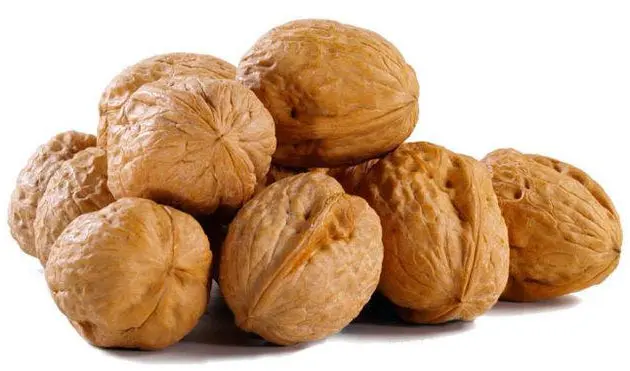
People often call the walnut tree a miraculous plant.
That’s because almost every part of the tree is useful: the fruit, the leaves, and the wood. Craftsmen turn the wood into sturdy furniture, while the leaves release potent phytoncides that repel insects and inhibit harmful bacteria.
But what about the walnut itself? The nut is packed with easily digestible fats, proteins, carbohydrates, and vitamins. Its nutritional value is comparable to the combined nutrition of meat, fish, bread, potatoes, and a liter of milk.
In the Caucasus, people make a delicious, nutritious walnut “sausage” from ripe nuts. The preparation is simple: string whole, dried nuts on threads and place them in a container—ideally a halved tube—where they soak in a mixture of concentrated grape juice and flour. The result is as nutritious as sausage, but with a sweet twist. Walnut sausage keeps for a long time if you dry it and hang it in a dry place or under a roof.
Walnuts are included in athletes’ and astronauts’ diets, and they’re recommended for people who are weakened because they help relieve fatigue and restore energy and vitality.
Traditional remedies suggest eating at least two walnuts on an empty stomach every day. People with hypertension are sometimes advised to eat 100 grams of walnuts with honey daily for a month and a half, and walnut milk is known to help normalize intestinal function.
This milk is especially beneficial for children. Grind 10 grams of walnut kernels in a mortar. Boil them in 200 grams of milk. Strain, sweeten with 10 grams of sugar, and serve warm.
If you have high stomach acidity, eat 25–100 grams of walnuts daily for 15–20 days.
Unripe walnut kernels contain six times as much vitamin C as black currants, nine times as much as rose hips, and 40–50 times as much as lemons or oranges. In Armenia, people make medicinal walnut honey by feeding bees juice from unripe walnuts mixed with sugar syrup; the bees turn it into honey rich in vitamin C.
Make an alcoholic tincture for stomach and intestinal pains by finely chopping 30 green walnuts and soaking them in a liter of alcohol or vodka. Seal and leave in the sun for two weeks. After straining, take 15 grams three times a day before meals.
People also make medicinal, nutrient-rich jams and marinades from green walnuts. In the pharmaceutical industry, medications derived from them are used to treat skin tuberculosis. The unripe fruits are rich in vitamins P and E, which are especially important for pregnant women.
Make a decoction using one tablespoon of walnut leaves per cup of boiling water. Take it as a general tonic during periods of fatigue or vitamin deficiency, use it as an astringent for diarrhea, or use it for gargling with sore throat and stomatitis. For inflammatory processes in the throat and mouth, and for treating scrofula and rickets, steep a tablespoon of dried walnut leaves in a cup of boiling water in a covered container for two hours, then take a teaspoon three times a day. People with diabetes sometimes use this infusion as a supplement because it can aid glucose absorption.
Apply freshly crushed walnut leaves to wounds and ulcers to promote rapid healing.
Make an oil infusion by putting 50–80 grams of fresh, chopped leaves into 300 grams of sunflower oil and leaving it in a dark place at room temperature for 15–20 days. Use it for liver and gastrointestinal diseases, and for treating chronic wounds and ulcers. Take one tablespoon on an empty stomach for two weeks.