
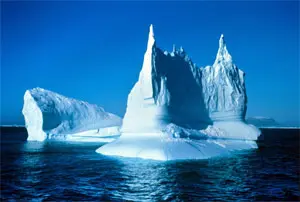
Was the air on Earth millions of years ago the same as it is today? Only eyewitnesses can answer that question. And believe it or not, those eyewitnesses have been found: icebergs—floating mountains of ice that are millions of years old.
Icebergs contain about 3 percent air trapped in bubbles, and that air is released as the ice melts. Researchers have studied those bubbles and found that the oxygen level in air trapped in relatively young ice matches today’s atmosphere, while air trapped in much older ice contains significantly less oxygen.
That’s because plants create the oxygen in our atmosphere. Plants absorb carbon dioxide and release oxygen. Together they produce roughly 10 trillion tons of oxygen each year. If all plants died, Earth would deplete its atmospheric oxygen in about three years, and humans and animals would perish.
That’s what the air in icebergs reveals: the ice formed in times when there were fewer plants on Earth and the atmosphere held less oxygen.