
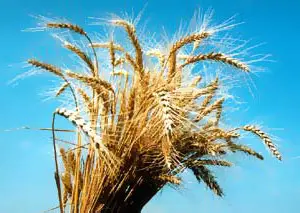
Plants are vulnerable to sudden cold snaps. That’s largely because the cells of crops like wheat are about 80 percent water. When temperatures fall low enough for that water to freeze, the cells can burst, like bottles of water left outside in a deep freeze. That can kill the plants. But if the cold comes on gradually—say, during autumn as temperatures creep down—wheat has time to adapt to the coming winter, a process called hardening off. During that period, the plant undergoes significant changes: growth slows, and it redirects energy into accumulating the fats, sugars, and proteins needed to survive the winter. With mild frosts, excess water starts to crystallize in the spaces between cells instead of inside them.
It’s ideal when everything goes according to plan—when the cold arrives slowly, step by step, allowing plants to gradually acclimate. But what happens when a sudden freeze hits?
In such cases, the unprepared cells can perish. This isn’t just about dead flowers on windowsills; sudden cold can cause major agricultural losses. Every year, a portion of winter grain crops must be reseeded. Remember the winter of 1978/79, when many fruit orchards in Moscow and the surrounding region were devastated?
During the search for solutions, researchers realized the key was finding substances that could boost plants’ adaptive mechanisms.
This research spanned several years and led to the development of a product called Kartolin. The substance helps plants accumulate more proteins, fats, and sugars than usual, which improves cold tolerance. Treated grains also contain less water that is prone to forming ice inside cells.
In experiments at temperatures where plants typically perish—between 18 and 20 degrees Fahrenheit—all of the untreated wheat stems died, while 30 to 40 out of 100 treated with Kartolin survived. Treated plants showed a 30 to 40 percent survival rate under those conditions. Positive results have also been observed in trials with fruit trees. The search continues, and researchers hope future substances will help plants withstand severe cold and preserve more of the harvest for people.