
 Almost all of us experience a bit of shyness from time to time, especially when we find ourselves in unfamiliar or uncomfortable situations. However, social is something entirely different.
According to the definition from the National Institute for Health and Care Excellence (NICE) in the UK, it refers to an “overwhelming fear of social situations.”
NICE experts note that individuals with social fear saying or doing something that could lead to embarrassment, humiliation, or disapproval from others. They worry about blushing, sweating, trembling, or appearing nervous. Many also fret over talking too much or too little when feeling anxious.
Researchers urge us not to confuse social anxiety with introversion—a personality type characterized by a preference for spending time alone rather than in large groups. Quiet and solitude provide introverts with strength and rejuvenation, while noisy gatherings can be exhausting. Nevertheless, these individuals do not shy away from meeting new people or presenting their work to an audience.
Social anxiety is not about the benefits of, but rather how the brain reacts to perceived threats.
However, a person can be an introvert and still suffer from , as noted by BBC Science Focus.
The Anatomy of Anxiety
For a long time, social anxiety was thought to be a reflection of personality and upbringing rather than biological factors. However, authors of new research are looking at it differently. They suggest that this condition may be linked to changes not only in the brain but even in the gut.
Thanks to advanced scanning methods like functional magnetic resonance imaging (fMRI), scientists can observe the dynamics of social anxiety in real-time. Researchers primarily focus on how three key neural networks in the brain function, as they operate incorrectly in individuals with social anxiety.
The first is the significance network, which includes the amygdala: an area deep in the brain that helps recognize emotionally charged or threatening events.
The second is the executive control network, which includes the medial prefrontal cortex: a fold on the brain’s surface responsible for attention, planning, and emotional regulation.
Finally, the third is the default mode network, which includes the precuneus: a center for orientation and self-perception. Located near the center of the brain, it activates when our thoughts wander or when we think about ourselves.
In a healthy brain, these neural networks constantly switch between modes depending on what is most important at the moment. However, individuals with social anxiety may struggle to switch between different neural networks.
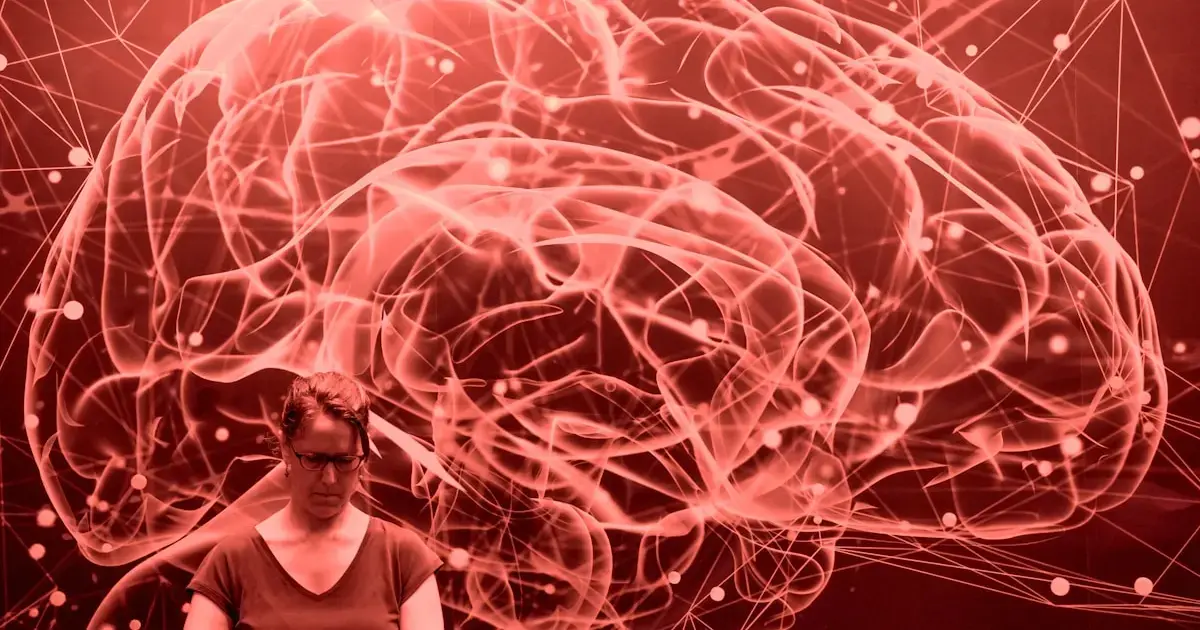
One of the most astonishing new discoveries has shown that the roots of social anxiety may extend far beyond the brain—to the trillions of .
A 2016 study found different microbiome profiles in people with depression. Researchers suggested that our mental health may be partially shaped by the organisms living inside us.
A few years later, Dr. Mary Butler’s team from University College Cork in Ireland conducted an observational study on students’ diets. It showed that those who consumed fermented foods beneficial for the microbiome typically exhibited fewer signs of social anxiety.
Mind Training
Since overcoming social anxiety through diet is still under-researched, cognitive-behavioral therapy remains the standard treatment for this condition.
Essentially, it is a form of mind training. During a series of sessions, a therapist helps the patient cope with anxiety-inducing situations while teaching them new skills for interpreting thoughts and reactions.
The theory seems simple, but applying it in practice can be significantly more challenging. The key to success lies in starting therapy with small tasks and gradually progressing to those that truly provoke fear.
For example, one might start by raising a question in a work meeting and then move on to giving a presentation in front of colleagues. On a neural level, this approach helps restore balance among the three main brain networks mentioned earlier.
Over the course of a year, a person who previously struggled with public speaking can transform into someone entirely different, says Dr. Venceslao Peñate Castro from the University of La Laguna in Tenerife, Spain.

Self-Distancing as the Key to Self-Understanding
Equally intriguing is the method known as self-distancing, or self-isolation, which involves new strategies for managing internal dialogue. This method was developed by Professor Ethan Kross from the University of Michigan (USA).
In its simplest form, it involves talking to oneself in the second or third person. For instance, before work, one might say, “David is nervous about the upcoming presentation,” and then describe their fears and how they might cope with them.
Ultimately, self-isolation helps alleviate arising from various challenges, including complex social situations.
What is particularly important is that the effects of self-isolation persist even at the highest levels of social anxiety. Thus, this method can be beneficial for anyone who freezes before a significant public speaking engagement, anyone planning to spend time in unfamiliar company, and anyone simply heading to the store.
Photo: Unsplash