
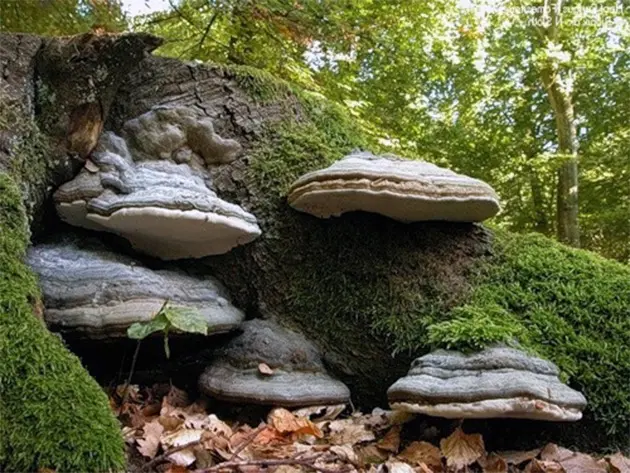
On the trunks of larches, aspens, oaks, and birches, we often encounter unusual mushrooms. Some resemble steps, while others look like strange hooves (hence one of their folk names, “devil’s hoof”). And the colors! They range from white to various shades of orange and black. These are members of the large polypore family.
One such mushroom, known as the larch sponge or agaric, can be found in the forests of the Carpathians and Polesia. It grows not only on larches but also on other coniferous trees. The whitish cap can reach 27 inches (about 70 cm) in diameter and weigh three kilograms (more than six pounds) or more.
The healing properties of these mushrooms have been known for centuries. Ten centuries ago, the renowned Tajik scholar and physician Avicenna wrote about the agaric: “It helps with bleeding, is beneficial for those suffering from epilepsy… and detoxifies, clears blockages in the liver, making it useful for jaundice… alleviates kidney pain.”
More recent research has confirmed his observations: a water infusion of the mushroom has hemostatic, calming, and sedative effects. Preparations made from the larch sponge have been used for diabetes, neurasthenia, and Graves’ disease. To make the remedy, boil a tablespoon of crushed dried sponge in 1.5 cups of water for 20 minutes. Let it steep for four hours, then strain it and take a tablespoon three times a day. The infusion can also help with excessive sweating.
Some people hang dried polypores on their walls — they’re quite striking. In Ukrainian villages this has been a long-standing tradition. Few people know it wasn’t just for looks: if someone cut themselves with a sickle, scythe, or knife, fresh wounds were dusted with polypore powder. The wound would heal quickly, without inflammation, and leave almost no scar. Dried sponges retain their medicinal properties for more than five years.
Chaga, or birch fungus, grows on birches — especially old or sick trees. You can easily distinguish it from other polypores: chaga (called “cir”) is flat and black, with a matte surface, while other polypores are velvety. Harvest it from autumn through spring and dry at 122°F (50°C).
Chaga is used to treat stomach and duodenal ulcers, as well as chronic hyperacid gastritis.
Chaga also acts as a tonic, supporting blood formation. A tea made from it can be beneficial even for healthy people.
Wash and crush the dried chaga. Soak it in cold boiled water for four hours to soften it, then pass it through a meat grinder or grate it. Soak the prepared mushroom again in boiled water (not exceeding 122°F or 50°C) at a ratio of five parts water to one part mushroom. Let it steep for 48 hours. Strain the liquid and add back the water used for soaking the mushroom. Take a cup three times a day, half an hour before meals. Store the prepared infusion for up to four days. Treatment typically lasts from three to seven months, with one- or ten-day breaks between courses. Chaga does not cause any undesirable side effects. Follow a dairy-and-vegetable diet during treatment: avoid meat, limit fats, and skip spicy seasonings. Do not take medications that reduce chaga’s effectiveness, such as penicillin and glucose. Chaga is contraindicated in cases of dysentery.
