
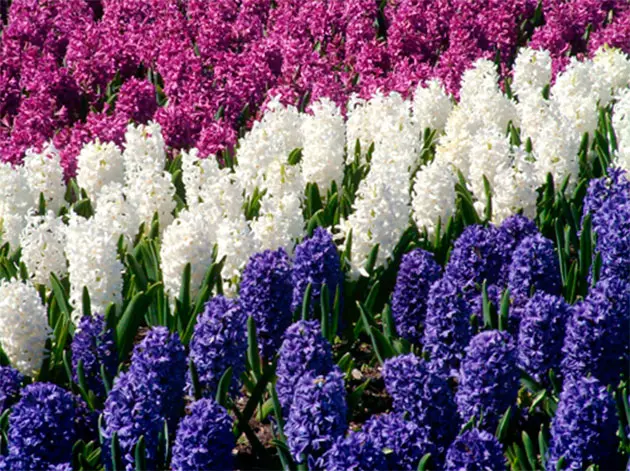
In August, roses, gladioli, daisies, and cornflowers blaze in color, eager to dazzle us. But some flowers are quietly resting and need special care: early spring-blooming bulbs like hyacinths, daffodils, and tulips. They have an interesting trait — after flowering, the plants move nutrients from the leaves into their storage organs, the bulbs, where the reserves sit in a modified bud until they’re needed.
Unlike woody plants, their buds form underground and already include the beginnings of roots, future leaves, and even a tiny flower stalk. Bulbs store a large reserve of nutrients that the plant uses slowly and efficiently. So, they need to be handled with care until conditions for reawakening arrive.
When growing bulb plants, the leaves collect energy and should not be cut off when the spent flowers are removed. The plants need feeding on schedule and must be transplanted according to the timeline for each species.
Daffodils should be transplanted every 2-3 years. Once the leaves turn yellow, the bulbs are dug up and laid out on plywood to dry in a shaded, well-ventilated area. Then the soil is shaken off gently, any remnants of dry leaves are removed, and the bulbs are sorted. The best bulbs are selected for future planting in flower beds, while the smaller bulbs are set aside to be planted in separate spots for further growth. The selected bulbs are placed in gauze bags, with 15-20 bulbs in each, and hung in a shaded area for 3-4 weeks. Hyacinths and tulips can also be stored this way until planting time.
Hyacinths are dug up every 2 years, while tulips are dug up annually.