
In winter, our bodies get fewer vitamins than in summer or fall. That reduces enzymatic activity and causes a kind of stagnation in the rhythm of the endocrine glands. As a result, we can feel lethargic, sleepy, and less productive. Some people even experience dizziness.
So, how can we avoid this?
Include at least 300 grams of raw vegetables and 200 grams of juices in your daily diet. Herbal teas can also help strengthen your health.
Vitamin Teas
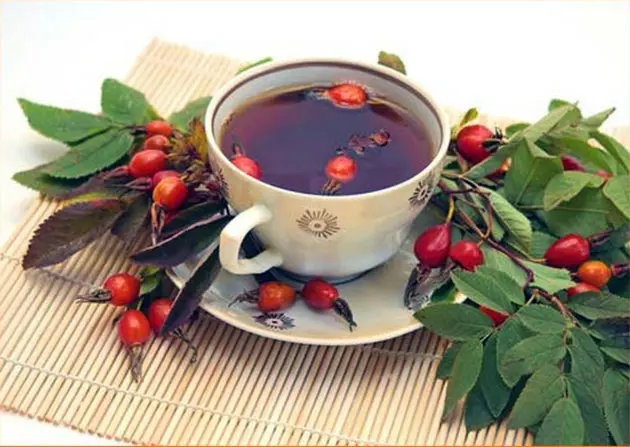
1. Take 10 grams each of raspberry leaves, black currant leaves, and lingonberry leaves, and add the same amount of crushed rose hips. Mix well. Pour two tablespoons of the dry mixture into a cup of boiling water and simmer for ten minutes. Let it cool in a tightly sealed container. Strain through cheesecloth, and add sugar to taste. Drink half a cup four times a day for a month. Keep in mind that this tea should not be stored for more than two to three days.
2. To 20 grams of dried clover flowers, add 30 grams of peppermint leaves and 10 grams of crushed rose hips. Pour a tablespoon of the mixture into 300 grams of boiling water and simmer for 15 minutes. Drink half a cup three times a day before meals. Alternate between different teas to prevent your body from getting used to the same blend.
3. This recipe is recommended for older adults. Mix 100 grams of dried rowan berries and 100 grams each of black currants and raspberries. Brew a tablespoon of the mixture in a cup of boiling water like regular tea. Add 10–15 drops of viburnum juice for better taste. This drink is especially recommended for people experiencing flare-ups of sclerosis and spasms in the brain’s blood vessels. Consume the tea for at least three weeks, drinking a cup several times a day.
4. To 15 grams of dried parsley leaves and 15 grams of carrot leaves, add 10 grams each of dill and carrot seeds. Pour a tablespoon of the mixture into two cups of boiling water and simmer for 5–7 minutes. Drink without straining, half a cup three times a day after meals.
5. Brew a tablespoon of the mixture (70 grams of rowan berries and 30 grams of nettle leaves) in two cups of boiling water and simmer for 10 minutes. Let it steep for four hours in a tightly sealed container in a dark, cool place. Strain through cheesecloth and drink half a cup twice a day.
6. The components of this tea are as follows: 40 grams of St. John’s wort, 30 grams of peppermint leaves, and 10 grams each of calamus roots and couch grass. Pour two tablespoons of the mixture into three cups of boiling water and simmer for 15–20 minutes on low heat until two-thirds of the liquid remains. Let it steep for eight hours, then strain and drink warm, half a cup three times a day, one hour after meals. Consume for three to four weeks. A weakened body is more susceptible to respiratory illnesses.
A few herbal tea recipes for cold relief
1. Mix 40 grams of marshmallow roots, 20 grams of coltsfoot leaves, 10 grams each of mullein flowers and fennel seeds, and 15 grams of licorice roots. Steep a tablespoon of this mixture in a cup of cold water. After two hours, bring it to a boil, then cool and strain. Drink the tea warm several times a day for seven days.
2. Mix equal parts (10 grams each) of plantain leaves, lungwort, coltsfoot, fragrant violet, and licorice roots. Brew and consume as in the previous recipe.
3. Combine 30 grams each of elecampane roots and primrose roots, and add the same amount of coltsfoot leaves. Pour two teaspoons of the mixture into a cup of boiling water, boil, and steep for 5 minutes, then strain. Drink in small sips.