
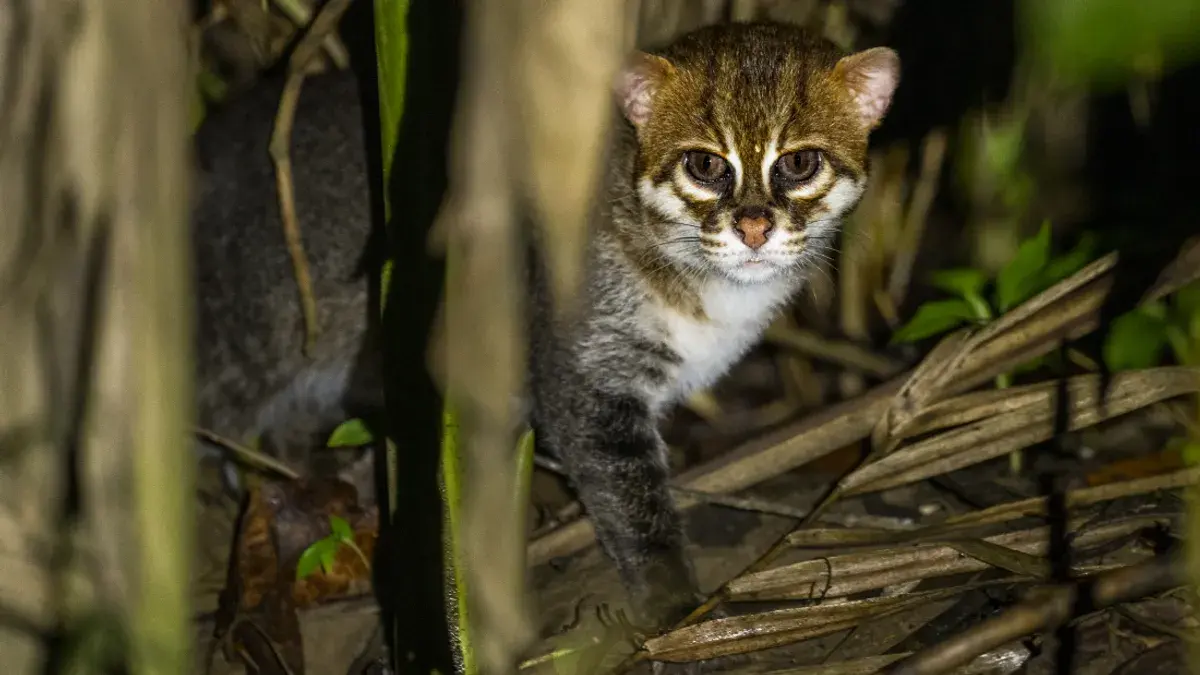
 For three decades, these Southeast Asian endemics were thought to be . The last documented sighting of one of the rarest wild species on the planet – Prionailurus planiceps – in Thailand was in 1995.
“We were confident that this species still existed. It was essential to develop the right research plan to confirm it,” said Rattapan Pattanarangsarn, the manager of the wild cat conservation program at Panthera Thailand, in an interview with IFLScience.
Using camera traps from Panthera Thailand and the Department of National Parks, Wildlife and Plant Conservation of Thailand (DNP), researchers achieved remarkable results. In 2024, the cameras captured 13 sightings of the Sumatran , and this year, another 16.
The most thrilling footage was of a female flat-headed cat with her kitten, indicating that this rare species continues to reproduce.
“This is compelling evidence of our long-standing commitment to conservation,” said Thailand’s Minister of Natural Resources and Environment, Suchart Chomklin, regarding the significant return of the Sumatran cat.

What Kind of Animal Is This?
The Sumatran cat is a small, nocturnal animal that prefers dense underbrush, making it incredibly difficult to find in the wild. Even capturing this elusive cat on a remote camera is no easy task.
These creatures can be easily recognized by their elongated heads, which are more cylindrical than those of domestic cats. The Prionailurus planiceps species is also characterized by closely set eyes, large teeth, and fangs adapted for catching fish and terrestrial prey, as well as webbed toes for better movement in marshy and aquatic environments, and thick reddish-brown fur.
The Sumatran cat grows to about 40-50 centimeters in length, not including its tail, which can reach 15 cm. It weighs up to 2.5 kg. Although fish is the primary component of the Prionailurus planiceps diet, the flat-headed cat also preys on chickens, rats, amphibians, and crustaceans.
“We had set up camera traps before, but we had not been able to detect the flat-headed cat. The key factor was choosing the right locations for the cameras,” explained Rattapan Pattanarangsarn. The researchers benefited from years of experience studying areas where these cats were known to fish.
According to zoologists, there are about 2,500 flat-headed cats left in the world. The International Union for Conservation of Nature (IUCN) classifies these wild animals as endangered.
“This discovery highlights the need to expand our efforts to other locations where, according to reports and unverified information, rare species may exist. Many under-researched areas could harbor important populations waiting for targeted studies,” noted scientists from Panthera Thailand.